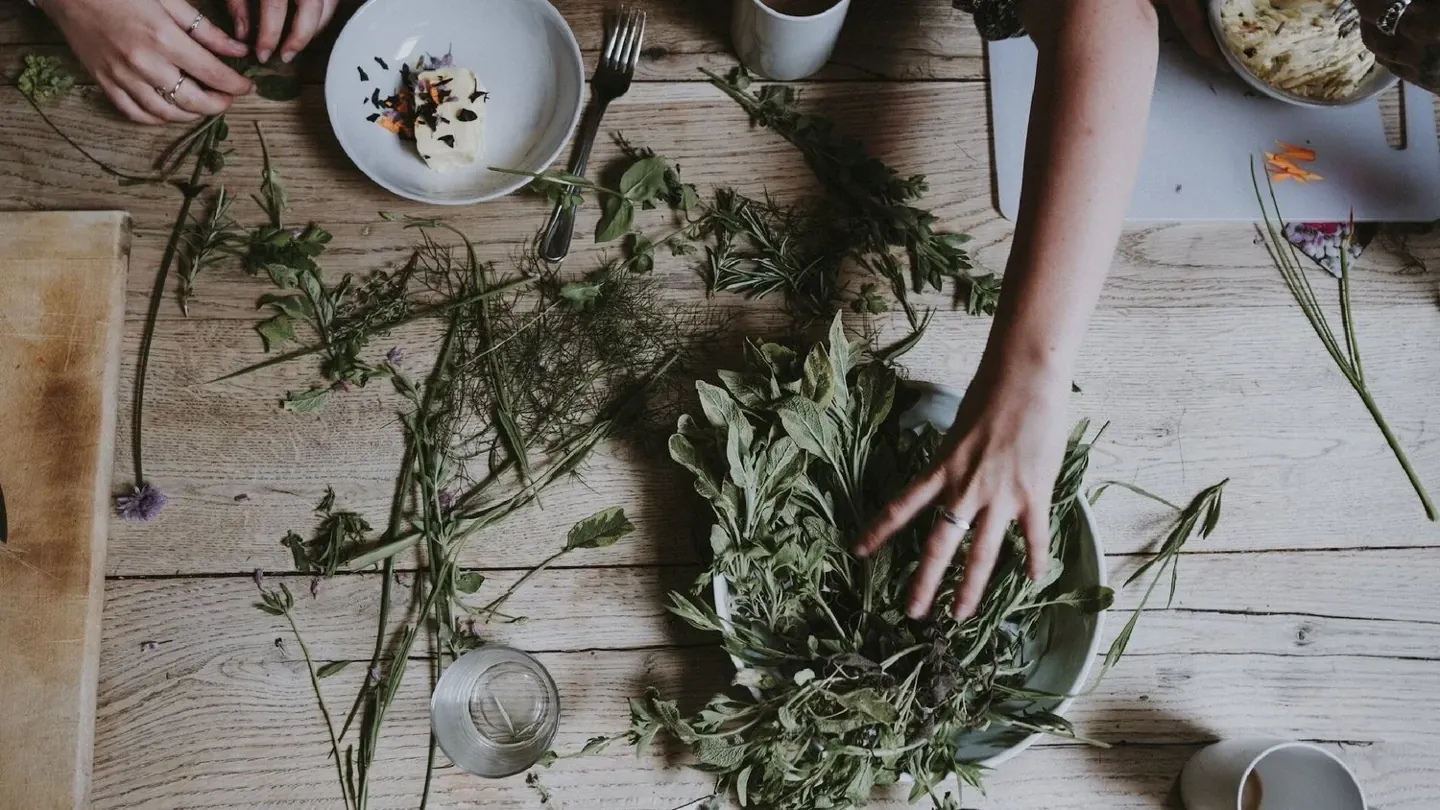
A head of garlic can change the entire mood of a meal. Roast it and the cloves become soft and mellow; slice it thinly into a pan and its fragrance announces that dinner is beginning. The most dependable benefit is also the easiest to enjoy: garlic makes simple food feel generous, savory, and complete.
Allium sativum L.
- Family
- Amaryllidaceae
- Parts in focus
- Bulb cloves; aged extracts, powders, and oils are distinct preparations
The action labels reflect culinary and traditional categories plus research interest; they do not establish cardiovascular or metabolic treatment benefits for ordinary servings.
A guide to herbal actions ↗One Bulb, Several Preparations
Garlic is Allium sativum, a bulb in the amaryllis family. A fresh clove, dried powder, garlic oil, and an aged garlic extract do not contain identical mixtures of compounds. Preparation is part of the ingredient's identity, particularly when comparing a kitchen habit with a clinical study.2
Aged garlic extract is a characterized supplement preparation; it is not automatically equivalent to fermented black garlic from a food shop. The latter can be delicious, with a dark sweetness that works in dressings and sauces, but flavor and color cannot establish equivalence to a research formula.
The Soul of a Shared Meal
Garlic's place in a household can be intimate: the sound of a knife on a board, the smell that fills a room, the familiar beginning of a soup. Let that ordinary knowledge count. You do not need an elaborate wellness ritual to turn an ingredient into a moment of connection.
A contemporary practice might be to prepare one garlic-scented dish slowly and share it. Notice who taught you to cook it, or who you would like to invite to the table. If no inherited recipe comes to mind, start a new one. The meaning is in the attention and hospitality you bring, not in presenting a meal as a treatment.
What Human Studies Have Found
Garlic supplements have shown modest benefits for certain cardiovascular risk markers, particularly blood pressure and cholesterol in some populations. NCCIH describes these effects as small rather than transformative. Changing a marker is useful research, but it does not by itself demonstrate fewer heart attacks or longer life.2
In the randomized AGE at Heart trial, 88 participants completed 12 weeks of treatment. Researchers used 1.2 grams daily of aged garlic extract, standardized to 1.2 milligrams of S-allylcysteine, and found improved blood-pressure measurements compared with placebo in people with uncontrolled hypertension. These are study details, not a dose prescription, and a clove added to dinner cannot be assigned the same result.3
An ABC research review brings together the broader supplement literature. Formulation differences, study quality, and commercial relationships deserve attention when interpreting pooled results. The evidence is most useful for a discussion about a specific adjunctive product, not for assuming that more garlic is always better.1
Roast a Head for the Week's Cooking
Heat the oven to 190°C/375°F. Remove loose papery layers from a head of garlic while keeping the cloves together, and slice a little from the top to expose them. Set it in a small covered baking dish, drizzle with olive oil, and roast until the cloves are soft, checking after about 35 minutes. Larger heads may need longer.
Once cool enough to handle, squeeze a few cloves into white beans, a spoonful of yogurt, or cooked vegetables. Add lemon, salt, and water as needed for the texture you want. Serve promptly. Refrigerate leftovers promptly in a covered container; do not store homemade garlic-in-oil mixtures at room temperature. Discard refrigerated homemade garlic oils after four days.4
For a gentler flavor, begin with one roasted clove in a dish and taste before adding more. There is no nutritional virtue in forcing yourself through a raw-garlic routine that makes your stomach hurt. Let the recipe serve the meal.
If You Are Considering an Extract
Bring the actual product label to a medication review. Look for its preparation, daily amount, and any standardization marker rather than simply a large milligram number. If blood pressure is the goal, discuss how you will measure it consistently and when to reassess. Do not change a prescribed medicine because one home reading happens to be lower.
A supplement may be worth discussing in an individual situation; it is not necessary to justify keeping garlic in the kitchen. Nor is garlic established as a way to prevent cancer or reliably prevent colds.2
Keep the Potency in Perspective
Garlic can cause reflux, abdominal discomfort, and odor. Supplements can increase bleeding risk, especially with anticoagulants or aspirin, and should be disclosed before surgery. Medicinal amounts during pregnancy or breastfeeding require professional advice. Raw garlic applied to skin can cause burns; it does not belong in a homemade acne treatment or on an irritated patch.2
For everyday pleasure, a well-cooked dish is plenty. Let the fragrance signal a meal worth sitting down for, and let any medicinal use be a separate, informed choice.
From the original journal: Explore the earlier garlic story ↗
References & further reading
Some garlic supplements yield modest blood-pressure or lipid improvements. The AGE at Heart trial tested a standardized aged extract over 12 weeks; results do not transfer to culinary garlic, black garlic, or every supplement, and do not demonstrate prevention of cardiovascular events.
Reviewed the ABC garlic research summary alongside AGE at Heart and NCCIH guidance. Its broader claims were assessed against the specific human evidence.
- Meta-analysis Shows Garlic Supplements Effective in Lowering Blood Pressure in Patients with Hypertension, Stimulating the Immune System, and Reducing Serum Cholesterol (2018) · ABC research review; accessible PDF; title not adopted as an efficacy claim
- Garlic: Usefulness and Safety (2025) · NCCIH evidence and safety summary
- The effect of aged garlic extract on blood pressure and other cardiovascular risk factors in uncontrolled hypertensives: the AGE at Heart trial (2016) · Randomized double-blind placebo-controlled human trial
- Home-Canned Foods: More ways to prevent botulism (2024) · CDC food-safety guidance
For education and reflection. Individual needs vary. For persistent symptoms or personal guidance, seek additional care from a qualified clinician or appropriate specialist.