Goldenseal keeps its most striking color below the surface. Beneath its broad woodland leaves lies a bright yellow rhizome, an unexpected flash of gold in the forest floor. It is a plant that rewards close attention—and one whose story is richer than the familiar promise on a seasonal supplement bottle.
Hydrastis canadensis L.
- Family
- Ranunculaceae
- Parts in focus
- Rhizome and roots, dried or extracted
Bitter and astringent are traditional herbal classifications, not evidence that goldenseal treats infection, digestive disease, or a metabolic disorder.
A guide to herbal actions ↗Meet the Woodland Original
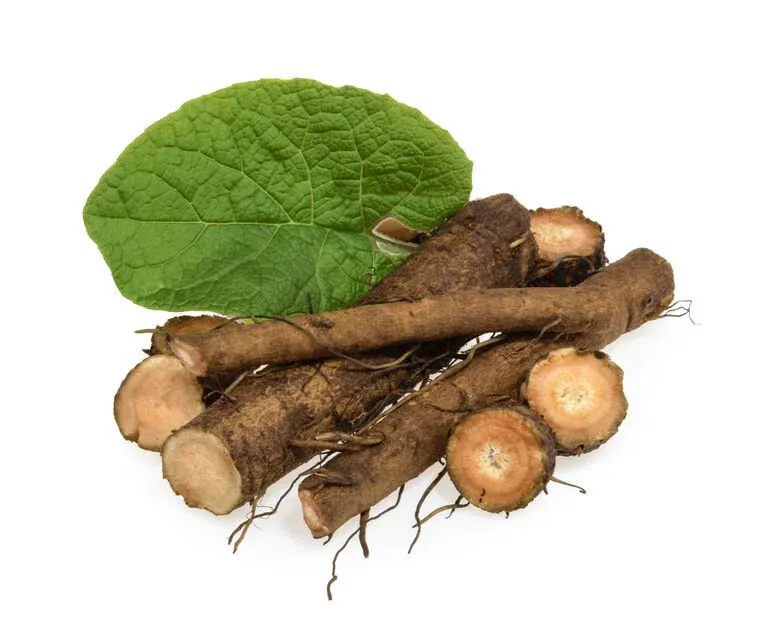
Hydrastis canadensis is a North American member of the buttercup family. Herbal preparations usually use the rhizome and roots, which contain several alkaloids, including berberine and hydrastine. The common name “yellow root” is not specific enough for product identification; other plants share it.1
Goldenseal is also not interchangeable with an isolated berberine supplement. The whole plant has a different mixture of constituents and a different absorption profile. Research on one compound cannot be assigned wholesale to the plant that happens to contain it. NCCIH specifically cautions against that assumption.2
Respect the Knowledge, and Its Origins
The ABC Clinical Guide documents goldenseal's roots in Indigenous North American medicine, including distinct Cherokee and Iroquois uses, before its later adoption by nineteenth-century American practitioners. Historical applications included skin and digestive concerns. Those records belong to particular peoples and contexts, rather than a single universal “ancient remedy.”1
For a present-day herbal practice, respect can begin with learning whose knowledge is being retold. Seek accounts that name their sources, distinguish tradition from later commercial interpretation, and make room for living communities. A plant profile is a doorway into that history, not ownership of it.
Goldenseal also offers a compelling contemporary reflection on value: what is precious may require restraint. An encounter with the plant need not end in taking a root home. Watching, drawing, learning, and supporting cultivation can be complete acts of relationship.
What the Clinical Evidence Can Say
Goldenseal has a substantial traditional reputation, but rigorous human trials have not established that it treats colds, sinus infections, digestive complaints, or other conditions. Laboratory antimicrobial findings do not answer whether an oral preparation helps a person recover. Its long history is important context; a specific clinical benefit still needs its own evidence.2
One of the most informative newer studies concerns interaction rather than efficacy. A 2025 crossover study examined goldenseal with metformin in adults with type 2 diabetes. Overall metformin exposure stayed within the study's predefined no-effect range, but the effect differed by metformin dose: exposure fell more at lower doses and little at higher doses. An exploratory change in HbA1c was not proof that goldenseal treats diabetes.3
This nuance matters. Goldenseal does not simply reduce every person's medication level by one fixed percentage. Nor does the absence of a large average effect make the combination automatically suitable. The study supports an individualized review of glucose control and medicines, not a self-directed adjustment.
Let Stewardship Be the Practice
Wild goldenseal has been overharvested, and commercially cultivated material is available. If a practitioner recommends it, ask for traceable cultivated sourcing and a clear explanation of identity testing.2 A supplier should be able to answer more than where the product was bottled.
For a non-ingestive ritual, make a page in a plant journal: sketch the leaf, write the botanical name, and note one question about its habitat or cultural history. Leave room for what you do not yet know. This is a way to practice reciprocity through attention rather than consumption.
If visiting a woodland, keep the encounter gentle. Observe from an established path and leave plants in place. The point is to become more aware of a living community, not to convert every discovery into something for the home apothecary.
Read a Formula with Discernment
Goldenseal often appears in blends with echinacea or other seasonal herbs. A familiar companion does not establish its effectiveness or remove its interaction potential. Read the complete formula and ask why each ingredient is there.
A useful consultation should clarify the actual symptom, the reason this particular plant is being considered, the preparation and duration, and how benefit or harm would be recognized. “Daily detox” is too vague a purpose for an herb with meaningful pharmacological activity. There is no need to invent a routine use merely because a plant has an important place in herbal history.
Know When It Is Not the Right Choice
Do not use goldenseal during pregnancy or breastfeeding, and do not give it to infants. It can affect the handling of medicines; people taking metformin or other prescription drugs should avoid self-combining it without a clinician or pharmacist's review. Long-term safety is uncertain.23
Do not put homemade goldenseal preparations in the eyes. Persistent fever, worsening respiratory symptoms, severe abdominal pain, bloody diarrhea, or signs of dehydration need assessment. Thoughtful herbalism can include choosing a different approach—and still holding this remarkable woodland plant in high regard.
From the original journal: Explore the earlier goldenseal story ↗
References & further reading
Traditional uses are documented, but rigorous human efficacy trials of goldenseal are lacking. A 2025 metformin interaction study found dose-dependent exposure changes despite an aggregate result within its no-effect range; its exploratory glycemic findings do not establish diabetes treatment.
Reviewed the ABC Clinical Guide monograph alongside NCCIH guidance and the full 2025 metformin interaction study. Historical applications are not presented as treatment instructions.
- Goldenseal: The ABC Clinical Guide to Herbs (2003) · ABC clinical monograph; accessible PDF; historical uses distinguished from current evidence
- Goldenseal: Usefulness and Safety (2025) · NCCIH evidence and safety summary
- The Pharmacokinetic Interaction Between Metformin and the Natural Product Goldenseal Is Metformin Dose-Dependent (2025) · Open-label three-arm crossover human pharmacokinetic study
For education and reflection. Individual needs vary. For persistent symptoms or personal guidance, seek additional care from a qualified clinician or appropriate specialist.