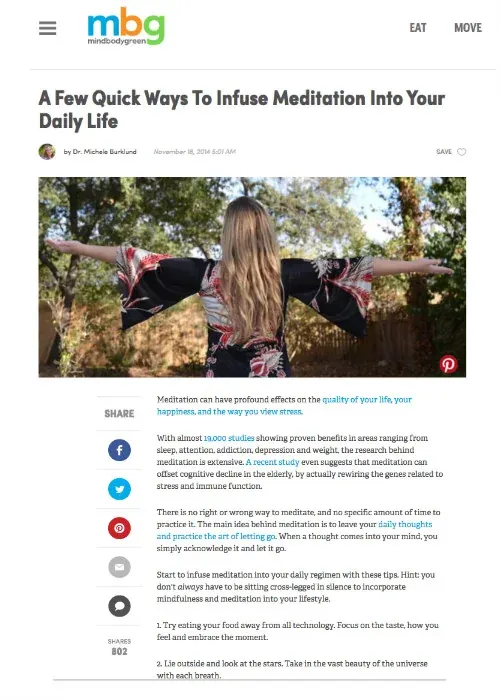
A quiet pause does not have to take over the day. The mindbodygreen feature linked in this October 23, 2015 archive entry explored ways to bring meditation into everyday life, with an emphasis on noticing thoughts and allowing attention to return.
The practice behind the feature
The accessible idea is still useful: sit comfortably, notice the breath or another steady sensation, and begin again when the mind wanders. A wandering mind is part of the experience, not evidence that the practice has failed.
Research suggests that structured mindfulness programs can help some people with stress-related symptoms. That is more measured than the original teaser's claims about thousands of “proven” benefits and genetic rewiring. A brief pause and an intensive clinical program should not be treated as the same intervention.
This page updates the context around the historical link; it does not claim that mindbodygreen has revised its original article. If meditation increases anxiety or distress, shorten the practice, try grounding with eyes open, or seek support.
Original mindbodygreen feature link
The destination's current availability could not be confirmed.
References & further reading
- mindbodygreen — original archived link (2015 archive entry) · Historical reference supplied in original Medicine Wild archive; destination availability not confirmed unless noted
- NCCIH: Meditation and Mindfulness (2022) · NIH evidence and safety summary