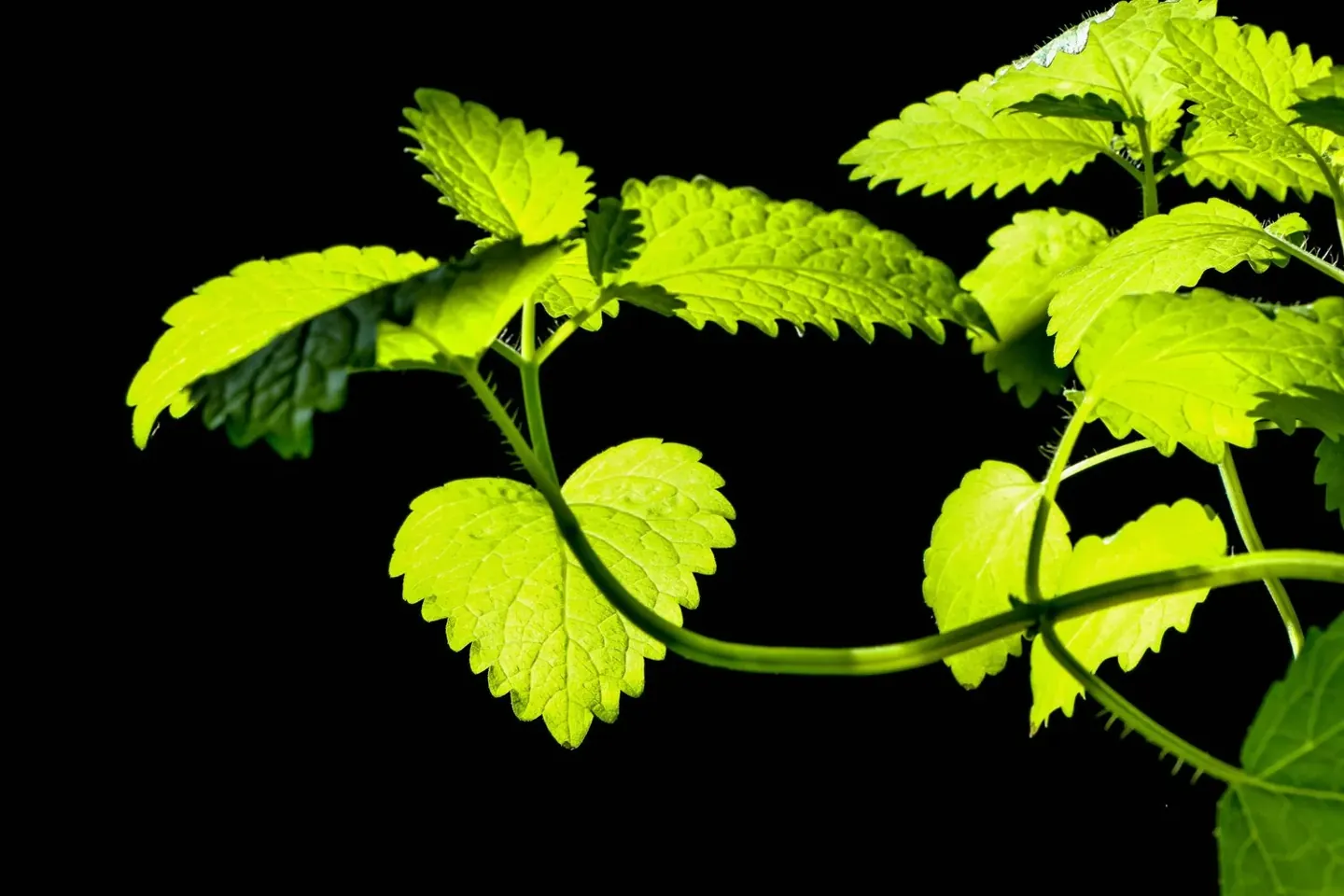
Rub a lemon-balm leaf gently between your fingers and the fragrance arrives before any explanation: green, lemony, a little sweet. It is an inviting plant for the transition between a full day and a quieter evening. The tea tastes fresh rather than heavy, which makes it especially appealing when the idea of a bedtime routine feels like one more item on the list.
Melissa officinalis L.
- Family
- Lamiaceae
- Parts in focus
- Leaves and leafy aerial parts; tea, tinctures, and defined extracts differ.
Nervine and carminative describe lemon balm’s traditional calming and digestive roles. Modern findings apply to the particular leaf extracts studied, not all lemon-scented plants.
A guide to herbal actions ↗A mint-family leaf with its own identity
Lemon balm is Melissa officinalis, a member of the mint family. It is neither lemon verbena nor lemongrass, and it is not made from citrus leaves. Herbal preparations generally use its leaves or leafy aerial parts. Their aromatic compounds share the stage with nonvolatile polyphenols, including rosmarinic acid.12
That distinction matters at the apothecary. An essential oil captures a different fraction of the plant from a water infusion or a standardized extract. A lemony scent alone cannot tell you what a product contains, how it was prepared, or whether it resembles anything studied in people.
The tradition of a lighter heart
European and Persian herbal traditions have valued lemon balm as a calming plant. Its place at the intersection of nervous tension and digestion feels particularly recognizable: the evening when the mind is busy and the belly seems to be keeping pace. In European herbal medicine, the leaf has longstanding use for mild mental stress, sleep, and mild digestive complaints such as bloating.12
For a modern ritual, let that tradition suggest welcome rather than withdrawal. Set out a cup for yourself as carefully as you would for a guest. Open a window if the weather allows. Let the bright fragrance stand for a little space around the day’s events. This is a personal meaning you can give the ritual, without needing to turn the leaf into a symbol of someone else’s spiritual practice.
What newer sleep studies add
A 2024 randomized crossover study enrolled 30 adults who found their sleep unrefreshing. A phospholipid-formulated lemon-balm extract improved insomnia questionnaire scores compared with placebo over two-week treatment periods. Anxiety scores did not significantly change. The researchers also reported changes in sleep stages using a consumer wrist device, which cannot establish those changes with the confidence of laboratory sleep measurement.3
A January 2026 study followed 32 adults for three weeks and reported improved sleep and emotional-wellbeing scores with a related phospholipid preparation. It was open-label and had no placebo group, so expectation and other changes could have contributed. Together, these findings are an interesting reason for larger trials, not evidence that every lemon-balm tea deepens sleep or treats an anxiety disorder.4
Bring the leaf to the table
A simple food-grade leaf tea is an accessible way to enjoy lemon balm’s character. Brew according to the package instructions, keep the cup covered during steeping, and strain. Try it plain first; a small amount of lemon peel changes the flavor beautifully, but you may prefer the leaf’s own softer citrus note.
You can also make the preparation itself the pause: fill the kettle, choose the cup, clear one small surface. There is no need to use the brewing time efficiently. If journaling appeals, write three brief lines: what felt full today, what felt nourishing, and what you are ready to set down. These are invitations to attention, not requirements for the herb to work.
Choose a preparation for a reason
The phytosome in the recent studies is a specific formulation designed to change how plant compounds are delivered. Its results cannot be translated into an equivalent number of handfuls of fresh leaves. Tea, tincture, and extract labels should make the species and plant part clear; concentrated products should also describe their composition.
If you are exploring sleep, keep the rest of your routine reasonably steady and notice morning functioning as well as bedtime impressions. A brief note about sleep, energy, and unwanted effects is more useful than chasing a wearable’s score. Avoid adding several new calming supplements simultaneously, which makes individual responses harder to understand.
Keep the brightness, mind the boundaries
Medicinal lemon-balm products are not recommended during pregnancy or breastfeeding without individualized advice because safety data are limited. They may cause drowsiness; review combinations with sedating medicines or alcohol. Laboratory findings raise thyroid questions, but a clinically important thyroid effect has not been established. If you have thyroid disease or take thyroid medication, check before using concentrated preparations.25
Seek more care when sleep problems persist beyond a couple of weeks, impair daytime life, or arrive with loud snoring and gasping. A pleasant cup can accompany that conversation; it should not have to carry the whole answer.
From the original journal: Explore the earlier lemon balm story ↗
References & further reading
Small formulation-specific trials suggest sleep benefits. The 2024 controlled trial used consumer wearable sleep staging; the 2026 study had no placebo. Traditional digestive uses are not equivalent to demonstrated clinical efficacy.
Read the public February 2025 HerbClip article and PDF; followed its citation to full primary XML. Also read the full January 2026 study through Europe PMC’s open full-text service. The HerbClip’s broad historical and mechanistic claims were not automatically adopted.
- HerbClip: Lemon Balm Phytosomes May Improve Sleep Quality and Deep Sleep (2025) · Public clinical-study review
- EMA: Melissae folium (2013) · Regulatory traditional-use assessment
- Di Pierro et al. Effects of Melissa officinalis Phytosome on Sleep Quality (2024) · Randomized double-blind crossover trial
- Rondanelli et al. Melissa phospholipids improves sleep quality and mental well-being (2026) · Open-label dose-comparison study
- EMA: Assessment report on Melissa officinalis leaf (2013) · Regulatory safety and evidence assessment
For education and reflection. Individual needs vary. For persistent symptoms or personal guidance, seek additional care from a qualified clinician or appropriate specialist.