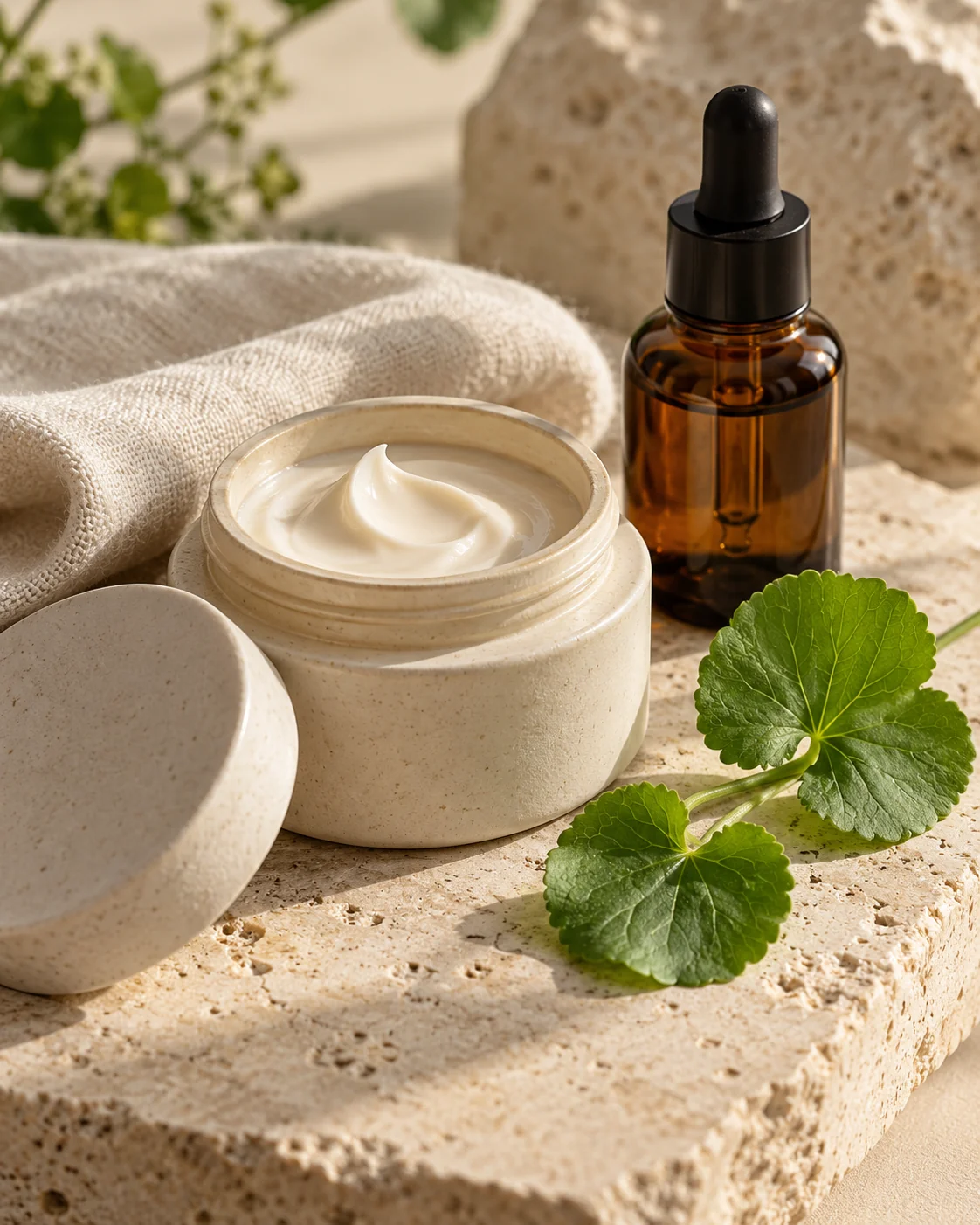
A bottle of botanical oil can turn an ordinary evening into a small ritual. Jojoba or argan oil can leave dry skin feeling softer. Adding an herb is a creative choice, not a guarantee that the finished oil will treat acne, eczema, or aging.
Keep the preparation simple
Choose a reputable, correctly identified, fully dried herb sold for cosmetic use. Avoid fresh flowers, fruit, or anything damp: adding water-containing material creates a different preservation problem. Use a clean, completely dry jar and utensils. Keep the preparation modest and the plant material fully submerged.
For an actual infusion, follow a validated preparation method supplied by a qualified cosmetic formulator or the ingredient supplier. A sunny windowsill for three weeks is not a safety or potency standard; heat and light can also encourage oil deterioration. There is no universal home-infusion shelf life.
Design a bottle with a clear purpose
Decide where you want to use the oil before choosing the botanical. A few drops for the hands after washing is a different project from a face oil used around the eyes. For a first experiment, keep to a small area of intact body skin and one familiar base. A complicated blend makes it harder to work out which ingredient you enjoy—or which one disagrees with you.
The simplest version is already complete
Plain jojoba or argan oil in a clean dispensing bottle can be the whole ritual. Rub a little between your palms and smooth it onto comfortable, intact skin. Start sparingly; you can add more if you like the finish. The pleasure comes partly from the unhurried application, not only from what is suspended in the bottle.
If a particular herb interests you, a commercially prepared cosmetic infusion with a full ingredient list and storage instructions is a more predictable starting point than improvising an extraction. “Infused oil” and “essential oil” mean different things: the former is plant material extracted into a carrier; the latter is a concentrated aromatic ingredient. Do not substitute one for the other in a recipe.
Make the label useful
Write down the botanical name, the carrier, the supplier, and the date. Keep the original packaging or photograph its instructions. An attractive bottle is a pleasure to use, but the practical information should stay with it. Reserve it for its intended cosmetic use rather than moving it into the kitchen or medicine cabinet.
Use with care
Label the ingredients and preparation date, keep the bottle away from light and heat, and make only a small quantity. Straining out plant material does not sterilize an oil. Discard it if it changes smell or appearance; an unchanged appearance cannot prove safety.
Try a little on a small area first and stop for itching or redness. Use only on intact skin, away from the eyes. For reactive skin, a plain, well-tolerated oil may be the loveliest choice of all. A persistent rash or infected-looking patch needs more than a homemade blend.
References & further reading
- Microbiological Safety and Cosmetics — FDA · regulatory safety guidance
- Aromatherapy — FDA · regulatory safety guidance
For education and reflection. Individual needs vary. For persistent symptoms or personal guidance, seek additional care from a qualified clinician or appropriate specialist.