
A gift from Medicine Wild
Seven Plants for a Woman’s Ritual
By Dr. Michele Burklund
There is something intimate about getting to know a plant. The shape of a leaf. The scent that stays on your hands. The stories women have carried around it, and the ways those stories change as they reach us.
This little guide brings together seven plants from Medicine Wild: rose, shatavari, vitex, red clover, mugwort, burdock, and gotu kola. Some invite a kitchen ritual or a moment of reflection. Others belong in a more individual conversation about the body.
At the center is a skincare ritual I use at night: dried gotu kola infused in olive oil. It is one of my little beauty secrets. The pleasure is in making something slowly, warming it between your hands, and allowing a few minutes of care to become part of your evening.
Start with the plant that makes you curious. You do not need seven new supplements. You might need a flower on the table, a better question about your cycle, or a small bottle of oil made with your own hands.

Rose
The Rose Muse
Rosa × damascena
The story
Roses have been cultivated for thousands of years. In Greek mythology they are associated with Aphrodite; Roman wedding customs also gave them a place in celebrations of love. Damask rose has its own aromatic and culinary traditions. The petal, distilled rose water, essential oil, and rosehip seed oil are different preparations.
The symbolism
Love and beauty are documented associations. In this guide, tenderness is the invitation: care that does not have to be earned, and beauty that can belong to an ordinary afternoon.
A small way to begin
Place a rose where you will notice it. If you enjoy rose in food, choose culinary rose water and follow its label; a small amount can perfume fruit or yogurt. Keep cosmetic rose water and essential oils out of the kitchen. Let the sensory experience be enough, without asking the flower to fix how you feel.
A little care. Fragrance can irritate sensitive skin. Do not apply undiluted rose essential oil. A flower ritual is not treatment for anxiety or grief.
Where could I offer myself a little more tenderness today?
Continue in Medicine Wild ↗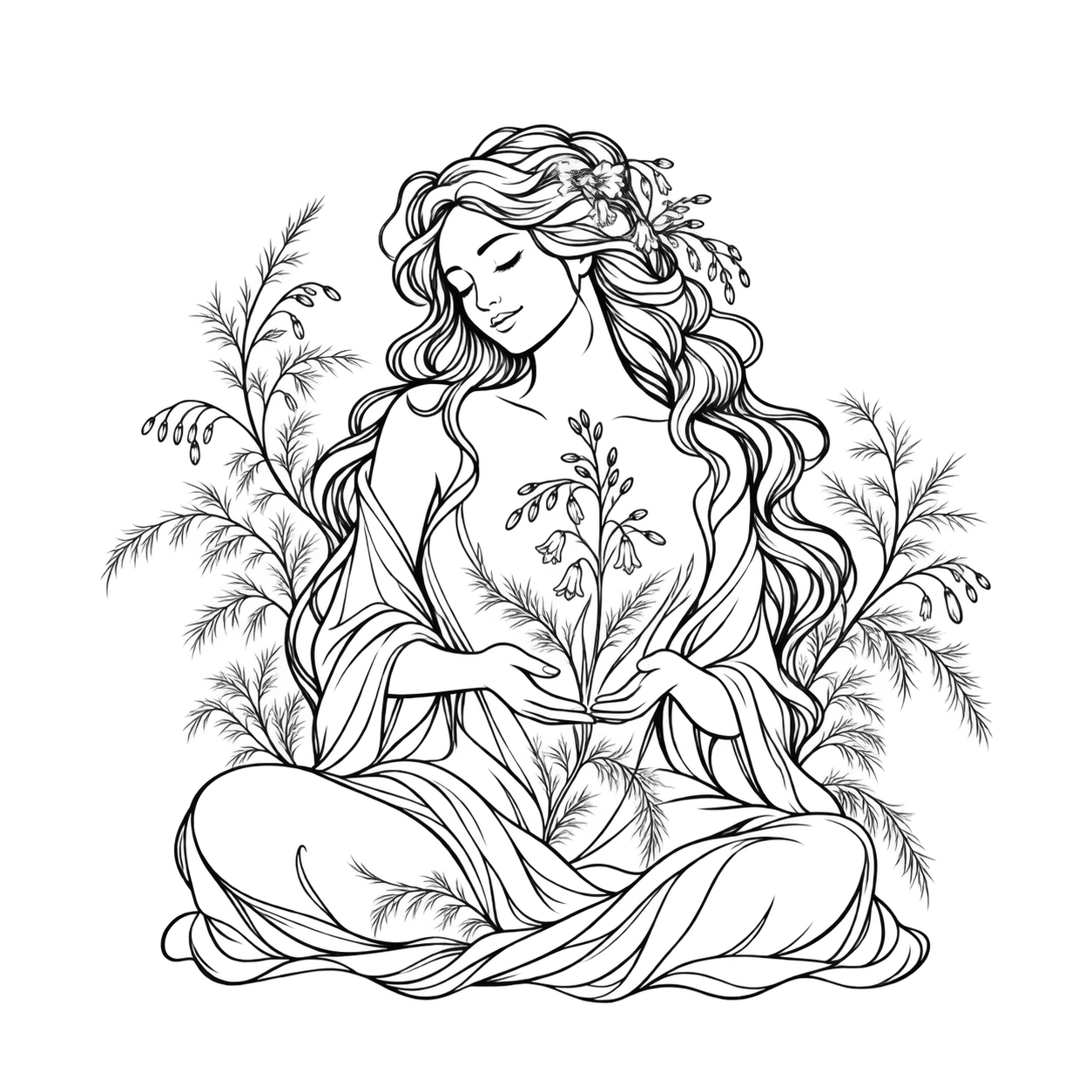
Shatavari
The Nourishing Mother
Asparagus racemosus
The story
Shatavari is an asparagus species whose root has a longstanding place in Ayurvedic women’s health practice. Modern extracts are being studied for menopausal symptoms. That traditional history does not make every root powder or multi-herb formula equivalent to the extract used in a study.
The symbolism
Here, shatavari represents being nourished. This is a contemporary reflection drawn from its traditional context, rather than a claim that every Ayurvedic lineage assigns it one fixed symbolic meaning.
How I bring it into Medicine Wild
I feature Shatavari Complex in my Perimenopause Edit and look closely at the other plants in the formula. The useful starting point is the woman and her experience: dryness, sleep, desire, changing periods, and the care she already receives. Read the plant parts and the complete label before deciding whether a product belongs in that conversation.
A little care. Avoid self-prescribing during pregnancy or breastfeeding. Discuss use with your clinician if you have a hormone-sensitive condition, use hormonal treatment, or have an asparagus allergy. Persistent dryness or painful sex deserves assessment.
What would feeling nourished look like in this season of my life?
Continue in Medicine Wild ↗Gaia Herbs Pro · Shatavari Complex · Randomized shatavari extract trial · 2024
Vitex
The Keeper of Rhythm
Vitex agnus-castus
The story
Also called chaste tree, vitex carries a history shaped by beliefs about sexuality. Its name reflects an association with chastity, including reported use by medieval monks. Today, certain fruit extracts are studied for premenstrual symptoms; the evidence does not justify using it as a general answer to every hormonal concern.
The symbolism
The modern invitation here is self-knowledge. The older story of restraint need not define a woman’s relationship with her body. A recurring pattern can become information she has words for.
Begin with observation
Keep a short cycle record: bleeding days, breast tenderness, mood, headaches, sleep, and anything that changes your daily life. Bring that pattern to a clinician. If you discuss vitex, ask which fruit extract was studied and whether it fits your medicines and circumstances. A product name alone cannot answer that question.
A little care. Vitex is not a proven fertility treatment. Avoid in pregnancy and breastfeeding; seek advice with hormone-sensitive conditions and medicines, including hormonal or dopamine-related treatments.
What is the pattern I have noticed but have not yet described?
Continue in Medicine Wild ↗NCCIH · Chasteberry · Randomized trial of vitex fruit extract
Red clover
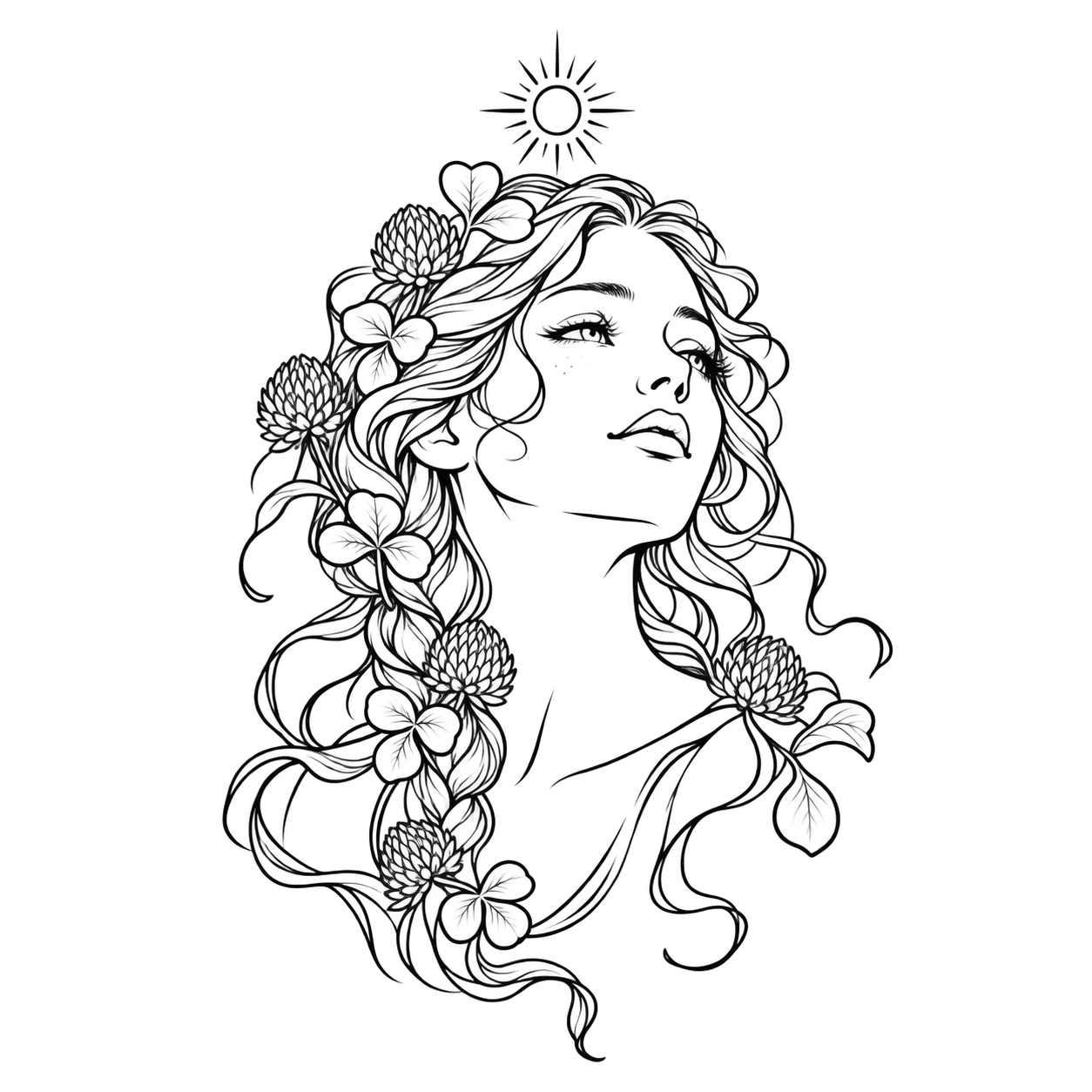
The Meadow Maiden
Trifolium pratense
The story
Red clover is a legume native to parts of Europe, Asia, and northern Africa, now grown more widely. Its isoflavones help explain its place in modern discussions of menopause. Studies of concentrated red-clover preparations for hot flashes have produced inconsistent results.
The symbolism
A meadow changing through the year offers this guide’s theme of transition. This is a present-day reflection, not a claim about a single historical meaning of clover. Red clover should not be confused with every shamrock or four-leaf-clover tradition.
Let the question become clearer
Use red clover as a starting point for learning what phytoestrogens are. A food, a tea, and a standardized extract provide different exposures. Write down the symptom you want help with and what improvement would actually mean to you. That is more useful than collecting products labeled for hormone balance.
A little care. Red-clover supplements may be unsafe during pregnancy or breastfeeding. Discuss concentrated products with a clinician, especially with hormone-sensitive conditions or prescription medicines.
What am I being asked to change, and what would I like to keep?
Continue in Medicine Wild ↗
Mugwort
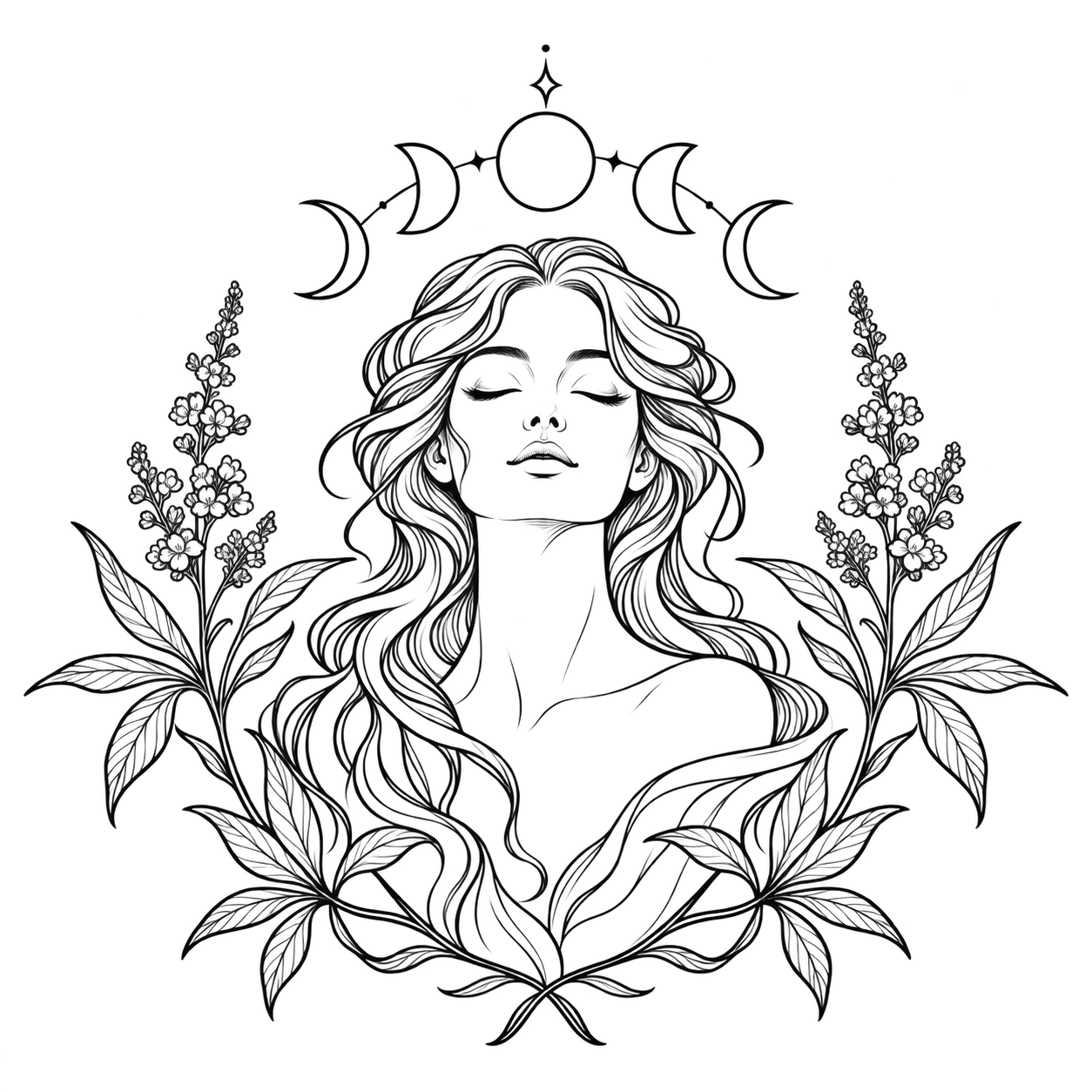
The Moon Dreamer
Artemisia vulgaris
The story
Mugwort appears in European and Asian herbal traditions, including historical uses around digestion and menstruation. The name mother of herbs appears in its medieval story. Dream-related uses are also documented in contemporary herbal practice; they are not evidence that the plant reliably changes sleep or dreams.
The symbolism
Its pale leaf undersides make an evocative companion to evening. In this guide, mugwort is an invitation to imagination and inward attention. That meaning can be explored through art and journaling, without ingesting or burning a plant.
Keep a notebook beside the bed
Draw a mugwort leaf from a botanical reference, or read its story in the plant library. On waking, record an image, feeling, or fragment you remember. No dream needs to become a diagnosis or a prediction. The ritual is simply giving your inner life a little room.
A little care. Do not use mugwort during pregnancy. Human evidence and safety information are limited, including for topical use. This guide does not recommend mugwort tea, smoke, essential oil, or use to bring on a period.
What image or idea keeps asking for my attention?
Continue in Medicine Wild ↗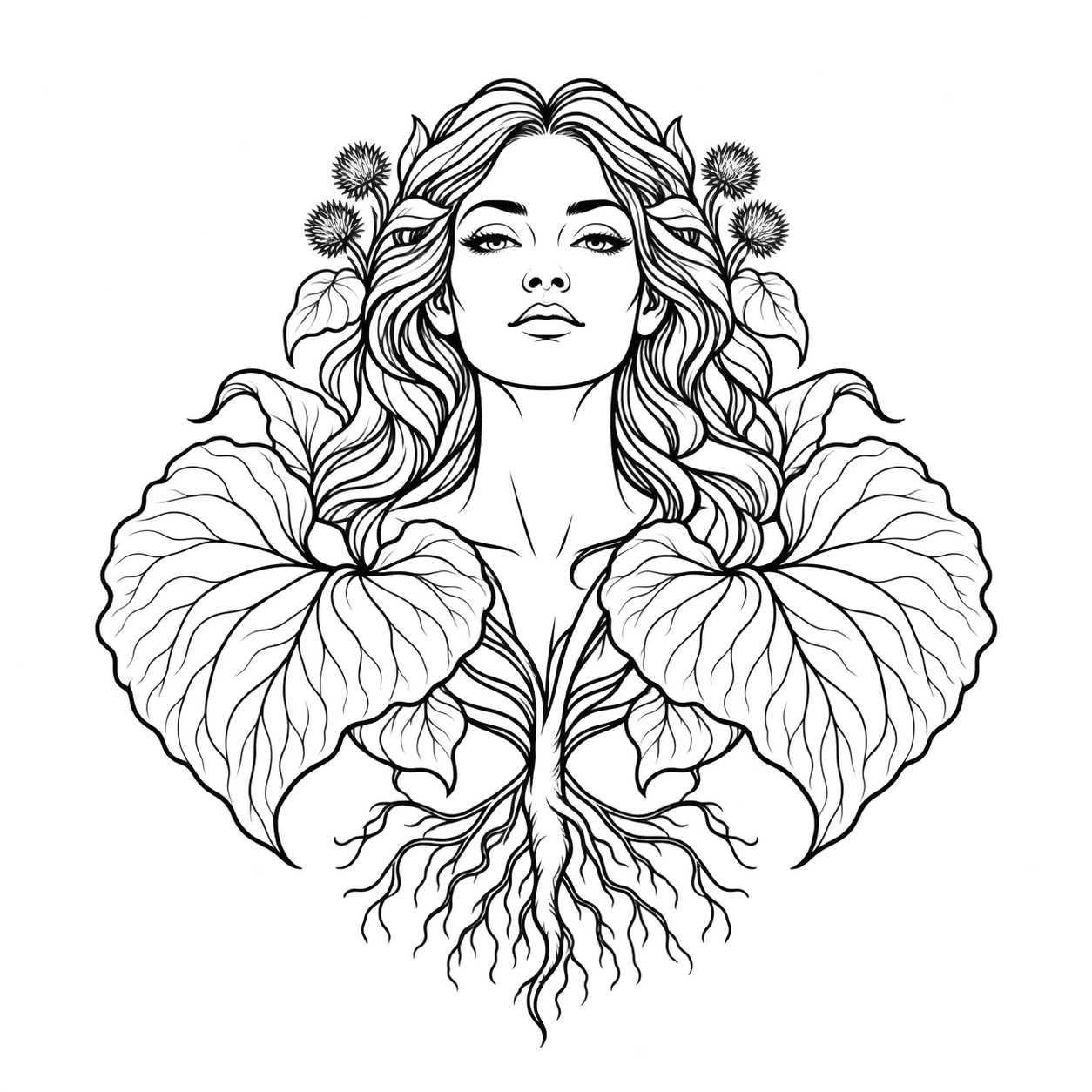
Burdock
The Rooted Guardian
Arctium lappa
The story
Burdock root is known as gobo in Japanese cooking. Western herbal writing has also described it as an alterative, a historical category associated with skin and elimination. That language provides cultural context; it does not establish that a juice cleanses the liver or treats a skin condition.
The symbolism
Grounding is the reflection I draw from a root: attention moving toward the soil, the kitchen, and the everyday act of feeding yourself. This is a personal theme, rather than a universal traditional symbol.
My apple-and-burdock pairing
Apple and burdock root is a juice pairing I love. For kitchen use, buy correctly identified culinary burdock from a reliable food supplier, wash the produce carefully, and use clean equipment. Enjoy freshly prepared juice promptly. Cooked burdock is another way to meet the root and keeps its fiber on the plate.
A little care. Do not forage from a photograph. People who are pregnant, immunocompromised, or otherwise advised to avoid unpasteurized juice should choose a cooked preparation. Seek advice before medicinal amounts, and avoid burdock if you react to it or related daisy-family plants.
What everyday form of nourishment helps me feel rooted?
Continue in Medicine Wild ↗American Botanical Council · Burdock · EMA · Burdock root monograph
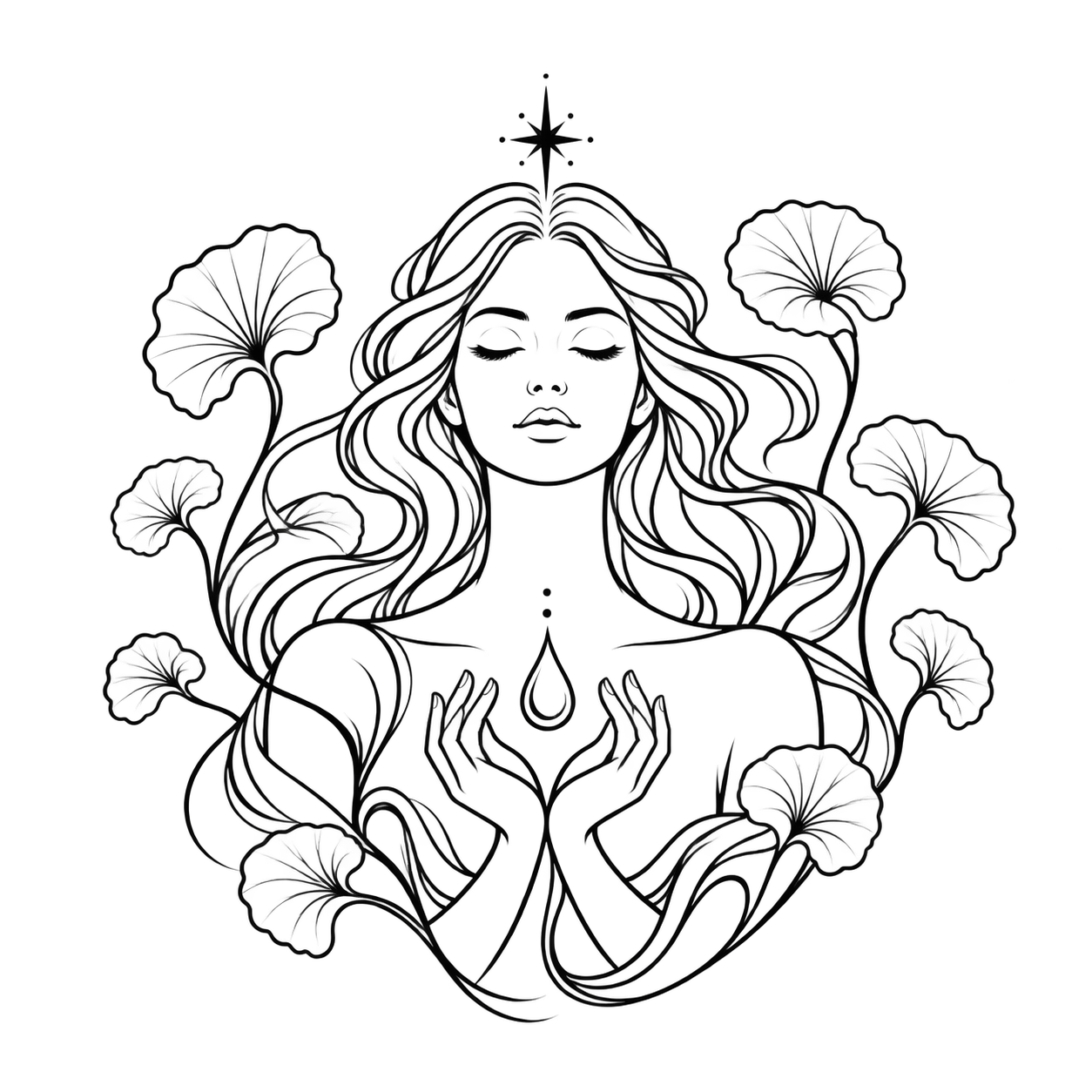
Gotu kola
The Patient Alchemist
Centella asiatica
The story
Gotu kola has a longstanding place in South Asian food and herbal traditions, including associations with longevity and the mind. It is not kola nut and is not a source of caffeine. Gotu kola (Centella asiatica) contains four much-studied triterpenes: asiaticoside, madecassoside, asiatic acid, and madecassic acid. These compounds are central to research on the plant and skin’s collagen.
The symbolism
For this ritual, its meaning is patience: tending to something small and returning to it. That is the spirit of a slow infusion, a preparation that makes room for time.
My nighttime botanical oil
I use dried gotu kola infused in olive oil as a nighttime topical ritual. The following recipe makes a small batch for adult body care. Warm a few drops between your palms, then massage your hands, forearms, or feet. A homemade oil is not standardized to the constituents used in clinical skin studies.
A little care. Keep this preparation external. Test first and stop if your skin reacts.
What is one small practice I could return to with patience?
Continue in Medicine Wild ↗EMA · Centella asiatica · Clinical study of madecassoside plus vitamin C
My nighttime gotu kola oil
Two ingredients. A little patience. A body-care ritual to make your own.
Gather
- 10 g fully dried, correctly identified gotu kola leaf (Centella asiatica)
- 100 mL fresh olive oil, plus extra if needed to cover the leaves
A clean, completely dry 250 mL glass jar and lid, dry spoon, kitchen scale, fine dry muslin, and a dry amber bottle.
Infuse
- Begin completely dry. Wash your jar and utensils and allow them to dry fully. Use dried leaf, not fresh herbs. Keep water, rose water, aloe, and other water-based ingredients out of this oil.
- Cover the leaf. Add the gotu kola and olive oil. Stir gently with a dry spoon to release trapped air. Add oil as needed to cover the herbs by about 2.5 cm / 1 inch, leaving room beneath the rim. These are starting proportions, not a standardized extract.
- Allow 4–6 weeks. Close the jar, label the date, and place it in a cupboard away from direct sun. Gently roll the jar every few days and keep the herbs submerged.
- Strain and settle. Strain through fine, dry muslin into a clean, dry container. Let the oil settle overnight, then decant the clear oil, leaving sediment behind. You will recover less oil than you started with.
- Bottle your ritual. Transfer to a dry amber bottle. Label the ingredients and date; store tightly closed in a cool, dark place. Keep wet fingers and water out of the bottle.
When your oil is ready
Before first use, test a small area of intact inner-arm skin twice daily for 7–10 days. If tolerated, massage a few drops onto intact adult body skin in the evening. Avoid the eyes, broken or inflamed skin, and any area that becomes irritated. Stop for redness, itching, or swelling.
Keep your bottle well
Make a small batch and use within 3 months, or the olive oil’s original expiry date if sooner. This is a conservative use-by, not a tested shelf life. Discard the entire batch if you notice moisture, mold, an unexpected smell, or a change in appearance. Do not taste it to check.
The art of slowing down
Making this oil asks me to slow down. I leave the jar to infuse in a quiet cupboard, then bring the finished oil into my evening ritual, warming a few drops between my hands.
Herbal Academy · Dried-herb oil infusions · American Academy of Dermatology · Testing skincare · Clinical study of olive and sunflower oils and the skin barrier
Keep a little wild
in your everyday.
Continue with the plant library, explore the Goddess Ritual, or browse the Apothecary when you want to look more closely at a product.