Vitex has a clear place in botanical women’s health: the irritability, breast fullness, and other discomforts that can arrive before a period. Particular extracts of Vitex agnus-castus fruit have improved premenstrual symptom scores in clinical trials.
- Cycle support
- PMS research
- Women’s herbal traditions
Work with the pattern
A recurring monthly rhythm gives this botanical conversation its focus. Noticing which symptoms appear, when they begin, and how they change across the cycle helps make the choice personal and purposeful.
Get to know the berry
Vitex is also called chaste tree or chasteberry. Its ripe fruit is prepared as powders, tinctures, and concentrated extracts. The form on the label helps connect the plant’s research with a specific preparation.
From the plant to my apothecary
My selection.
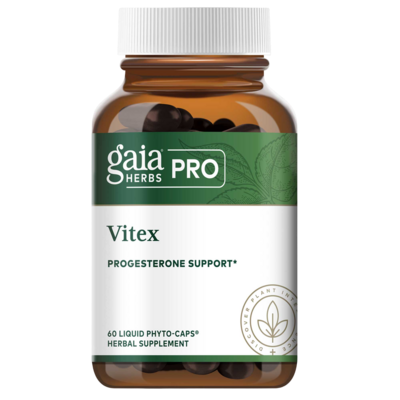
Gaia’s Vitex capsules are my featured preparation of the chaste-tree berry, chosen for its place in premenstrual support. For those who prefer a liquid, the collection also includes a Wise Woman Herbals extract.
Another preparation in my collection
I may earn income from purchases through my Fullscript shop.
Meet the botanical
Vitex agnus-castus L.
- Family
- Lamiaceae
- Parts in focus
- Ripe, dried fruit; specified fruit extracts in clinical research.
Common uses
Traditional and everyday uses, at a glance.
| Common use | Part & preparation |
|---|---|
| Premenstrual symptom care | Specified ripe-fruit extracts |
| Menstrual-cycle care | Individually selected fruit preparations |
A short history
Vitex is also called chaste tree or chasteberry. Its ripe, dried fruit is the material used in many women’s-herbal preparations, from tinctures to concentrated extracts.
Energy & character
A small, aromatic fruit with a bitter, peppery character and a longstanding place in cycle-centered herbal care.
Symbolism
For a personal reflection, vitex can symbolize rhythm: observing a cycle with curiosity and making room for changing needs.
The research & references
What the studies tell us
A three-cycle randomized trial of the Ze 440 fruit extract found greater improvement in premenstrual symptoms than placebo. These results do not establish that all vitex products improve fertility, raise progesterone, or treat menopause. Pregnancy, breastfeeding, hormone-sensitive conditions, and hormone- or dopamine-active medicines require particular care.
Care with this plant.
Avoid during pregnancy and breastfeeding. Seek advice with hormone-sensitive conditions, pituitary disorders, hormonal treatments, or dopamine-active medicines. Possible nausea, headache, menstrual changes, and allergic reactions. Severe mood symptoms or unexplained bleeding warrant assessment.
Research relates to the species, preparation, and people studied. Findings for an ingredient do not establish the effects of the complete featured formula.
Explore the sources
- German Chaste Tree Extract Shows Improvement of PMS Symptoms (HerbalGram 90, ABC-hosted issue PDF)
- Chasteberry: Usefulness and Safety
- Treatment for the premenstrual syndrome with agnus castus fruit extract: prospective, randomised, placebo controlled study
- Agni casti fructus: herbal medicinal product and adopted monograph
About this article & supplement statements
These statements have not been evaluated by the Food and Drug Administration. These products are not intended to diagnose, treat, cure, or prevent any disease.
Medicine Wild offers botanical education from Dr. Michele Burklund’s naturopathic and functional medicine perspective. This article is for informational purposes and does not replace individual medical advice, diagnosis, or treatment. A qualified practitioner can help you choose care suited to your health history.
A little more to know
Questions about vitex.
What is the botanical name of vitex?
Vitex is identified in this monograph as Vitex agnus-castus L.. Its botanical family is Lamiaceae.
Which parts of vitex are used?
Ripe, dried fruit; specified fruit extracts in clinical research.
What does research say about vitex?
Several trials suggest particular Vitex fruit extracts can improve PMS symptoms. A 170-participant, three-cycle trial of Ze 440 reported 50%-symptom-response rates of 52% versus 24% with placebo. Product variability and study limitations preclude broad hormone, fertility, or menopause claims.
What should I know before using vitex?
Avoid during pregnancy and breastfeeding. Seek advice with hormone-sensitive conditions, pituitary disorders, hormonal treatments, or dopamine-active medicines. Possible nausea, headache, menstrual changes, and allergic reactions. Severe mood symptoms or unexplained bleeding warrant assessment.
Where can I read the research on vitex?
These sources are included in the monograph’s reference list.