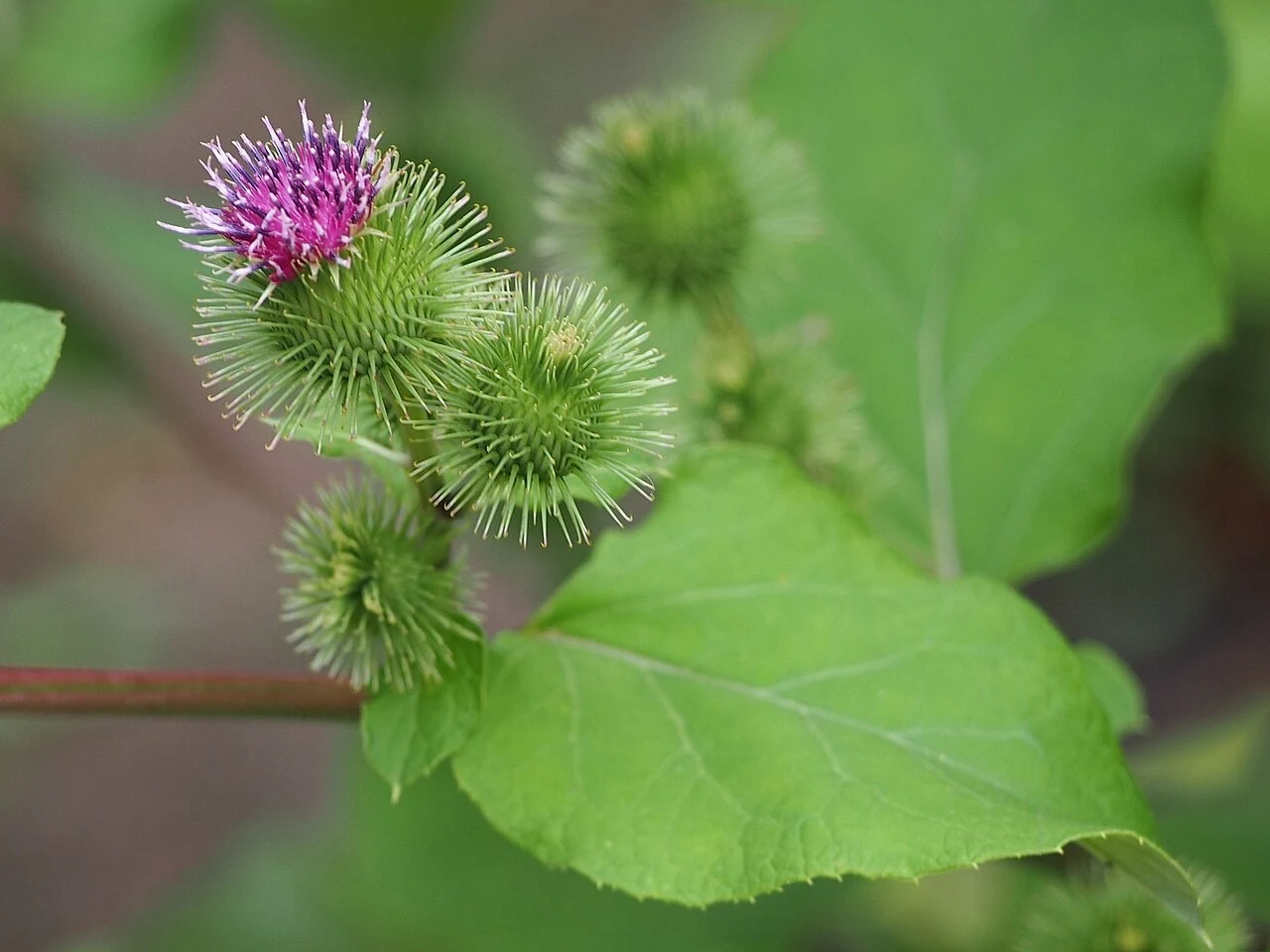
Burdock is a satisfying reminder that food and herbal traditions often share the same roots. Known as gobo in Japanese cooking, Arctium lappa is earthy, gently sweet, and a little bitter. Western herbalists have long included it in digestive and skin-focused formulas.
- Bitter tradition
- Urinary traditions
- Skin traditions
A traditional digestive bitter
Burdock root has a history of use when appetite needs encouragement. Its flavor places it among the gentler bitters, bringing a distinct botanical character to preparations intended for digestive support.
Skin care from a wider perspective
Traditional herbal practice also connects burdock with certain skin concerns. That interest fits naturally into a naturopathic view of skin as part of the whole person, including nourishment, digestion, and daily exposures. Its clinical research remains more limited than its long traditional story.
From the plant to my apothecary
My selection.
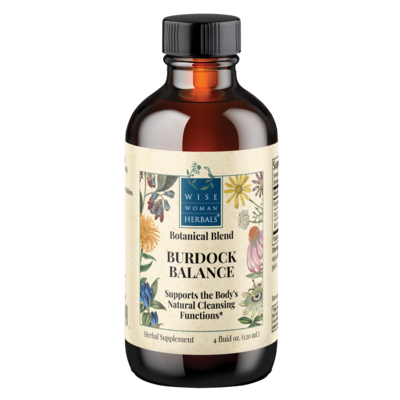
Burdock Balance is the formula I feature in the botanical and skin-focused collections. It places burdock within a blend, reflecting the tradition of considering skin and digestion together.
I may earn income from purchases through my Fullscript shop.
Meet the botanical
Arctium lappa L.
- Family
- Asteraceae
- Parts in focus
- Root as food and in herbal preparations; fruit used in other traditions is distinct
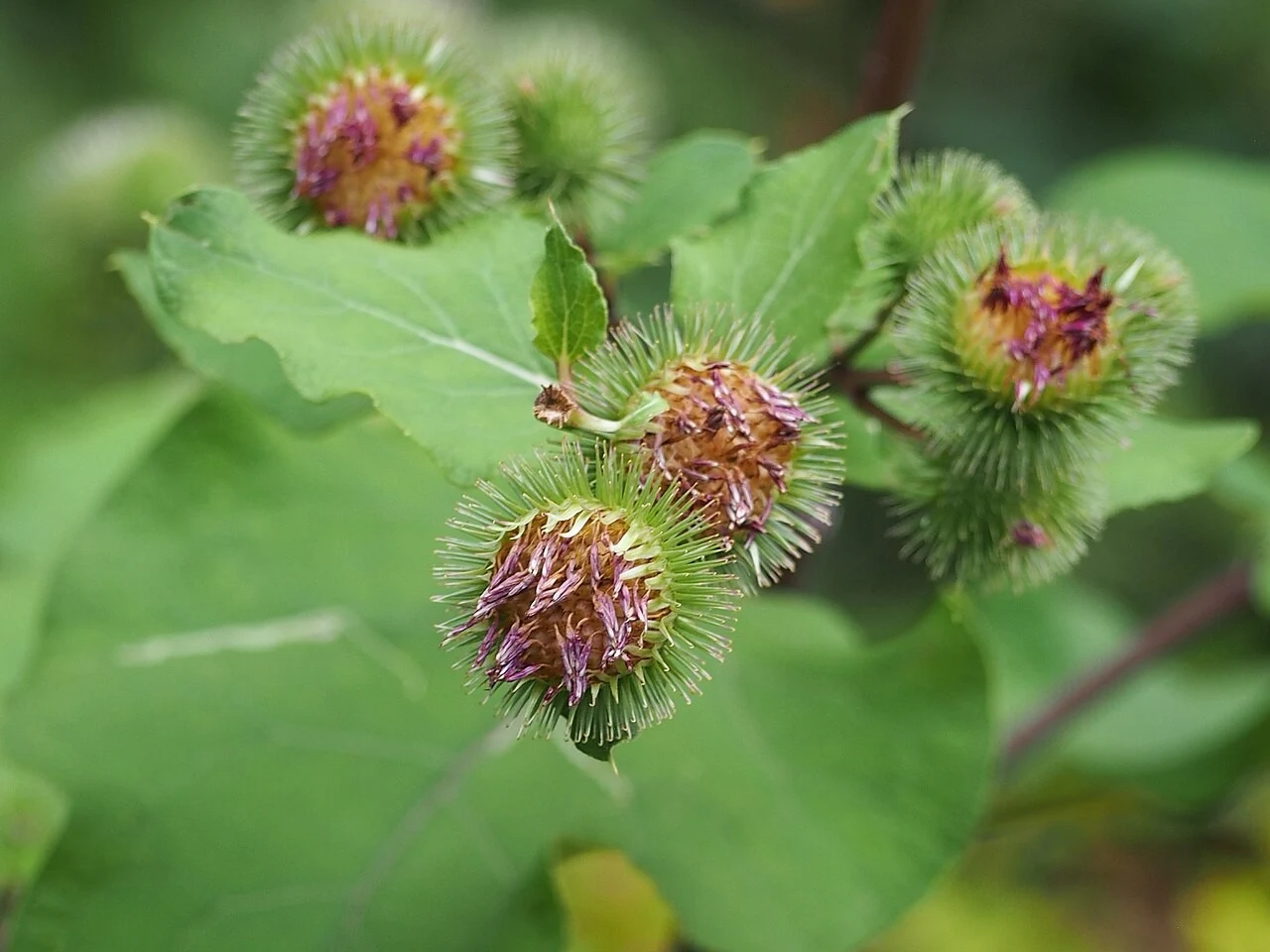
ⓘ Photograph credits
Arctium lappa · Agnieszka Kwiecień, Nova · Original photograph · CC BY-SA 4.0. Resized and converted to WebP; displayed with a crop. No generative edits.
Common uses
Traditional and everyday uses, at a glance.
| Common use | Part & preparation |
|---|---|
| Everyday nourishment | Root prepared as food |
| Appetite & digestive traditions | Bitter root preparations |
| Skin & elimination traditions | Root tea or other identified preparations |
A short history
Burdock bridges the kitchen and the apothecary. Western herbalists traditionally called the root an alterative; East Asian traditions also use the plant, with root and fruit serving distinct roles.
Energy & character
Earthy and grounding, with a gently bitter root taste and the substantial character of a plant grown beneath the soil.
Symbolism
For reflection, burdock suggests rootedness and patient nourishment: the connection between soil, preparation and a shared table.
The research & references
What the studies tell us
The EMA indications are based on traditional use. A small trial of burdock tea measured inflammatory and oxidative-stress markers; it did not establish arthritis symptom relief or systemic detoxification. Food, tea, and concentrated extracts are not interchangeable.
Care with this plant.
Asteraceae allergy and rare serious reactions; medicinal pregnancy/lactation and pediatric use not recommended. Avoid combining urinary-use preparations with diuretics; fluid restriction requires review.
Research relates to the species, preparation, and people studied. Findings for an ingredient do not establish the effects of the complete featured formula.
Explore the sources
About this article & supplement statements
These statements have not been evaluated by the Food and Drug Administration. These products are not intended to diagnose, treat, cure, or prevent any disease.
Medicine Wild offers botanical education from Dr. Michele Burklund’s naturopathic and functional medicine perspective. This article is for informational purposes and does not replace individual medical advice, diagnosis, or treatment. A qualified practitioner can help you choose care suited to your health history.
A little more to know
Questions about burdock.
What is the botanical name of burdock?
Burdock is identified in this monograph as Arctium lappa L.. Its botanical family is Asteraceae.
Which parts of burdock are used?
Root as food and in herbal preparations; fruit used in other traditions is distinct
What does research say about burdock?
Traditional-use indications and a small 42-day biomarker trial do not establish arthritis symptom relief or blood/liver detoxification.
What should I know before using burdock?
Asteraceae allergy and rare serious reactions; medicinal pregnancy/lactation and pediatric use not recommended. Avoid combining urinary-use preparations with diuretics; fluid restriction requires review.
Where can I read the research on burdock?
These sources are included in the monograph’s reference list.