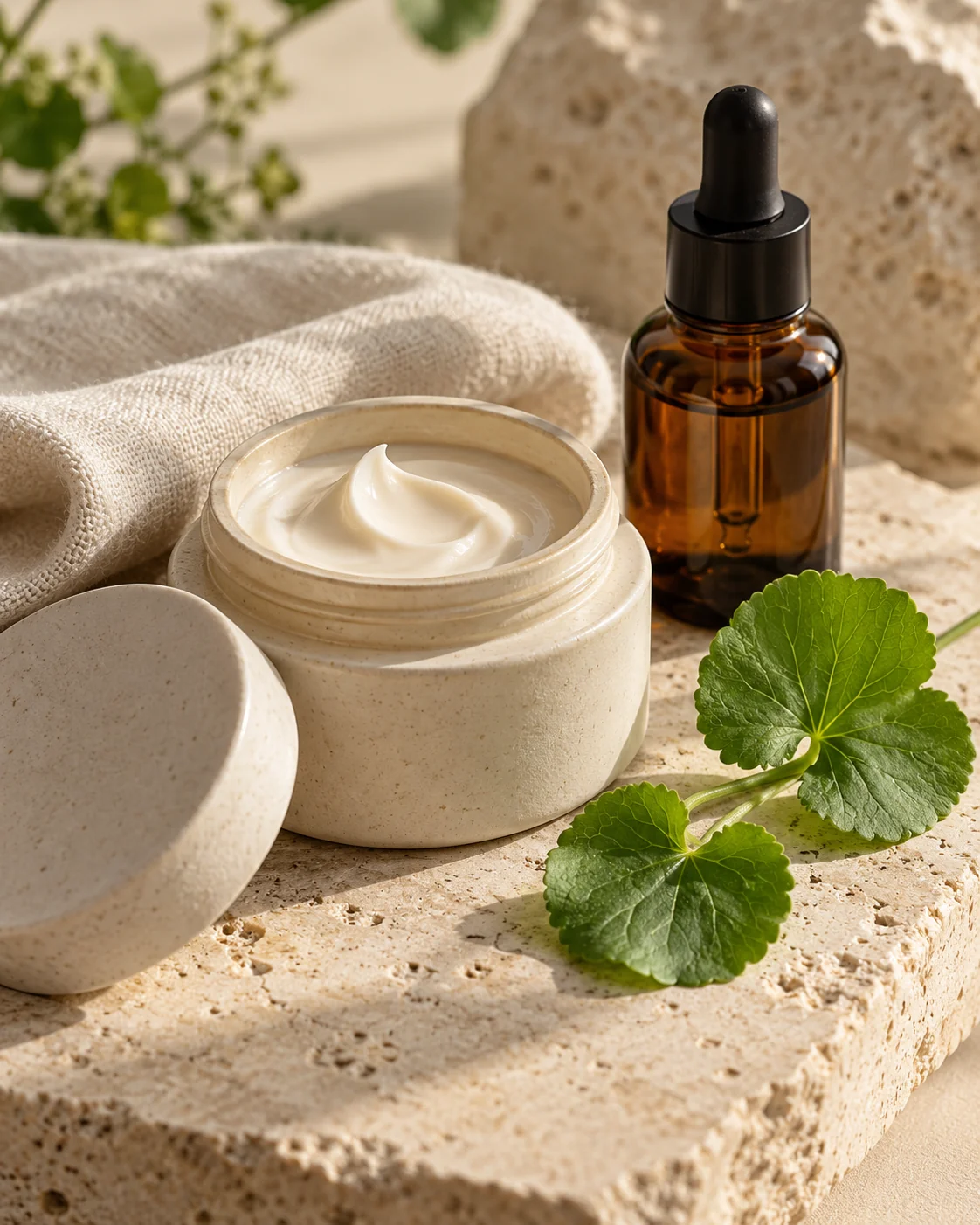
Propolis has an earthy, resinous character that makes it feel closely connected to the landscape. Bees gather plant resins and combine them with other materials to help maintain the hive. The resulting substance varies with geography, season, and the plants available nearby.
A botanical worth understanding
One intriguing variety is Brazilian green propolis, associated with Baccharis dracunculifolia. Its chemistry is interesting, but the number of compounds or patents connected with an ingredient does not tell us whether a facial spray works. Nor is there one universally best grade for every purpose.
Laboratory research has explored antimicrobial and anti-inflammatory effects. Some small human skin studies are encouraging, but formulations matter. A 2018 acne trial studied a cream combining propolis with tea tree oil and aloe. It cannot tell us how much of the result came from propolis, or validate a different spray, concentration, or homemade blend.
Look at the whole formula
If you want to try a propolis cosmetic, choose a clearly labeled product with a full ingredient list. Alcohol, fragrance, and other ingredients can influence how it feels. Introduce one new product at a time and use it on intact skin according to the directions.
Propolis is a recognized contact allergen. A small-area trial can reveal irritation but does not guarantee that a later reaction will not develop. Avoid it if you have a known propolis allergy; be particularly cautious with a history of reactions to bee products. Stop for itching, rash, or swelling.
Introduce it like an ingredient, not an entire routine
Begin by deciding what you want from the product. A light facial mist, a rich cream, and a spot product can feel very different even when propolis appears on every label. Choose the texture for your skin and the rest of the routine, then consider the botanical. An ingredient is only one part of how a product behaves.
A useful label check
- Is the product intended for the face, body, lips, or another specific area?
- Does it list all ingredients and clear application directions?
- Are there fragrances, alcohols, or other ingredients you already know you do not tolerate?
- Is there a storage instruction or use-after-opening period?
Keep your familiar cleanser and moisturizer in place while you try the new addition. Take note of the application date and how your skin feels over time. If you change the serum, cleanser, mask, and supplement at once, it becomes difficult to understand any improvement or irritation.
Understand “green” as a description
Brazilian green propolis is associated with a particular botanical source and chemical profile. The name does not make every product made from it equivalent. Extraction, concentration, and the finished formula all matter. A tincture intended for another purpose should not be repurposed as a facial spray simply because it contains the same resin.
The most interesting beauty result is one you can describe plainly: the product feels comfortable, suits the rest of the routine, and does what its directions reasonably lead you to expect. Keep that experience separate from sweeping promises of cellular renewal.
Keep the goal specific
A comfortable, well-tolerated routine is a better goal than “purifying” skin. Persistent inflammatory acne, painful lesions, scarring, or an oozing rash deserves a closer look. Do not put a cosmetic propolis spray into an open wound or treat an infection with it. For some skin, the nicest botanical addition is one fewer ingredient.
References & further reading
- Treatment of acne with a combination of propolis, tea tree oil, and Aloe vera (2018) · small randomized human combination-product trial
- Changes to propolis and royal jelly in listed medicine applications — TGA (2024) · regulatory allergy safety guidance
For education and reflection. Individual needs vary. For persistent symptoms or personal guidance, seek additional care from a qualified clinician or appropriate specialist.