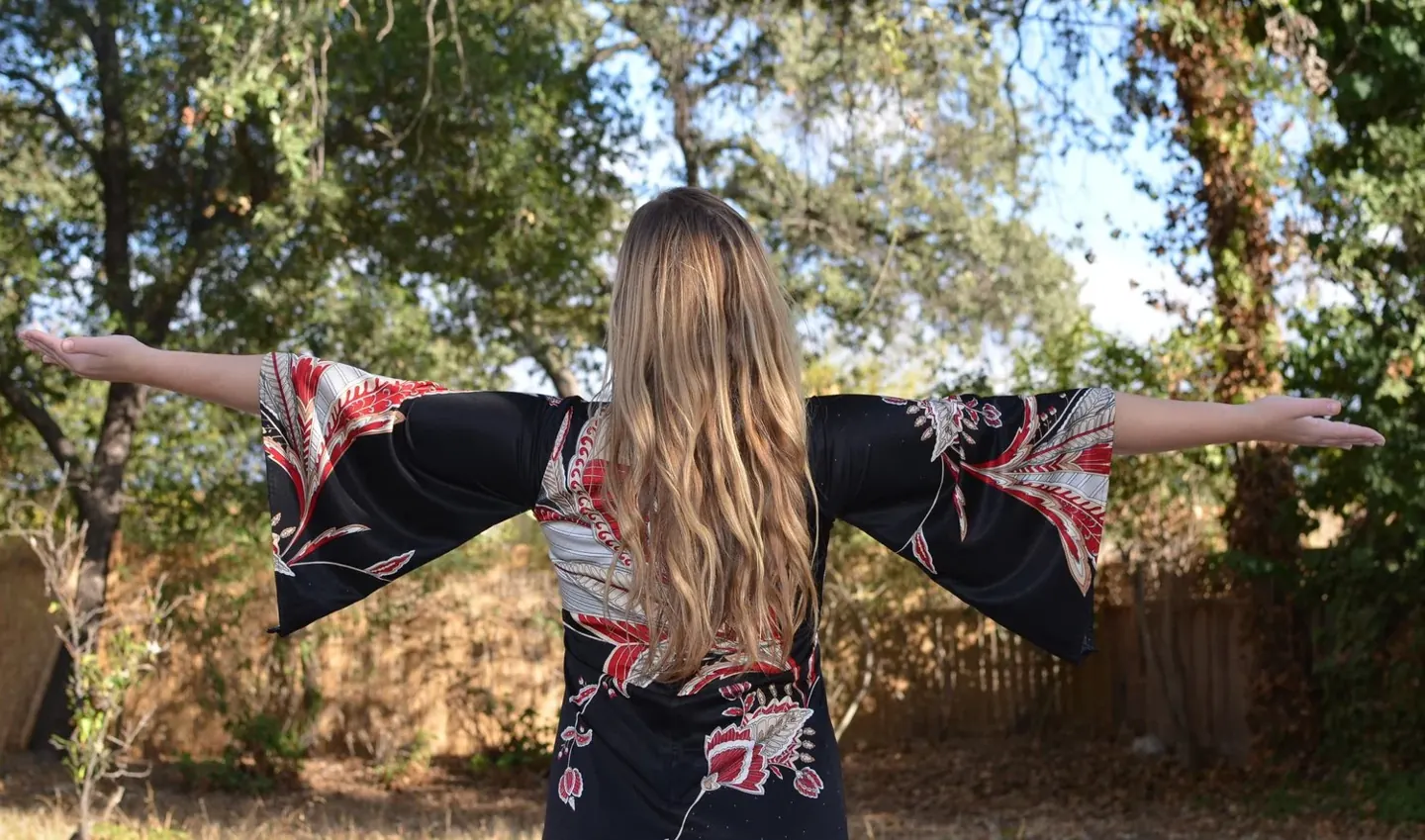
Clear your thoughts. Even for a second. Come back to now.
When I first wrote about meditation, I described how deeply a daily practice had changed my life. I felt clearer, less stressed, and more at peace. That personal experience is still at the heart of this story: the possibility of finding a little space within the life you already have.
An evening walk. The stars. A quiet moment before sleep. Meditation can begin somewhere beautifully ordinary.
Your happy place can be a practice
I love the idea of following your intuition toward a place that makes you feel more present. Perhaps it is the garden, your favorite corner of the sofa, or a familiar path through the trees. Let yourself notice what draws you there: the light, the scent, the feeling of being held by something larger than the day’s demands.
Thoughts will still arrive. You don’t have to empty your mind to belong in this moment. Notice the thought, then gently return to something you can feel or hear.
Five ways to bring meditation into your day
- Look at the sky. Step outside when it is comfortable and safe. Give the clouds, the evening light, or the stars your undivided attention for a minute.
- Let a walk become a listening practice. Notice your footsteps and the sounds around you. Stay aware of the path rather than closing your eyes.
- Make a meal a small ceremony. Put the phone away for the first few bites. Notice the colors, texture, and aroma. Pause for gratitude in whatever form feels natural.
- Choose a word with meaning. I have been drawn to “love” and “abundance.” Your word might be “here,” “soften,” or something entirely your own.
- Return before sleep. Let the day settle without requiring yourself to solve it. Feel the support beneath you. A few unforced breaths can be enough for this evening’s practice.
A little Taoist spaciousness
What draws me to Taoist practice is the invitation to stop forcing every experience. I think of a river finding its way around a stone. For me, this becomes a useful meditation: where could I soften unnecessary effort today?
This is a personal reflection inspired by Taoism, rather than a complete teaching of a lineage. If it opens a door for you, explore the journal’s Energy, Spirit & Ritual collection and learn with an experienced teacher. Spiritual practice has its own depth; it does not need to become another productivity technique.
What the science can tell us
Research on structured mindfulness programs suggests benefits for some people with anxiety and sleep difficulties, although outcomes and study quality vary. A randomized trial involving 276 adults with anxiety disorders studied an eight-week mindfulness-based stress reduction program. It included substantial instruction and practice, so its results cannot simply be transferred to a one-minute pause.1, 2
I find both scales valuable: the discipline of a sustained practice and the small, accessible moment that helps us begin. The science asks what changes can be measured. The personal experience asks what it feels like to be here.
Take one minute with me
Settle somewhere comfortable. Keep your eyes open or soften your gaze. For the first few moments, feel what supports your body. Then notice one sound, one color, and the sensation of an ordinary breath. Let the breath choose its own pace. As the minute ends, ask yourself: What would feel kind to me next?
Try the one-minute film and practice on the homepage ↗
You do not need a laboratory result to earn a moment of stillness. You can begin with the life around you, exactly where you are.
References & further reading
- NCCIH — Meditation and Mindfulness: Effectiveness and Safety · Evidence and botanical safety summary
- Hoge et al. — Mindfulness-Based Stress Reduction vs Escitalopram for the Treatment of Adults With Anxiety Disorders (2023) · Randomized clinical trial; cited for the structured mindfulness intervention
Plant & care notes
If attention to breathing feels uncomfortable, use the room around you as your anchor. Stop if you feel overwhelmed or disconnected. Persistent anxiety, depression, or sleep disruption deserves additional care from an appropriate specialist; meditation can be part of support without having to carry everything.1