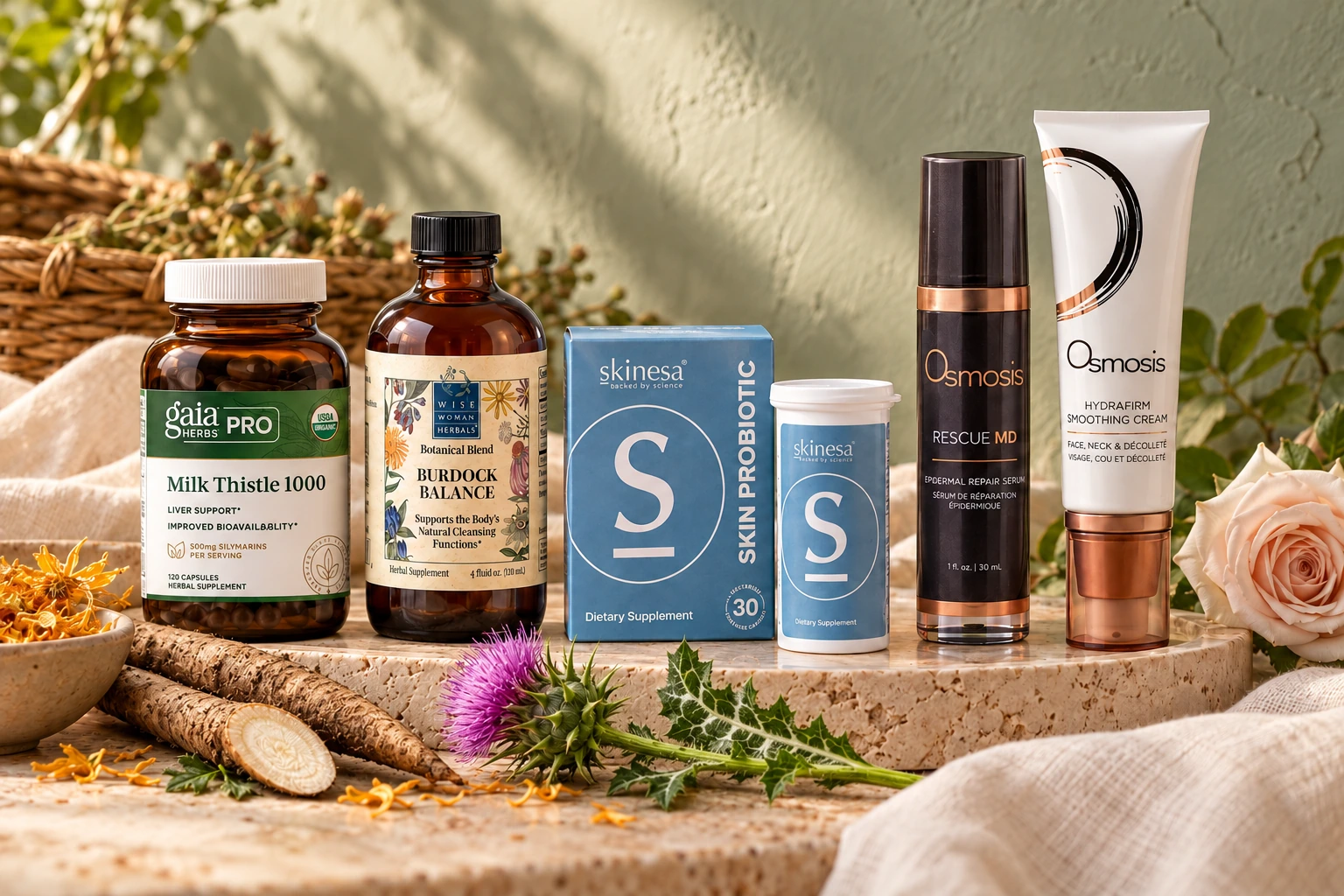
A face is often spoken about as a surface to improve. I prefer to begin with everything happening beneath that description: sensation, protection, connection, and the living communities that make their home on our skin.
The skin microbiome makes beauty more interesting. It invites us to consider the conditions we create with our routines, the complexity behind familiar skin concerns, and the possibility that care can become more attentive and less relentless.
A landscape with many climates
The oily forehead, a dry forearm, and a warm skin fold do not offer microbes the same environment. In a foundational study, researchers sampled 20 skin sites and found that physiologically similar locations tended to host similar bacterial communities. The complexity and stability of those communities depended on the site.
This is a reason to be cautious about universal ideas of a perfect skin microbiome. Location, the person, and the condition being studied all matter. Even the name of an organism may tell only part of the story, because different strains can have different properties.
Researchers studying bacteria collected from healthy skin identified particular strains that produced substances able to inhibit Staphylococcus aureus. Early clinical work then explored selected skin bacteria in people with atopic dermatitis. These are carefully specified research preparations, with questions about safety, persistence, and clinical outcomes. They do not establish that a cosmetic bearing the word probiotic will reproduce the same effects.
Botanical beauty, with its character intact
Rose, calendula, oats, and plant oils each bring a different character to the world of beauty. Their textures, colors, cultivation, preparations, and cultural histories deserve attention. A plant is more interesting when we learn its identity than when we assign it the same vague promise of glowing skin.
Traditional beauty practices also carry human stories: tending a garden, preparing an infusion, passing a recipe between generations, creating a small interval of care at the end of the day. I want to preserve that intimacy. Botanical knowledge includes practical skill and relationship, not simply a list of ingredients.
As a formulator, I also care about the finished preparation. Extraction, concentration, preservation, and the other ingredients change what arrives on the skin. The romance of an ingredient cannot tell us everything about a formula. A beautifully made botanical product can be appreciated for what it actually does without being given an untested claim to rebalance an ecosystem.
The ritual of meeting your own skin
A skincare ritual can be a moment of recognition. There is the warmth of the water, the pressure of fingertips, the feel of a soft towel, and the face looking back at you after a long day. None of that needs to be rushed past in pursuit of the next active ingredient.
I think of touch and attention as part of the soul of self-care. They create room for a different question: what does this skin need from me today? Sometimes the answer may be simplicity. Gentle cleansing with lukewarm water and avoiding abrasive scrubbing are practical ways to reduce irritation; a suitable moisturizer can help dry or itchy skin feel more comfortable.
Botanical does not automatically mean suitable for every complexion. If something stings, burns, or repeatedly leaves the skin uncomfortable, pay attention rather than treating discomfort as evidence that it is working. Persistent or worsening skin symptoms deserve additional care from a dermatologist or another appropriate specialist.
The deeper beauty of a living ecosystem is that it asks for a relationship. We can bring modern research, plant knowledge, inherited ritual, and spiritual attention to that relationship—and allow care to feel both intelligent and deeply human.
Put it into practice
Naturopathic foundations
How can I care for skin as a living ecosystem?
Keep the skin barrier comfortable with gentle cleansing, familiar moisturizer, and sun protection. Introduce one new product at a time and notice the pattern of irritation. Regular nourishment and rest belong alongside what you apply to the surface.
Functional tests to consider
When persistent skin changes travel with cycle changes, fatigue, or metabolic symptoms, the broader pattern can guide testing. The skin examination and product history come first.
HbA1c & fasting glucose
These help evaluate blood-sugar patterns when metabolic risk, increased thirst, frequent urination, or other clinical clues warrant testing. A1c gives a longer view; a fasting glucose is a point-in-time measurement. Anemia and other conditions can affect A1c.
TSH & free T4
Consider these when ongoing fatigue, cold intolerance, constipation, changing weight, or cycle changes suggest a thyroid question. Thyroid antibodies can add context when autoimmune thyroid disease is suspected. Supplements, medications, and timing matter when interpreting results.
A mind–body practice
A kinder moment at the mirror
Set down the magnifying mirror. Apply a familiar moisturizer with a light touch, noticing temperature and texture. Unclench your jaw. Name one thing your body allowed you to do today that has nothing to do with its appearance.
A little more clarity
When are laboratory tests useful for persistent skin changes?
Testing is most useful when there are clues beyond an isolated blemish: changing cycles, unexpected hair growth, fatigue, or other symptoms. Start with the question you want to answer and choose the test accordingly. A new or changing lesion needs a direct skin assessment.
For education and reflection. Individual needs vary. For persistent symptoms or personal guidance, seek additional care from a qualified clinician or appropriate specialist.
References
- Grice et al. Topographical and temporal diversity of the human skin microbiome (2009)
- Nakatsuji et al. Antimicrobials from human skin commensal bacteria protect against Staphylococcus aureus (2017)
- Nakatsuji et al. Development of a human skin commensal microbe for bacteriotherapy of atopic dermatitis: phase 1 trial (2021)
- American Academy of Dermatology: Face washing 101