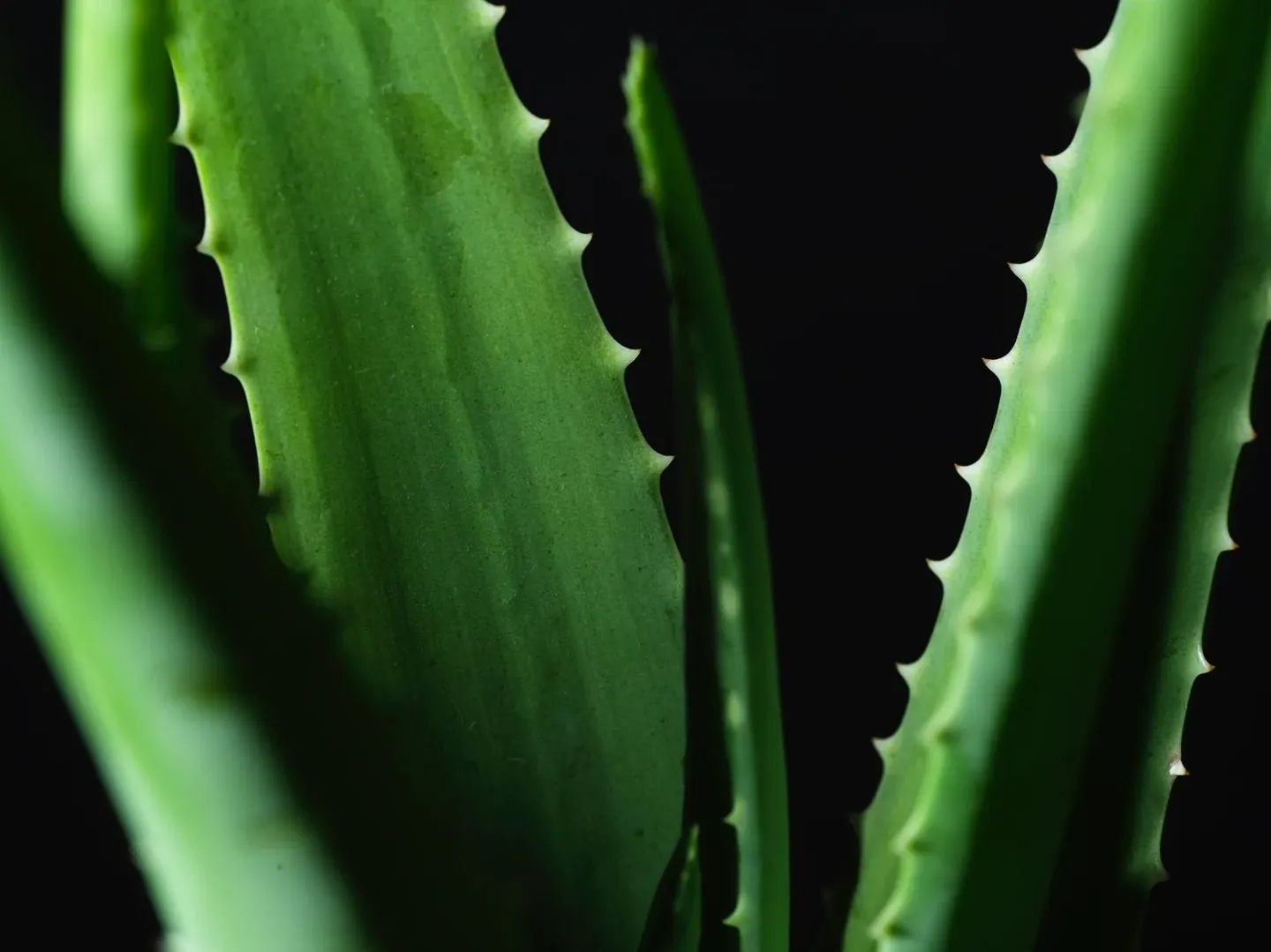
When skin feels dry or uncomfortable, a light, cooling texture can be especially welcome. The clear gel inside an aloe leaf is mostly water, with plant compounds that give it that familiar, slightly slippery feel. It has a long history in topical care for irritated skin.
- Skin traditions
A softer landing for skin
Aloe gel adds lightweight moisture without the richness of an oil. In a well-made cream or gel, it can help skin feel soothed and comfortable. Researchers have also explored specific aloe preparations for burn healing and inflammatory skin conditions.
Keep the formula simple
The inner-leaf gel is the part behind aloe’s skin-care reputation. Look for a finished topical formula whose texture suits your skin; the other ingredients help determine whether it feels cooling, cushioning, or more deeply moisturizing.
Meet the botanical
Aloe vera (L.) Burm.f. (syn. Aloe barbadensis Mill.)
- Family
- Asphodelaceae
- Parts in focus
- Clear inner-leaf gel for topical preparations; yellow leaf latex and whole-leaf extracts are distinct materials.
Common uses
Traditional and everyday uses, at a glance.
| Common use | Part & preparation |
|---|---|
| Skin comfort | Prepared inner-leaf gel, used on intact skin |
| Moisturizing care | Inner-leaf gel in a cream or lotion |
A short history
Aloe’s herbal story includes two very different materials: the soft inner-leaf gel used on skin and the bitter latex once used as a strong laxative.
Energy & character
Cool, slippery and moisture-rich in feel. Its character belongs to gentle surface care.
Symbolism
For reflection, aloe can stand for replenishment: a reminder to offer softness where life has become abrasive.
The research & references
What the studies tell us
Some clinical studies suggest that topical aloe may speed burn healing and reduce related pain. Results depend on the preparation and condition; evidence for one gel does not describe every aloe product. Oral latex and whole-leaf preparations have separate safety concerns.
Care with this plant.
Contact irritation; oral latex can cause diarrhea/electrolyte loss and interact with digoxin; oral products have pregnancy/lactation and liver-safety concerns. No raw-leaf ingestion instructions.
Research relates to the species, preparation, and people studied. Findings for an ingredient do not establish the effects of the complete featured formula.
Explore the sources
About this article & supplement statements
These statements have not been evaluated by the Food and Drug Administration. These products are not intended to diagnose, treat, cure, or prevent any disease.
Medicine Wild offers botanical education from Dr. Michele Burklund’s naturopathic and functional medicine perspective. This article is for informational purposes and does not replace individual medical advice, diagnosis, or treatment. A qualified practitioner can help you choose care suited to your health history.
A little more to know
Questions about aloe.
What is the botanical name of aloe?
Aloe is identified in this monograph as Aloe vera (L.) Burm.f. (syn. Aloe barbadensis Mill.). Its botanical family is Asphodelaceae.
Which parts of aloe are used?
Clear inner-leaf gel for topical preparations; yellow leaf latex and whole-leaf extracts are distinct materials.
What does research say about aloe?
Some topical burn and psoriasis findings are promising; evidence and results vary by formulation. Gel, latex and whole leaf cannot share one efficacy or safety conclusion.
What should I know before using aloe?
Contact irritation; oral latex can cause diarrhea/electrolyte loss and interact with digoxin; oral products have pregnancy/lactation and liver-safety concerns. No raw-leaf ingestion instructions.
Where can I read the research on aloe?
These sources are included in the monograph’s reference list.