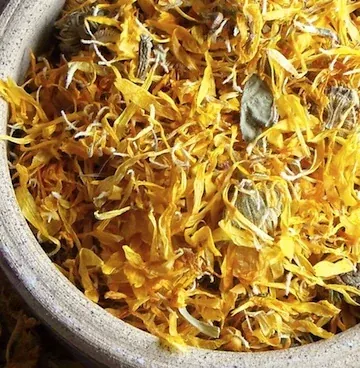
Calendula brings a sunny, practical kind of care to the skin. Its golden-orange flowers are traditionally infused into oils and prepared in creams or ointments for minor irritation and small wounds. The plant is Calendula officinalis, also known as pot marigold.
- Skin traditions
Comfort at the surface
Calendula’s most familiar role is topical: a finished preparation placed where skin needs attention. Its traditional use is recognized in European herbal monographs, and researchers have explored it in several skin-care settings.
Choose the texture you love
An infused oil feels different from a cushiony cream or a richer ointment. The base helps shape the experience as much as the flower. A well-chosen formula makes gentle daily care feel simple and considered.
Meet the botanical
Calendula officinalis L.
- Family
- Asteraceae
- Parts in focus
- Fully opened flower heads and detached ray florets; flower extracts in topical preparations.
Common uses
Traditional and everyday uses, at a glance.
| Common use | Part & preparation |
|---|---|
| Minor skin discomfort | Prepared flower creams, ointments or washes |
| Gentle surface care | Flower preparations for small, superficial irritations |
| Culinary color | Food-grade petals |
A short history
Calendula’s flowers have a long place in European skin-care traditions. Its petals also bring color to food; pot marigold is distinct from the Tagetes plants sold as garden marigolds.
Energy & character
Bright and gently tending in character, with a lightly bitter, resinous flower taste.
Symbolism
As a personal symbol, its gold petals suggest warmth and attentive care: a little sunlight brought into ordinary tending.
The research & references
What the studies tell us
EMA recognizes specified calendula preparations for traditional use in minor skin inflammation and small wounds. Clinical results vary: some specialized studies have been positive, while later trials have not consistently shown an advantage. Homemade preparations are not sterile wound-care products.
Care with this plant.
Asteraceae/contact allergy; no DIY eye, deep-wound or surgical applications; pregnancy/lactation medicinal-use safety is insufficient.
Research relates to the species, preparation, and people studied. Findings for an ingredient do not establish the effects of the complete featured formula.
Explore the sources
About this article & supplement statements
These statements have not been evaluated by the Food and Drug Administration. These products are not intended to diagnose, treat, cure, or prevent any disease.
Medicine Wild offers botanical education from Dr. Michele Burklund’s naturopathic and functional medicine perspective. This article is for informational purposes and does not replace individual medical advice, diagnosis, or treatment. A qualified practitioner can help you choose care suited to your health history.
A little more to know
Questions about calendula.
What is the botanical name of calendula?
Calendula is identified in this monograph as Calendula officinalis L.. Its botanical family is Asteraceae.
Which parts of calendula are used?
Fully opened flower heads and detached ray florets; flower extracts in topical preparations.
What does research say about calendula?
Traditional topical use is recognized by EMA; radiation-dermatitis trials are inconsistent and formulation-specific. No general wound-healing guarantee.
What should I know before using calendula?
Asteraceae/contact allergy; no DIY eye, deep-wound or surgical applications; pregnancy/lactation medicinal-use safety is insufficient.
Where can I read the research on calendula?
These sources are included in the monograph’s reference list.