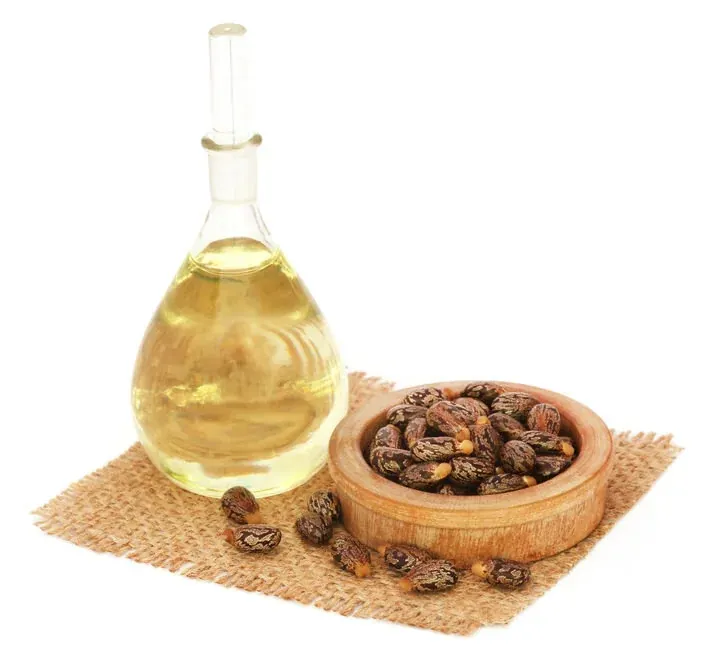
Castor oil is thick, glossy, and wonderfully distinctive. In a finished body-care product, its fatty acids bring softness and slip to the skin. The oil comes from Ricinus communis and has a long place in botanical self-care.
- Skin traditions
A little richness
Its emollient character helps explain why castor oil appears in balms and other skin-softening formulas. The texture is richer than many lightweight oils, making it especially interesting when you want a more cushioned feel.
Make ordinary care feel considered
A slow body-care ritual can be valuable for the attention it brings to your skin and your day. A labeled topical preparation offers the most straightforward introduction to castor oil’s sensory qualities.
Meet the botanical
Ricinus communis L.
- Family
- Euphorbiaceae
- Parts in focus
- Professionally processed seed oil; the seeds themselves are poisonous and are not a home remedy.
Common uses
Traditional and everyday uses, at a glance.
| Common use | Part & preparation |
|---|---|
| Emollient skin care | Prepared cosmetic oil on intact skin |
| Laxative use | Oral medicinal products; a separate, clinician-guided use |
A short history
Castor oil appears in centuries of pharmacy practice. An eighteenth-century pharmacopoeia described its use in a compounded rose-oil preparation, illustrating its longstanding role as a prepared oil.
Energy & character
Thick, glossy and enveloping in texture, with a substantial rather than fleeting feel on the skin.
Symbolism
For a personal ritual, it can represent a pause for the body: care that is quiet, deliberate and free from a demand to perform.
The research & references
What the studies tell us
EMA recognizes appropriately prepared castor oil for short-term laxative use. Research on castor-oil packs is limited and does not establish liver, lymphatic, fertility, or whole-body detoxification benefits. Topical allergy is possible; oral use has substantial contraindications, including pregnancy.
Care with this plant.
Seeds are poisonous; no home extraction or seed ingestion. No oral use in pregnancy/lactation or with obstruction, unexplained abdominal pain, inflammatory bowel disease or dehydration. Topical allergy possible; no eye use or heated overnight packs.
Research relates to the species, preparation, and people studied. Findings for an ingredient do not establish the effects of the complete featured formula.
Explore the sources
About this article & supplement statements
These statements have not been evaluated by the Food and Drug Administration. These products are not intended to diagnose, treat, cure, or prevent any disease.
Medicine Wild offers botanical education from Dr. Michele Burklund’s naturopathic and functional medicine perspective. This article is for informational purposes and does not replace individual medical advice, diagnosis, or treatment. A qualified practitioner can help you choose care suited to your health history.
A little more to know
Questions about castor oil.
What is the botanical name of castor oil?
Castor Oil is identified in this monograph as Ricinus communis L.. Its botanical family is Euphorbiaceae.
Which parts of castor oil are used?
Professionally processed seed oil; the seeds themselves are poisonous and are not a home remedy.
What does research say about castor oil?
Oral short-term laxative use is established for appropriate products. A small uncontrolled pack study does not establish systemic detoxification, lymphatic, reproductive or liver benefits.
What should I know before using castor oil?
Seeds are poisonous; no home extraction or seed ingestion. No oral use in pregnancy/lactation or with obstruction, unexplained abdominal pain, inflammatory bowel disease or dehydration. Topical allergy possible; no eye use or heated overnight packs.
Where can I read the research on castor oil?
These sources are included in the monograph’s reference list.