Echinacea’s purple flowers are a garden favorite; its roots and aerial parts have a long history in herbal care. Today, it is best known in the conversation about seasonal immune support, with several species used in different preparations.
- Immune research & tradition
What makes it interesting
Research suggests that some echinacea preparations may slightly reduce the chance of catching a cold. That modest finding gives its seasonal reputation a clearer focus and makes the species, plant part, and extraction especially useful label details.
Keep the routine grounded
Rest, regular nourishment, and time to recover are the everyday foundations. Echinacea can be explored within that seasonal rhythm, with a preparation chosen for a particular purpose rather than simply because colder weather has arrived.
From the plant to my apothecary
My selection.
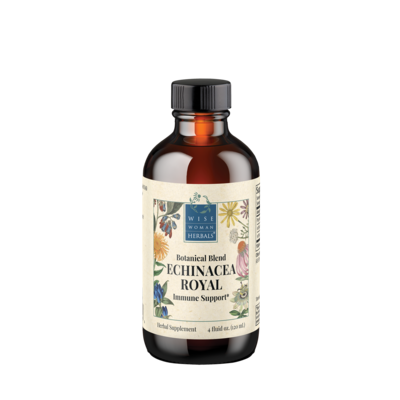
Echinacea Royal is the preparation featured in my seasonal botanical collection. Its label details the species and plant parts, helping connect the familiar flower with the full formula.
I may earn income from purchases through my Fullscript shop.
Meet the botanical
Echinacea purpurea (L.) Moench; E. angustifolia DC.; E. pallida (Nutt.) Nutt.
- Family
- Asteraceae
- Parts in focus
- Root and/or aerial parts, depending on the species and preparation
Common uses
Traditional and everyday uses, at a glance.
| Common use | Part & preparation |
|---|---|
| Seasonal-wellness care | Species-specific root or aerial-part preparations |
| Short-term cold-season use | Identified, preparation-specific products |
A short history
Echinacea’s medicinal history begins with distinct Indigenous North American traditions, before its later adoption in European pharmacy and modern herbal products.
Energy & character
Bracing and distinctive, with some preparations producing a tingling sensation on the tongue.
Symbolism
For a personal reflection, its strong flower form can suggest resilience and attentive care. Respect also means remembering the communities whose knowledge shaped its herbal history.
The research & references
What the studies tell us
Prevention findings vary across products. A large treatment trial did not show a significant reduction in cold duration or severity, and some reviews include manufacturer relationships. Results from one extract should not be applied to every echinacea product; allergic reactions can occur.
Care with this plant.
Allergy, including severe reactions, and gastrointestinal upset are possible; children may develop rash. Review pregnancy, breastfeeding, medicines and immune-targeting treatment. Respiratory red flags require care.
Research relates to the species, preparation, and people studied. Findings for an ingredient do not establish the effects of the complete featured formula.
Explore the sources
About this article & supplement statements
These statements have not been evaluated by the Food and Drug Administration. These products are not intended to diagnose, treat, cure, or prevent any disease.
Medicine Wild offers botanical education from Dr. Michele Burklund’s naturopathic and functional medicine perspective. This article is for informational purposes and does not replace individual medical advice, diagnosis, or treatment. A qualified practitioner can help you choose care suited to your health history.
A little more to know
Questions about echinacea.
What is the botanical name of echinacea?
Echinacea is identified in this monograph as Echinacea purpurea (L.) Moench; E. angustifolia DC.; E. pallida (Nutt.) Nutt.. Its botanical family is Asteraceae.
Which parts of echinacea are used?
Root and/or aerial parts, depending on the species and preparation
What does research say about echinacea?
Some prevention trials and a 2024 meta-analysis suggest fewer respiratory infections, but preparations and study settings vary and manufacturer relationships are relevant. A large 2010 treatment trial did not show significant benefit for cold duration or severity.
What should I know before using echinacea?
Allergy, including severe reactions, and gastrointestinal upset are possible; children may develop rash. Review pregnancy, breastfeeding, medicines and immune-targeting treatment. Respiratory red flags require care.
Where can I read the research on echinacea?
These sources are included in the monograph’s reference list.