Gentian is unapologetically bitter. The root of Gentiana lutea has long been used in European herbal medicine for temporary loss of appetite and mild indigestion. It offers a clear introduction to one of herbalism’s most familiar ideas: digestive bitters.
- Bitter tradition
A taste with a purpose
In the bitter tradition, flavor is part of the experience. Gentian often appears in formulas chosen around appetite or a meal that leaves you feeling overly full. Its strong character gives a little botanical context to the preparation.
Know the root
A single-root extract and a blended bitter formula each have their own personality. Seeing Gentiana lutea and the root identified on the label helps connect the product to the tradition you are exploring.
Meet the botanical
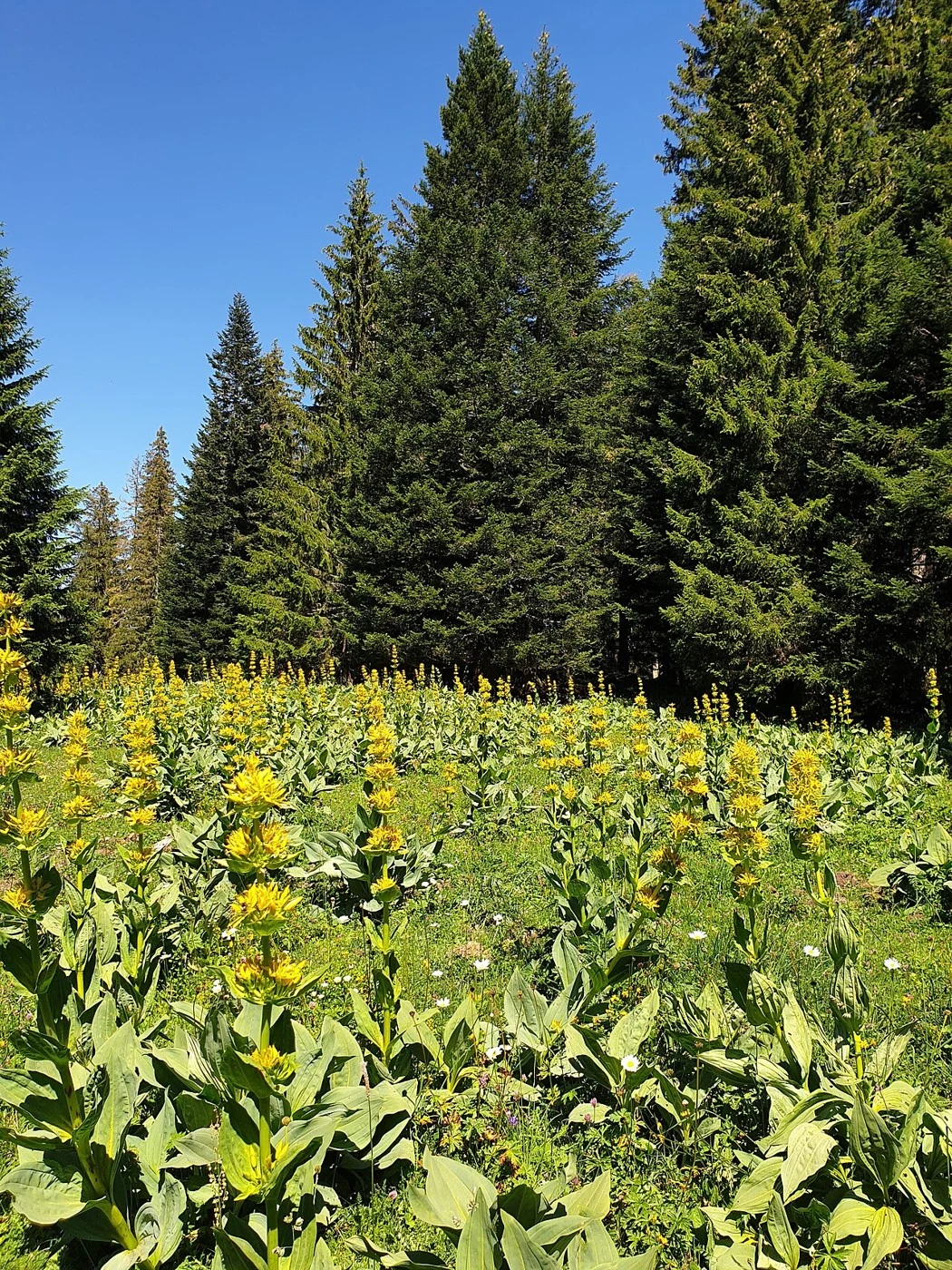
Gentiana lutea L.
- Family
- Gentianaceae
- Parts in focus
- Dried root and rhizome; defined teas and extracts
ⓘ Photograph credits
Gentiana lutea · CorinneJL · Original photograph · CC BY-SA 4.0. Resized and converted to WebP; displayed with a crop. No generative edits.
Common uses
Traditional and everyday uses, at a glance.
| Common use | Part & preparation |
|---|---|
| Temporary loss of appetite | Specified root preparations |
| Mild digestive discomfort | Bitter root products |
A short history
Gentian is a classic European bitter. Its intensely flavored root has traditionally been used around appetite and digestion, with taste central to its herbal identity.
Energy & character
Strongly bitter and bracing, drawing attention back to the palate and the beginning of a meal.
Symbolism
For reflection, gentian can represent an honest taste for life: allowing complexity, including what is not sweet.
The research & references
What the studies tell us
EMA recognizes traditional use for temporary appetite loss and mild indigestion. An uncontrolled observational study cannot establish efficacy on its own; persistent appetite changes or unexplained weight loss need assessment.
Care with this plant.
Avoid with allergy or peptic ulcer; medicinal use not recommended for children or pregnancy/lactation. Interactions insufficiently studied; persistent appetite loss or weight loss requires assessment.
Research relates to the species, preparation, and people studied. Findings for an ingredient do not establish the effects of the complete featured formula.
Explore the sources
About this article & supplement statements
These statements have not been evaluated by the Food and Drug Administration. These products are not intended to diagnose, treat, cure, or prevent any disease.
Medicine Wild offers botanical education from Dr. Michele Burklund’s naturopathic and functional medicine perspective. This article is for informational purposes and does not replace individual medical advice, diagnosis, or treatment. A qualified practitioner can help you choose care suited to your health history.
A little more to know
Questions about gentian.
What is the botanical name of gentian?
Gentian is identified in this monograph as Gentiana lutea L.. Its botanical family is Gentianaceae.
Which parts of gentian are used?
Dried root and rhizome; defined teas and extracts
What does research say about gentian?
Traditional-use indication for temporary appetite loss and mild dyspepsia; observational evidence cannot establish efficacy. The 2025 review was consulted without implying new clinical proof.
What should I know before using gentian?
Avoid with allergy or peptic ulcer; medicinal use not recommended for children or pregnancy/lactation. Interactions insufficiently studied; persistent appetite loss or weight loss requires assessment.
Where can I read the research on gentian?
These sources are included in the monograph’s reference list.