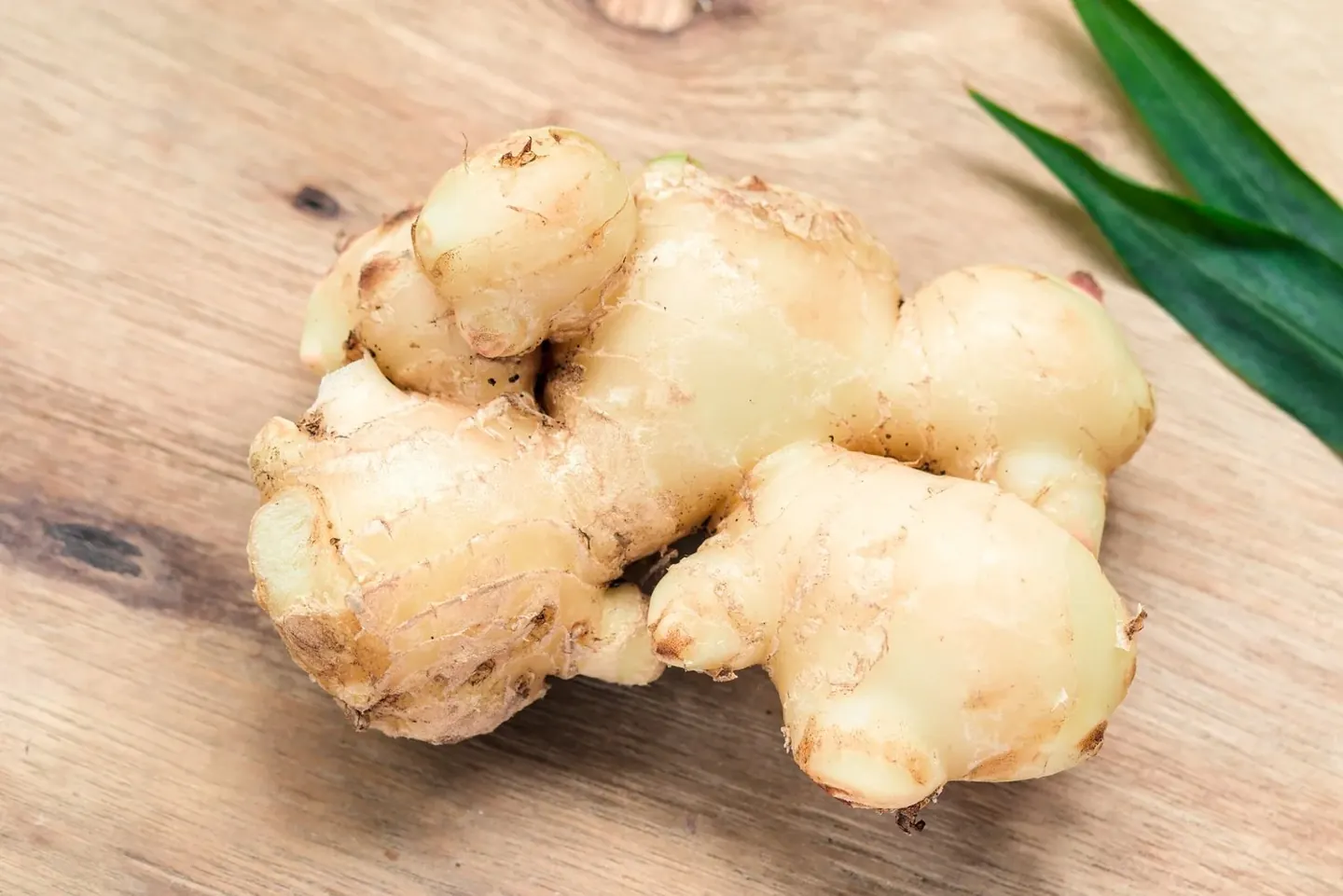
Ginger is a kitchen ingredient with a particularly useful herbal story. Specific oral preparations may help with nausea in some settings. The familiar knobbly piece is the rhizome of Zingiber officinale—an underground stem with a warm, lively flavor.
- Digestive tradition
Comfort when you feel queasy
Nausea is one of ginger’s best-studied uses, including research into pregnancy-related nausea under individual guidance. Its long digestive tradition also helps explain why so many people associate ginger with a more settled feeling.
Find the form that fits
Fresh slices bring fragrance to food; a prepared tea creates a warming pause. Powders and extracts offer more concentrated forms. Each gives a different experience of the same plant, with the clinical research following specific preparations.
Meet the botanical
Zingiber officinale Roscoe
- Family
- Zingiberaceae
- Parts in focus
- Rhizome, fresh or dried; standardized rhizome extracts
Common uses
Traditional and everyday uses, at a glance.
| Common use | Part & preparation |
|---|---|
| Food & warming drinks | Fresh or dried rhizome |
| Nausea care | Specified ginger preparations |
| Digestive comfort | Culinary ginger or a prepared infusion |
A short history
Ginger has long belonged to Asian food and healing traditions. Its pungent rhizome became a familiar companion to meals and unsettled stomachs.
Energy & character
Bright, peppery and warming, with a lemony aroma in the freshly cut rhizome.
Symbolism
For a personal ritual, ginger can stand for welcome and warmth: the feeling of being offered something prepared with care.
The research & references
What the studies tell us
NCCIH finds the clearest nausea evidence in pregnancy-related symptoms, largely from supplement studies. Evidence for motion sickness, postoperative nausea, and use alongside chemotherapy is less consistent; tea is not equivalent to a studied extract.
Care with this plant.
Possible heartburn, diarrhea, and irritation. Review concentrated products with medicines, including anticoagulants; pregnancy use should be individualized. Persistent vomiting or dehydration requires assessment.
Research relates to the species, preparation, and people studied. Findings for an ingredient do not establish the effects of the complete featured formula.
Explore the sources
About this article & supplement statements
These statements have not been evaluated by the Food and Drug Administration. These products are not intended to diagnose, treat, cure, or prevent any disease.
Medicine Wild offers botanical education from Dr. Michele Burklund’s naturopathic and functional medicine perspective. This article is for informational purposes and does not replace individual medical advice, diagnosis, or treatment. A qualified practitioner can help you choose care suited to your health history.
A little more to know
Questions about ginger.
What is the botanical name of ginger?
Ginger is identified in this monograph as Zingiber officinale Roscoe. Its botanical family is Zingiberaceae.
Which parts of ginger are used?
Rhizome, fresh or dried; standardized rhizome extracts
What does research say about ginger?
Human evidence is most useful for certain nausea settings; pregnancy and chemotherapy trials studied specific oral preparations. No equivalence to a homemade tea is assumed.
What should I know before using ginger?
Possible heartburn, diarrhea, and irritation. Review concentrated products with medicines, including anticoagulants; pregnancy use should be individualized. Persistent vomiting or dehydration requires assessment.
Where can I read the research on ginger?
These sources are included in the monograph’s reference list.