Green tea offers an easy meeting of pleasure and plant chemistry. Camellia sinensis leaves contain catechins, including EGCG, as well as naturally occurring caffeine. The familiar cup brings flavor, warmth, and a reason to pause.
- Circulatory research
The heart-health connection
Research on green-tea preparations has found small reductions in total and LDL cholesterol. The findings add interest to a plant already deeply rooted in everyday food culture, with the details collected in the research below.
Choose the experience
Brewed leaves, powdered tea, and concentrated extracts contain different amounts of caffeine and other compounds. Enjoying a cup can be as simple as finding a flavor and time of day that feel right for you.
From the plant to my apothecary
My selection.
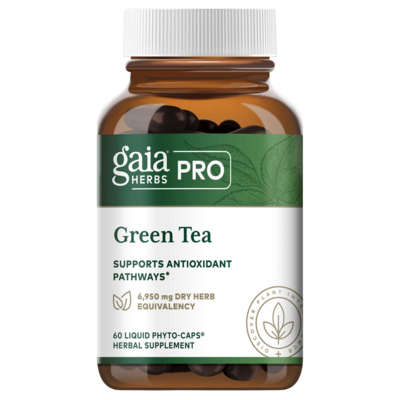
This selection brings green tea into a concentrated capsule preparation. It offers a different way to explore the leaf’s compounds, with the amount and full formula described on the label.
I may earn income from purchases through my Fullscript shop.
Meet the botanical
Camellia sinensis (L.) Kuntze
- Family
- Theaceae
- Parts in focus
- Leaves and leaf buds, processed to limit oxidation; infusion, powdered leaf, and concentrated extracts are distinct.
Common uses
Traditional and everyday uses, at a glance.
| Common use | Part & preparation |
|---|---|
| Everyday beverage | Brewed tea leaves |
| Food & tea traditions | Matcha and other culinary preparations |
| Alertness | Caffeinated tea; strength varies |
A short history
Green tea belongs to enduring East Asian food and tea cultures. Brewing leaves, consuming powdered matcha and taking a concentrated extract are distinct practices.
Energy & character
Fresh, grassy and astringent, with a drying finish that changes with the leaf and the brew.
Symbolism
A personal tea ritual can symbolize presence and hospitality: making space for the cup, the guest, or a few undivided moments.
The research & references
What the studies tell us
Most cholesterol trials evaluated extracts rather than brewed tea. Findings do not prove prevention of cardiovascular disease. Concentrated extracts have a different safety profile from the beverage, including rare reports of serious liver injury.
Care with this plant.
Caffeine timing and individual tolerance matter. Concentrated extracts can cause rare serious liver injury and may interact with medicines. Jaundice or dark urine after a supplement requires prompt assessment.
Research relates to the species, preparation, and people studied. Findings for an ingredient do not establish the effects of the complete featured formula.
Explore the sources
About this article & supplement statements
These statements have not been evaluated by the Food and Drug Administration. These products are not intended to diagnose, treat, cure, or prevent any disease.
Medicine Wild offers botanical education from Dr. Michele Burklund’s naturopathic and functional medicine perspective. This article is for informational purposes and does not replace individual medical advice, diagnosis, or treatment. A qualified practitioner can help you choose care suited to your health history.
A little more to know
Questions about green tea.
What is the botanical name of green tea?
Green Tea is identified in this monograph as Camellia sinensis (L.) Kuntze. Its botanical family is Theaceae.
Which parts of green tea are used?
Leaves and leaf buds, processed to limit oxidation; infusion, powdered leaf, and concentrated extracts are distinct.
What does research say about green tea?
Observational cardiovascular associations and modest trial biomarker findings do not prove disease prevention. Brewed tea, powdered leaf, and concentrated extracts are explicitly distinguished.
What should I know before using green tea?
Caffeine timing and individual tolerance matter. Concentrated extracts can cause rare serious liver injury and may interact with medicines. Jaundice or dark urine after a supplement requires prompt assessment.
Where can I read the research on green tea?
These sources are included in the monograph’s reference list.