Hawthorn has long held a special place in European herbal traditions surrounding the heart. Its leaves and flowers have also been used for mild stress and sleep support. It is a plant whose cultural story brings tenderness and resilience together.
- Circulatory research
- Nervine tradition
The quieter side of heart care
Traditional use includes temporary heart sensations associated with nervousness after serious causes have been excluded. That context gives hawthorn a particular role: an individualized botanical conversation about both physical comfort and the experience of stress.
Know the part you’re choosing
Berry, leaf, and flower are different herbal materials. A preparation may include one or several, and that detail helps explain its intended use. Hawthorn’s blossom and protective thorns add their own beautiful symbolism to the story.
From the plant to my apothecary
My selection.
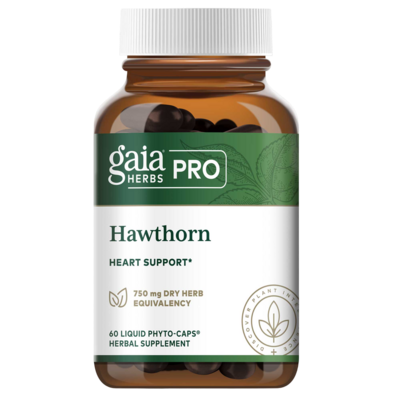
Hawthorn’s long connection to heart care is the reason for its place in this collection. The featured capsules sit alongside a solid extract, each offering its own preparation of this beloved botanical.
Another preparation in my collection
I may earn income from purchases through my Fullscript shop.
Meet the botanical
Crataegus monogyna Jacq.; Crataegus laevigata (Poir.) DC. and their hybrids
- Family
- Rosaceae
- Parts in focus
- Leaves with flowers for many researched extracts; fruit is a distinct traditional and culinary material
Common uses
Traditional and everyday uses, at a glance.
| Common use | Part & preparation |
|---|---|
| Heart-centered herbal care | Specified leaf-and-flower preparations |
| Food traditions | Identified edible haws in prepared foods |
| Nervous-heart traditions | Clinician-selected herbal preparations |
A short history
Hawthorn has a longstanding European heart-remedy tradition, with wider medicinal popularity developing in the late nineteenth century. Its name May tree recalls its seasonal flowers.
Energy & character
Gently astringent and heart-centered in traditional language, with fruit and flowering tops contributing different qualities.
Symbolism
For a personal reflection, its thorns and blossoms can suggest tender boundaries: protection that still leaves room for warmth and connection.
The research & references
What the studies tell us
EMA’s nervous-heart, stress, and sleep indications are traditional-use assessments. The large SPICE trial of a defined extract did not significantly improve its primary cardiac outcome; hawthorn is not a replacement for heart treatment.
Care with this plant.
Medication review is essential with cardiac and blood-pressure treatment; dizziness and digestive upset are possible. Avoid unverified tejocote/root weight-loss products. New or severe cardiac symptoms require assessment, not self-treatment. Pregnancy and breastfeeding safety is insufficiently established.
Research relates to the species, preparation, and people studied. Findings for an ingredient do not establish the effects of the complete featured formula.
Explore the sources
About this article & supplement statements
These statements have not been evaluated by the Food and Drug Administration. These products are not intended to diagnose, treat, cure, or prevent any disease.
Medicine Wild offers botanical education from Dr. Michele Burklund’s naturopathic and functional medicine perspective. This article is for informational purposes and does not replace individual medical advice, diagnosis, or treatment. A qualified practitioner can help you choose care suited to your health history.
A little more to know
Questions about hawthorn.
What is the botanical name of hawthorn?
Hawthorn is identified in this monograph as Crataegus monogyna Jacq.; Crataegus laevigata (Poir.) DC. and their hybrids. Its botanical family is Rosaceae.
Which parts of hawthorn are used?
Leaves with flowers for many researched extracts; fruit is a distinct traditional and culinary material
What does research say about hawthorn?
Hawthorn's traditional nervous-heart role and contemporary symbolism are distinct from clinical outcomes. The 2,681-person SPICE trial of WS 1442 added to heart-failure treatment did not significantly improve its primary cardiac endpoint.
What should I know before using hawthorn?
Medication review is essential with cardiac and blood-pressure treatment; dizziness and digestive upset are possible. Avoid unverified tejocote/root weight-loss products. New or severe cardiac symptoms require assessment, not self-treatment. Pregnancy and breastfeeding safety is insufficiently established.
Where can I read the research on hawthorn?
These sources are included in the monograph’s reference list.