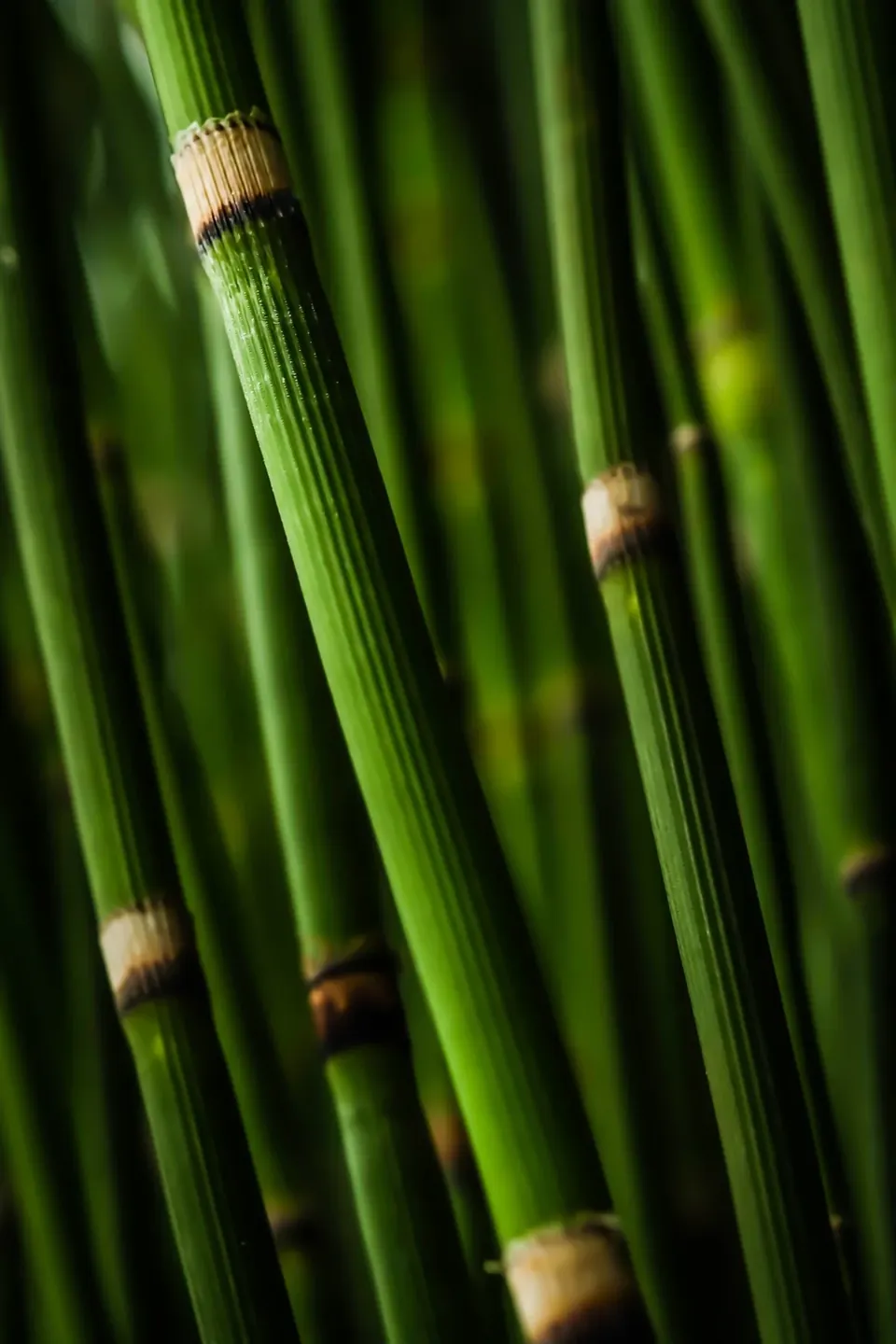
Horsetail’s slender, jointed stems are instantly recognizable. The green aerial parts of Equisetum arvense have traditionally been used to increase urine flow in the context of minor urinary complaints. A small study also found a short-term diuretic effect with a particular extract.
- Urinary traditions
- Skin traditions
A focused traditional use
Its herbal role centers on urinary flow. That makes horsetail a more specific consideration than a general daily tonic, with the preparation matched to an individual purpose.
The silica connection
Horsetail contains silica and appears in some hair, skin, and nail formulas. That composition explains part of its appeal, while the evidence for beauty benefits remains limited. The species and plant part provide the clearest starting point.
Meet the botanical
Equisetum arvense L.
- Family
- Equisetaceae
- Parts in focus
- Dried sterile green above-ground parts; correct species identification is essential.
Common uses
Traditional and everyday uses, at a glance.
| Common use | Part & preparation |
|---|---|
| Urinary traditions | Specified sterile-stem preparations |
| External-care traditions | Properly identified, prepared stem products |
A short history
Horsetail’s silica-rich stems once served as a household scouring material. Its herbal history also includes urinary and external preparations.
Energy & character
Structured and spare in appearance, with jointed stems and a lightly grassy character.
Symbolism
For reflection, its architectural form suggests steadiness: support built from many small, well-placed connections.
The research & references
What the studies tell us
EMA recognizes traditional urinary use. A short crossover study in healthy men found increased urine production; it did not establish treatment of urinary infections or benefits for hair, nails, or bone strength.
Care with this plant.
Correct species and green aerial parts; avoid flushing use with fluid restriction, serious heart/kidney conditions or without medication review; pregnancy/lactation data insufficient; urinary red flags require assessment.
Research relates to the species, preparation, and people studied. Findings for an ingredient do not establish the effects of the complete featured formula.
Explore the sources
- Equiseti herba — EMA assessment and monograph
- Randomized, double-blind clinical trial to assess the acute diuretic effect of Equisetum arvense in healthy volunteers
- Horsetail — HerbClip News
- Evaluation of the Clinical Efficacy of a Novel Palmitoylethanolamide–Equisetum arvense Supplement for the Management of Chronic Pain
About this article & supplement statements
These statements have not been evaluated by the Food and Drug Administration. These products are not intended to diagnose, treat, cure, or prevent any disease.
Medicine Wild offers botanical education from Dr. Michele Burklund’s naturopathic and functional medicine perspective. This article is for informational purposes and does not replace individual medical advice, diagnosis, or treatment. A qualified practitioner can help you choose care suited to your health history.
A little more to know
Questions about horsetail.
What is the botanical name of horsetail?
Horsetail is identified in this monograph as Equisetum arvense L.. Its botanical family is Equisetaceae.
Which parts of horsetail are used?
Dried sterile green above-ground parts; correct species identification is essential.
What does research say about horsetail?
A four-day crossover study in healthy men found diuresis with one standardized extract. Traditional urinary and external uses are distinct from unestablished hair, nail or bone claims.
What should I know before using horsetail?
Correct species and green aerial parts; avoid flushing use with fluid restriction, serious heart/kidney conditions or without medication review; pregnancy/lactation data insufficient; urinary red flags require assessment.
Where can I read the research on horsetail?
These sources are included in the monograph’s reference list.