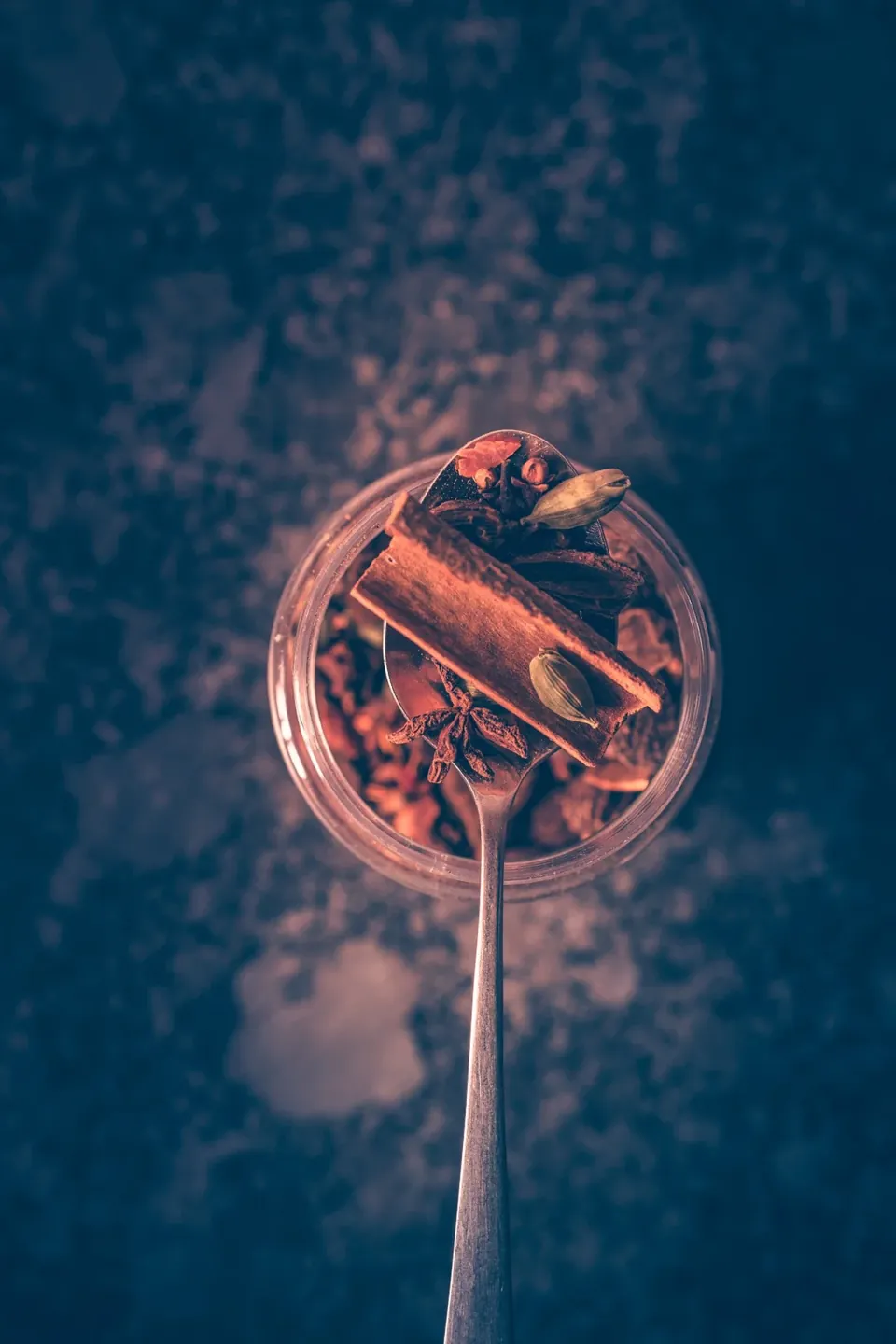
A little nutmeg can make familiar food feel newly comforting. Grated over fruit, folded into greens, or stirred into a creamy sauce, it brings a rounded warmth. The spice is the seed kernel of Myristica fragrans, the tree that also gives us mace.
- Digestive tradition
Let flavor do its work
Its most useful everyday role is sensory: warm aroma, depth, and a meal you want to sit down and enjoy. Food pleasure is a meaningful part of nourishment, and this small spice has plenty to offer there.
A traditional herbal story
Nutmeg has also been associated with digestion and rest in herbal traditions. Those uses have a different context from ordinary culinary seasoning. The research and preparation considerations are collected below.
Meet the botanical
Myristica fragrans Houtt.
- Family
- Myristicaceae
- Parts in focus
- Dried seed kernel for culinary use; mace is the separate aril. Essential oil and concentrated extracts are not equivalent to seasoning.
Common uses
Traditional and everyday uses, at a glance.
| Common use | Part & preparation |
|---|---|
| Culinary fragrance | Small amounts of grated seed |
| Digestive traditions | Ordinary culinary spice quantities |
A short history
Nutmeg’s aromatic seed belongs to kitchen and historical digestive traditions. The familiar spice is separate from concentrated preparations or the large amounts that cause toxicity.
Energy & character
Warm, sweet-smelling and rounded, especially noticeable when freshly grated.
Symbolism
For a personal ritual, nutmeg can evoke a remembered kitchen or season: fragrance as a way of gathering the day into something familiar.
The research & references
What the studies tell us
Clinical evidence does not establish a therapeutic sleep or mood benefit from nutmeg. Poison-center reports document serious adverse effects after excessive ingestion. The kitchen role described here concerns normal seasoning, not a medicinal dose, extract, or swallowed essential oil.
Care with this plant.
No DIY medicinal dose or ingestion of essential oil. Excess exposure can produce delayed neuropsychiatric and cardiovascular toxicity. Seek poison advice promptly for large/uncertain ingestion; avoid medicinal use in pregnancy, lactation, and children.
Research relates to the species, preparation, and people studied. Findings for an ingredient do not establish the effects of the complete featured formula.
Explore the sources
About this article & supplement statements
These statements have not been evaluated by the Food and Drug Administration. These products are not intended to diagnose, treat, cure, or prevent any disease.
Medicine Wild offers botanical education from Dr. Michele Burklund’s naturopathic and functional medicine perspective. This article is for informational purposes and does not replace individual medical advice, diagnosis, or treatment. A qualified practitioner can help you choose care suited to your health history.
A little more to know
Questions about nutmeg.
What is the botanical name of nutmeg?
Nutmeg is identified in this monograph as Myristica fragrans Houtt.. Its botanical family is Myristicaceae.
Which parts of nutmeg are used?
Dried seed kernel for culinary use; mace is the separate aril. Essential oil and concentrated extracts are not equivalent to seasoning.
What does research say about nutmeg?
Culinary value is well established; human evidence does not establish a therapeutic sleep, mood, or metabolic benefit. Poison-center evidence supports a clear distinction between seasoning and excessive exposure.
What should I know before using nutmeg?
No DIY medicinal dose or ingestion of essential oil. Excess exposure can produce delayed neuropsychiatric and cardiovascular toxicity. Seek poison advice promptly for large/uncertain ingestion; avoid medicinal use in pregnancy, lactation, and children.
Where can I read the research on nutmeg?
These sources are included in the monograph’s reference list.