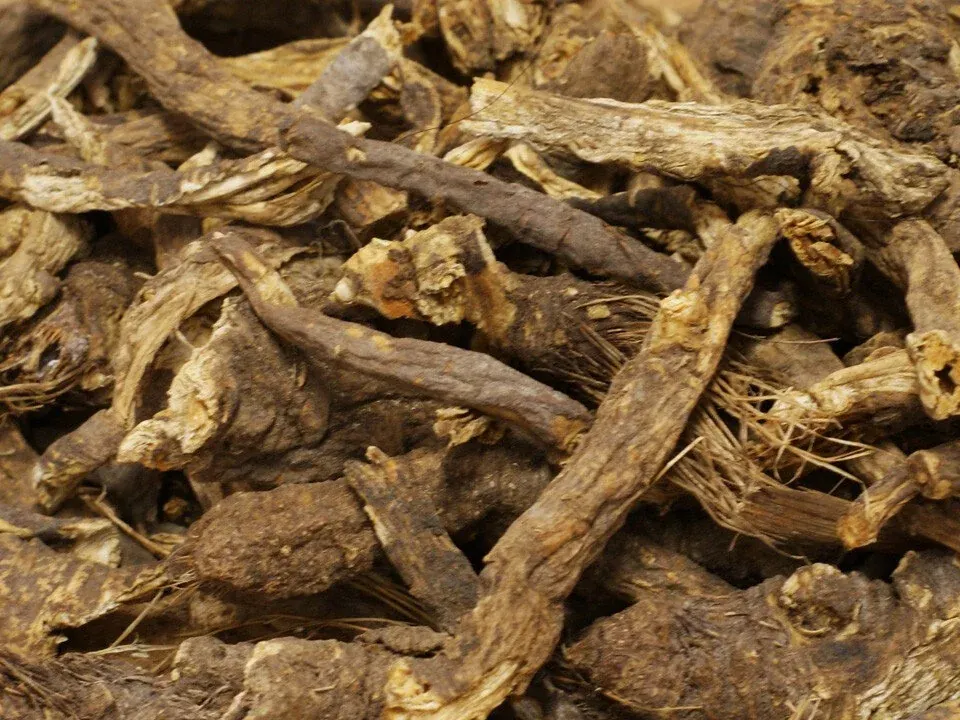
Oshá has long been part of respiratory herbal traditions in the southwestern United States and Mexico. Ligusticum porteri root is intensely aromatic and traditionally associated with coughs and throat discomfort. Its history is closely connected to Indigenous and Hispanic communities.
The respiratory tradition
Herbalists have used the root as an expectorant, a traditional category concerned with helping clear mucus. Its penetrating fragrance gives the plant a memorable character, while clinical evidence remains limited.
Care for the source
Oshá grows in mountain habitats, and harvesting the root has consequences for the living plant. Respect for cultural knowledge, authenticated material, and thoughtful sourcing are central to understanding this botanical’s place in the apothecary.
Meet the botanical
Ligusticum porteri J.M.Coult. & Rose
- Family
- Apiaceae
- Parts in focus
- Root and rhizome; authenticated dried material and extracts.
Common uses
Traditional and everyday uses, at a glance.
| Common use | Part & preparation |
|---|---|
| Respiratory traditions | Correctly identified root preparations |
| Aromatic traditional care | Practices vary among the communities carrying the knowledge |
A short history
Oshá has distinct Indigenous and Hispanic histories in the southwestern United States and Mexico. Ethnobotanical accounts include particular Zuni and Plains Apache ceremonial relationships with the root.
Energy & character
Penetrating and aromatic, with a strong celerylike root scent.
Symbolism
Oshá’s spiritual meanings belong to specific communities. A personal response can center respect for place, living knowledge and the care of the plant’s habitat.
The research & references
What the studies tell us
University and ethnobotanical sources document traditional respiratory use and conservation concerns. Laboratory experiments do not establish that oshá improves lung function or treats respiratory infection in people. Dangerous lookalikes make casual foraging unsafe, and significant breathing symptoms require medical assessment.
Care with this plant.
Poison-hemlock confusion makes casual foraging unsafe. Root harvesting raises stewardship concerns. No DIY dose; pregnancy, lactation, and pediatric safety are insufficient. Preserve urgent respiratory warning signs.
Research relates to the species, preparation, and people studied. Findings for an ingredient do not establish the effects of the complete featured formula.
Explore the sources
- The Genus Ligusticum in North America: An Ethnobotanical Review with Special Emphasis upon Species Commercially Known as ‘Osha’
- Oshá — Native Medicinal Plant Research Program
- Effects of Ligusticum porteri (Osha) Root Extract on Human Promyelocytic Leukemia Cells
- Ligusticum porteri — NatureServe Explorer
About this article & supplement statements
These statements have not been evaluated by the Food and Drug Administration. These products are not intended to diagnose, treat, cure, or prevent any disease.
Medicine Wild offers botanical education from Dr. Michele Burklund’s naturopathic and functional medicine perspective. This article is for informational purposes and does not replace individual medical advice, diagnosis, or treatment. A qualified practitioner can help you choose care suited to your health history.
A little more to know
Questions about oshá.
What is the botanical name of oshá?
Oshá is identified in this monograph as Ligusticum porteri J.M.Coult. & Rose. Its botanical family is Apiaceae.
Which parts of oshá are used?
Root and rhizome; authenticated dried material and extracts.
What does research say about oshá?
Traditional respiratory use and laboratory research are documented; convincing clinical efficacy trials were not identified. Human-cell experiments are explicitly distinguished from human treatment evidence.
What should I know before using oshá?
Poison-hemlock confusion makes casual foraging unsafe. Root harvesting raises stewardship concerns. No DIY dose; pregnancy, lactation, and pediatric safety are insufficient. Preserve urgent respiratory warning signs.
Where can I read the research on oshá?
These sources are included in the monograph’s reference list.