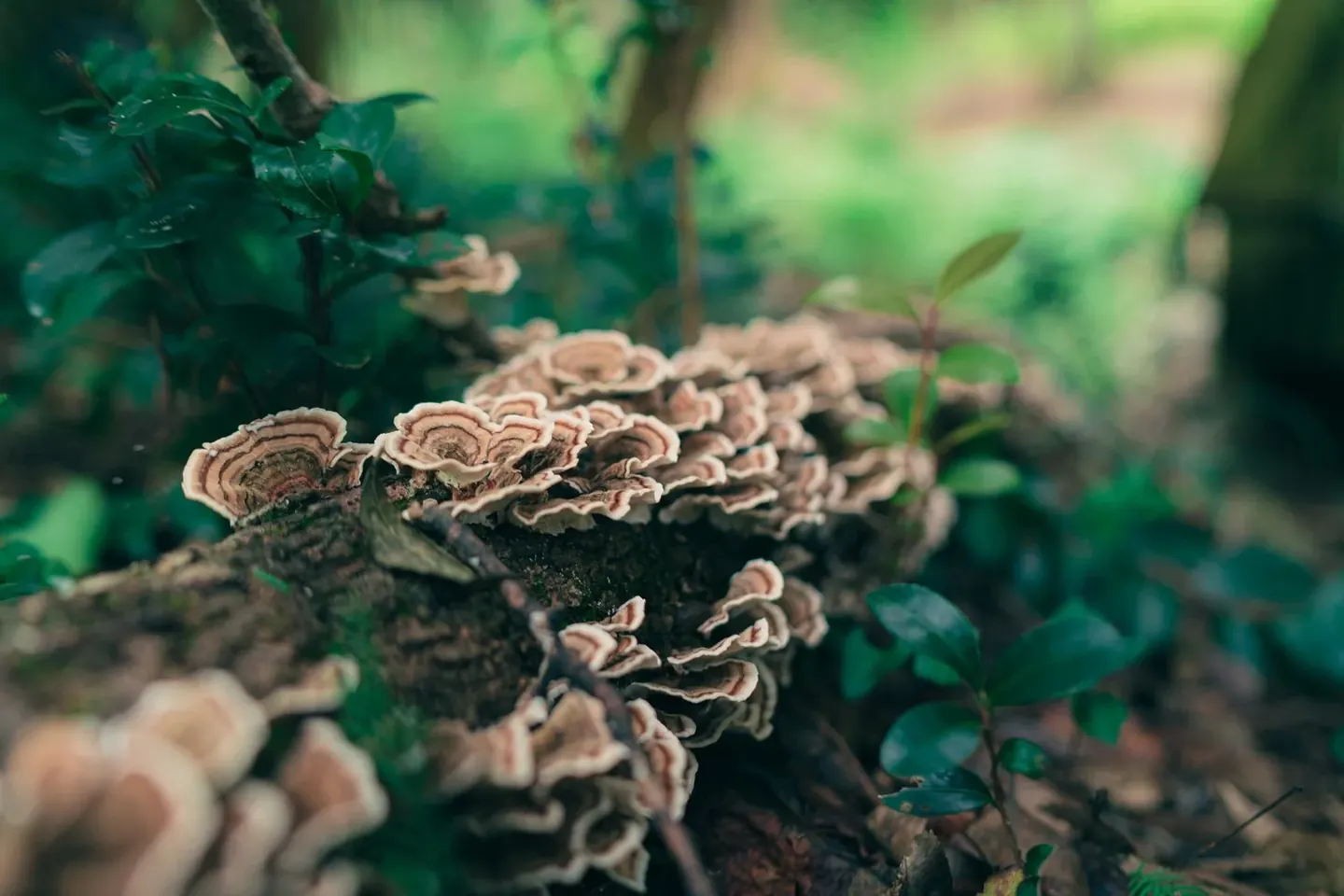
Reishi has a long place in Chinese traditions of vitality and wellbeing. Known as lingzhi, it is also a striking cultural symbol of longevity and spiritual nourishment. Its bitter taste gives it a distinctive identity in the mushroom apothecary.
- Medicinal mushroom
- Immune research & tradition
- Adaptogenic tradition
A restorative perspective
The traditional tonic idea is about sustaining a person over time. Reishi belongs to that wider conversation about rest, nourishment, and resilience. Researchers are also exploring its polysaccharides and other compounds in relation to immune activity.
Know your mushroom
Species, fruiting body or mycelium, and extraction method all help describe a preparation. These details make it easier to connect reishi’s rich traditional story with what is actually in a powder, capsule, or extract.
Meet the botanical
Ganoderma lingzhi Sheng H.Wu, Y.C.Dai & Y.Cao; commercial reishi also includes other Ganoderma species historically labeled G. lucidum
- Family
- Ganodermataceae
- Parts in focus
- Fungal fruiting body, cultivated mycelium, and spores; each preparation must be identified separately.
Common uses
Traditional and everyday uses, at a glance.
| Common use | Part & preparation |
|---|---|
| Tonic traditions | Identified fruiting-body preparations |
| Immune-related care | Specified fungal extracts with clinical oversight |
A short history
Known as lingzhi in Chinese tradition, reishi has a longstanding place in tonic medicine, art and cultural imagery. It is a fungus included within the broader materia medica.
Energy & character
Woody and distinctly bitter, with a traditional character associated with steadiness and sustained vitality.
Symbolism
Chinese lingzhi symbolism includes longevity, wellbeing and spiritual potency. These meanings concern the quality and continuity of life as well as medicine.
The research & references
What the studies tell us
Traditional tonic and longevity meanings are not proof that a supplement extends life or boosts immunity. A randomized metabolic-syndrome trial did not find improvements in its primary or secondary measures. Reishi preparations differ, and interactions—including bleeding, immunosuppressant, and oncology concerns—need individual review.
Care with this plant.
Review bleeding, immunosuppressant, and oncology interactions; rare liver-injury reports exist. Avoid unsupervised pregnancy/lactation/pediatric use. Not a cancer treatment or substitute for assessment of persistent fatigue.
Research relates to the species, preparation, and people studied. Findings for an ingredient do not establish the effects of the complete featured formula.
Explore the sources
- Great Ganoderma: Reishi Mushroom; Herb of Spiritual Potency and Medical Wonder
- Ganoderma lucidum (Lingzhi or Reishi)
- A double-blind, randomised, placebo-controlled trial of Ganoderma lucidum for cardiovascular risk factors of metabolic syndrome
- Taxonomic Position and Species Identity of the Cultivated Yeongji Ganoderma lucidum in Korea
- Reishi Mushroom — About Herbs
About this article & supplement statements
These statements have not been evaluated by the Food and Drug Administration. These products are not intended to diagnose, treat, cure, or prevent any disease.
Medicine Wild offers botanical education from Dr. Michele Burklund’s naturopathic and functional medicine perspective. This article is for informational purposes and does not replace individual medical advice, diagnosis, or treatment. A qualified practitioner can help you choose care suited to your health history.
A little more to know
Questions about reishi / lingzhi.
What is the botanical name of reishi / lingzhi?
Reishi / Lingzhi is identified in this monograph as Ganoderma lingzhi Sheng H.Wu, Y.C.Dai & Y.Cao; commercial reishi also includes other Ganoderma species historically labeled G. lucidum. Its botanical family is Ganodermataceae.
Which parts of reishi / lingzhi are used?
Fungal fruiting body, cultivated mycelium, and spores; each preparation must be identified separately.
What does research say about reishi / lingzhi?
Traditional tonic and spiritual meanings are documented and kept distinct from clinical claims. Human findings are preparation-specific and limited; a metabolic-syndrome RCT was negative. Historical G. lucidum labels cannot automatically identify modern species.
What should I know before using reishi / lingzhi?
Review bleeding, immunosuppressant, and oncology interactions; rare liver-injury reports exist. Avoid unsupervised pregnancy/lactation/pediatric use. Not a cancer treatment or substitute for assessment of persistent fatigue.
Where can I read the research on reishi / lingzhi?
These sources are included in the monograph’s reference list.