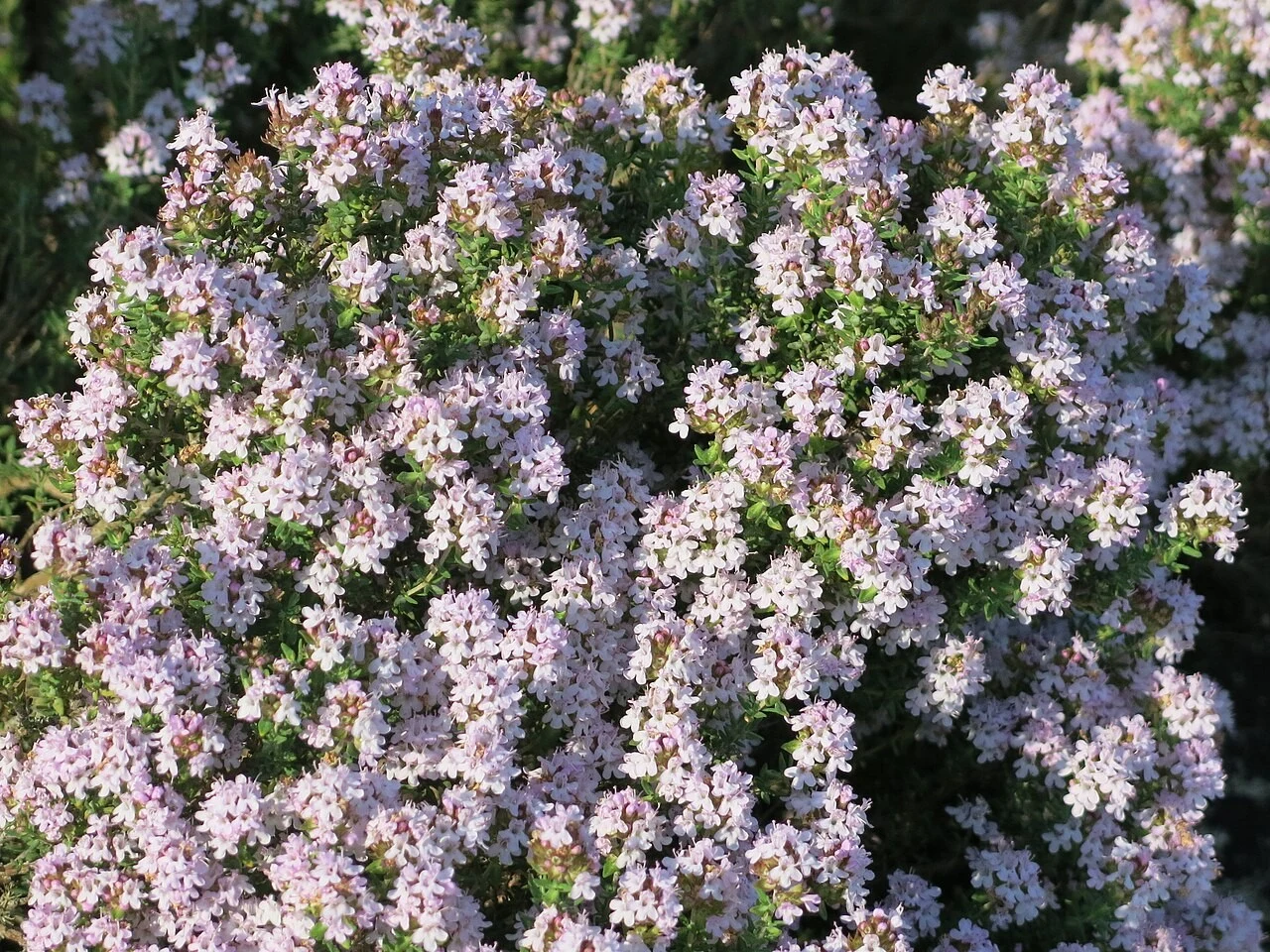
Thyme is small, aromatic, and full of character. Its leaves and flowers have traditionally been used for a productive cough, giving this familiar cooking herb a separate respiratory story. Thymus vulgaris and Thymus zygis are the species used in European herbal medicines.
- Digestive tradition
An interesting cough formula
A clinical trial of a particular thyme-and-ivy syrup found a greater reduction in coughing fits than placebo during acute bronchitis. The complete formula is the focus of that finding.
From food to the apothecary
The leaf brings earthy, slightly peppery flavor to everyday cooking. An infusion, a prepared syrup, and concentrated essential oil have different roles. Understanding the form makes thyme’s botanical story easier to use.
Meet the botanical
Thymus vulgaris L.; Thymus zygis L.
- Family
- Lamiaceae
- Parts in focus
- Leaves and flowers separated from dried stems; herb extracts. Essential oil is a separate concentrated preparation.
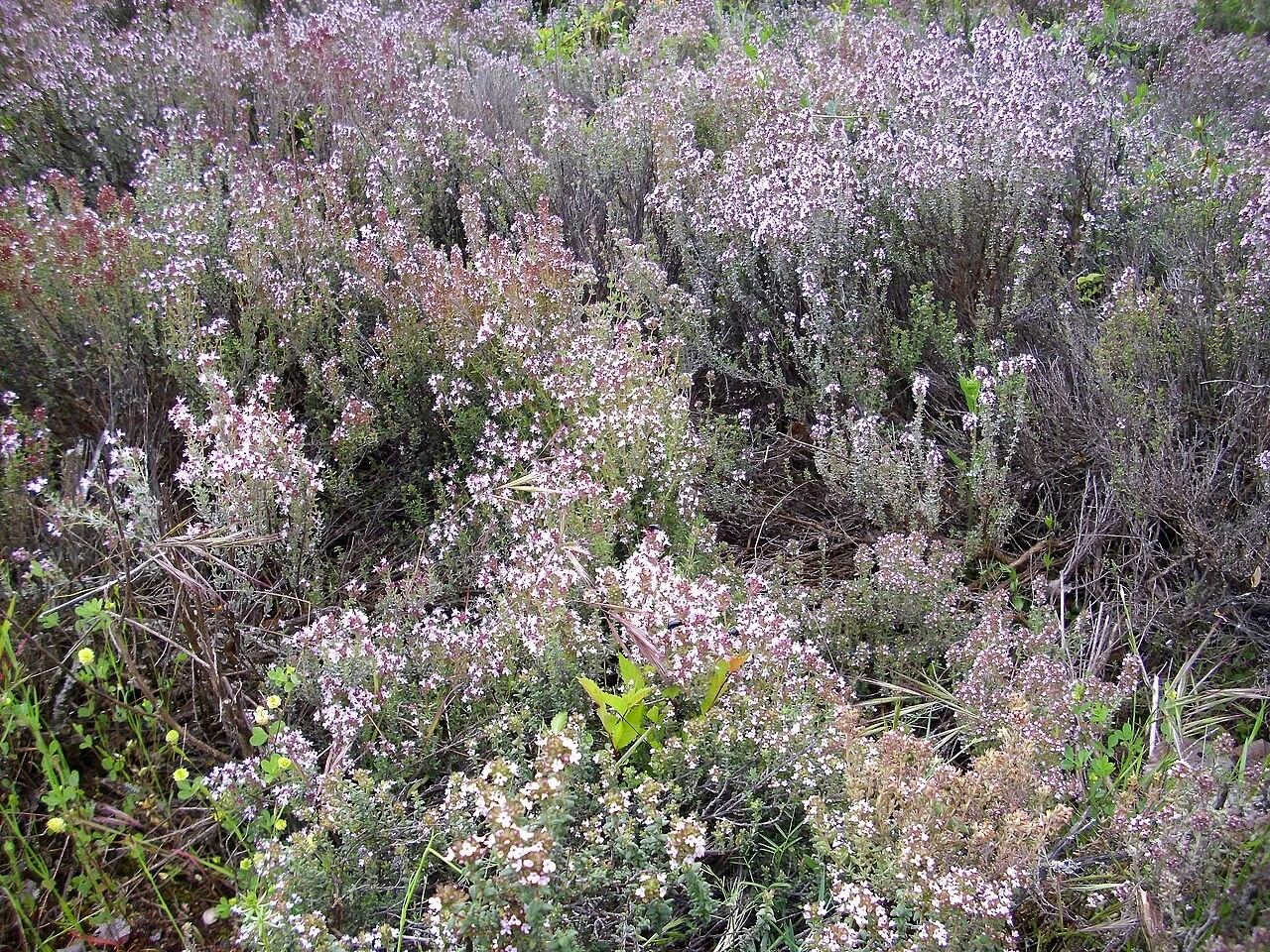
ⓘ Photograph credits
Thymus vulgaris · Javier martin · Original photograph · Public domain. Resized and converted to WebP; displayed with a crop. No generative edits.
Common uses
Traditional and everyday uses, at a glance.
| Common use | Part & preparation |
|---|---|
| Everyday cooking | Fresh or dried leaves and flowering tops |
| Cough traditions | Specified herb preparations |
| Digestive traditions | Culinary herb or prepared infusions |
A short history
Thyme belongs to European cooking and cough-care traditions. Historical European imagery also connects the herb with bravery, including medieval embroidery associated with knights.
Energy & character
Earthy, aromatic and gently peppery, with a remarkably expansive scent for such small leaves.
Symbolism
Courage is a documented strand of European thyme symbolism. A personal ritual can make that courage quiet: patience and steadiness brought into an ordinary day.
The research & references
What the studies tell us
EMA recognizes thyme herb for traditional cough use. The principal clinical trial tested a thyme–ivy combination, so its benefit cannot be assigned to thyme alone or a home tea. Breathing difficulty, chest pain, or persistent symptoms need assessment; essential oil should not be swallowed.
Care with this plant.
Mint-family allergy and digestive upset; no swallowed or neat essential oil; medicinal pregnancy/lactation data inadequate; child use product-specific; respiratory red flags need assessment.
Research relates to the species, preparation, and people studied. Findings for an ingredient do not establish the effects of the complete featured formula.
Explore the sources
- Thyme — HerbalGram 80
- Thymi herba — EMA assessment and monograph
- Efficacy and tolerability of a fluid extract combination of thyme herb and ivy leaves and matched placebo in adults suffering from acute bronchitis with productive cough
- Effect of thyme-ivy syrup on antiviral immune response in patients with mild COVID-19: a prospective, open-label, randomized pilot study
About this article & supplement statements
These statements have not been evaluated by the Food and Drug Administration. These products are not intended to diagnose, treat, cure, or prevent any disease.
Medicine Wild offers botanical education from Dr. Michele Burklund’s naturopathic and functional medicine perspective. This article is for informational purposes and does not replace individual medical advice, diagnosis, or treatment. A qualified practitioner can help you choose care suited to your health history.
A little more to know
Questions about thyme.
What is the botanical name of thyme?
Thyme is identified in this monograph as Thymus vulgaris L.; Thymus zygis L.. Its botanical family is Lamiaceae.
Which parts of thyme are used?
Leaves and flowers separated from dried stems; herb extracts. Essential oil is a separate concentrated preparation.
What does research say about thyme?
Traditional cough use is recognized by EMA. The principal cited trial tested a specific thyme–ivy syrup, not thyme alone, tea or essential oil.
What should I know before using thyme?
Mint-family allergy and digestive upset; no swallowed or neat essential oil; medicinal pregnancy/lactation data inadequate; child use product-specific; respiratory red flags need assessment.
Where can I read the research on thyme?
These sources are included in the monograph’s reference list.