Tulsi, also called holy basil, has a long Ayurvedic association with wellbeing and resilience. Its spicy, green fragrance makes it memorable in a cup. A trial of a particular extract found improvements in perceived stress and self-rated sleep over eight weeks.
- Adaptogenic tradition
- Digestive tradition
- Nervine tradition
Support for demanding days
Tulsi is often grouped with adaptogens, plants explored for the way they influence the response to stress. Its traditional appeal is restorative, connecting everyday steadiness with the opportunity to recover.
A ritual with meaning
Holy basil holds a sacred place in Indian traditions as well as a role in herbal practice. A fragrant pause can honor the plant’s sensory character, while an extract brings a more defined preparation to the conversation.
From the plant to my apothecary
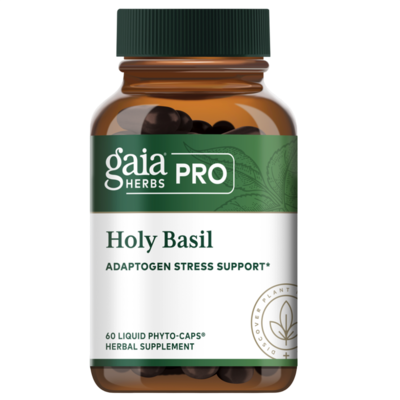
My selection.
Gaia’s Holy Basil brings tulsi into a capsule form. I chose it for the plant’s restorative tradition and the growing conversation around perceived stress and rest.
I may earn income from purchases through my Fullscript shop.
Meet the botanical
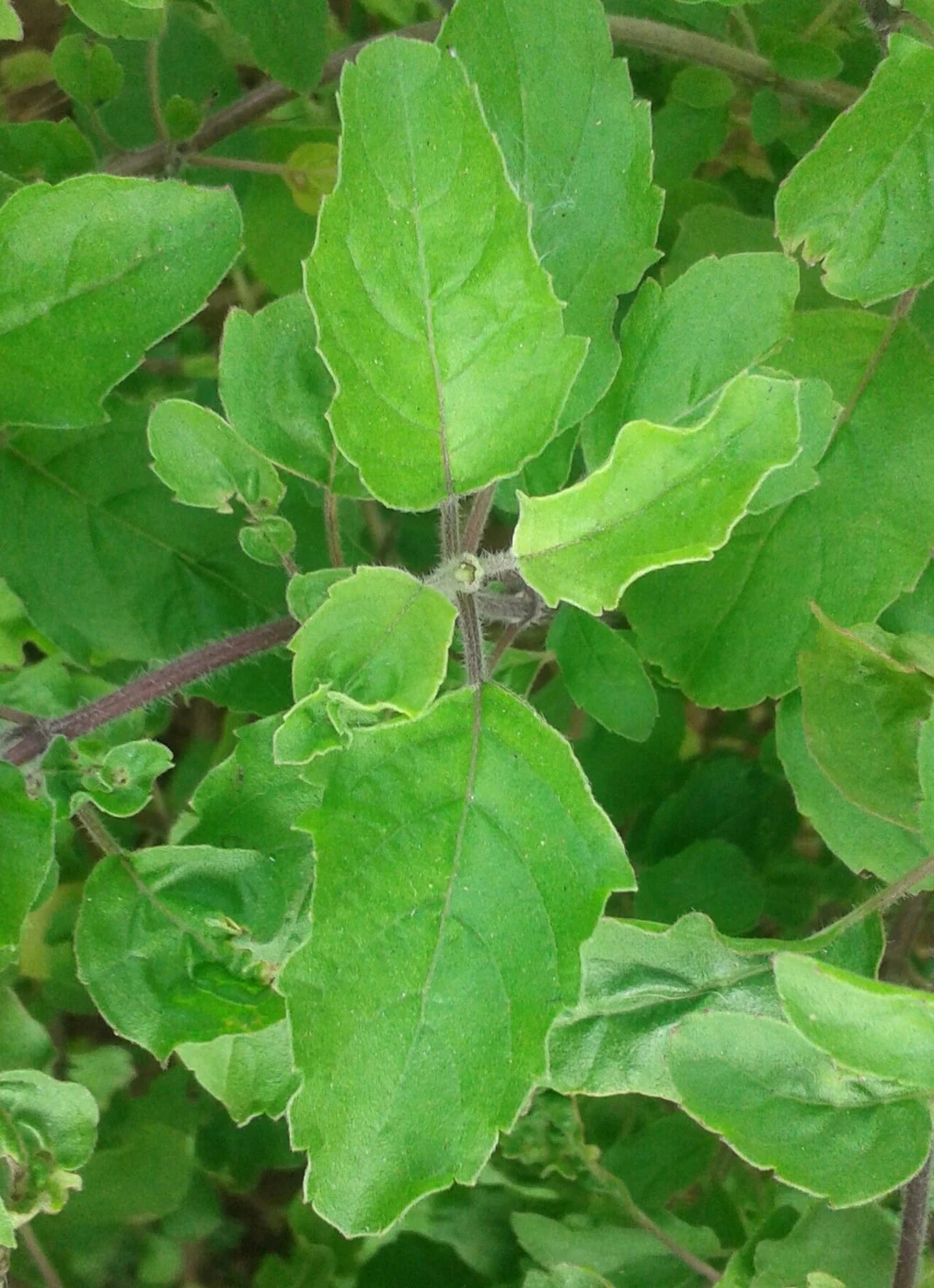
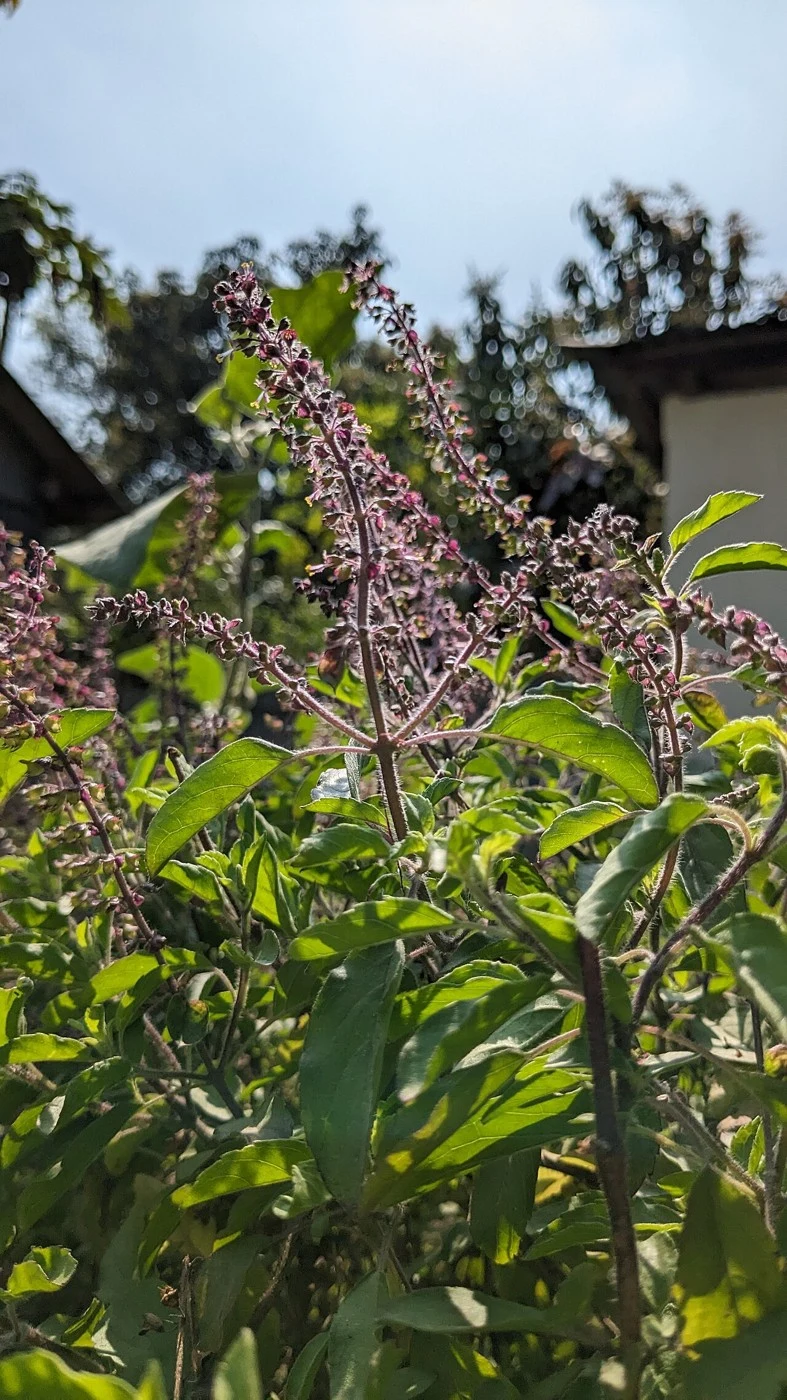
Ocimum tenuiflorum (syn. Ocimum sanctum)
- Family
- Lamiaceae
- Parts in focus
- Leaf for teas and many preparations; other plant parts and concentrated extracts are distinct materials.
ⓘ Photograph credits
Ocimum tenuiflorum · Tanvir Rahat · Original photograph · CC BY-SA 4.0. Resized and converted to WebP; displayed with a crop. No generative edits.
Common uses
Traditional and everyday uses, at a glance.
| Common use | Part & preparation |
|---|---|
| Aromatic herbal drinks | Identified leaves and aerial parts |
| Stress-related traditions | Prepared tulsi products |
| Digestive & culinary traditions | Food-grade leaves in established preparations |
A short history
Tulsi has a deeply spiritual place in Indian traditions alongside its culinary and Ayurvedic uses. Its leaves and seeds are described separately within that traditional system.
Energy & character
The leaves are described through qualities of lightness and dryness in Ayurveda. Their taste is green, spicy and aromatic.
Symbolism
Tulsi’s sacred associations belong to living Indian traditions. A personal practice can begin with gratitude and respect for the people who carry that knowledge.
The research & references
What the studies tell us
A 100-person trial of Holixer extract reported improvements in perceived stress and some subjective sleep measures. Objective sleep benefits and equivalence to tea remain unestablished. The result does not support universal cortisol-regulation claims. Pregnancy and relevant medicines or health conditions require particular care.
Care with this plant.
Avoid pregnancy; review breastfeeding, diabetes, cardiovascular conditions and heart/BP medicines; adult-trial limits; no essential-oil ingestion instructions.
Research relates to the species, preparation, and people studied. Findings for an ingredient do not establish the effects of the complete featured formula.
Explore the sources
About this article & supplement statements
These statements have not been evaluated by the Food and Drug Administration. These products are not intended to diagnose, treat, cure, or prevent any disease.
Medicine Wild offers botanical education from Dr. Michele Burklund’s naturopathic and functional medicine perspective. This article is for informational purposes and does not replace individual medical advice, diagnosis, or treatment. A qualified practitioner can help you choose care suited to your health history.
A little more to know
Questions about tulsi (holy basil).
What is the botanical name of tulsi (holy basil)?
Tulsi (Holy Basil) is identified in this monograph as Ocimum tenuiflorum (syn. Ocimum sanctum). Its botanical family is Lamiaceae.
Which parts of tulsi (holy basil) are used?
Leaf for teas and many preparations; other plant parts and concentrated extracts are distinct materials.
What does research say about tulsi (holy basil)?
A defined extract improved perceived stress and subjective sleep outcomes in an eight-week 100-person trial; tea equivalence, objective sleep effects and universal cortisol regulation are not established.
What should I know before using tulsi (holy basil)?
Avoid pregnancy; review breastfeeding, diabetes, cardiovascular conditions and heart/BP medicines; adult-trial limits; no essential-oil ingestion instructions.
Where can I read the research on tulsi (holy basil)?
These sources are included in the monograph’s reference list.