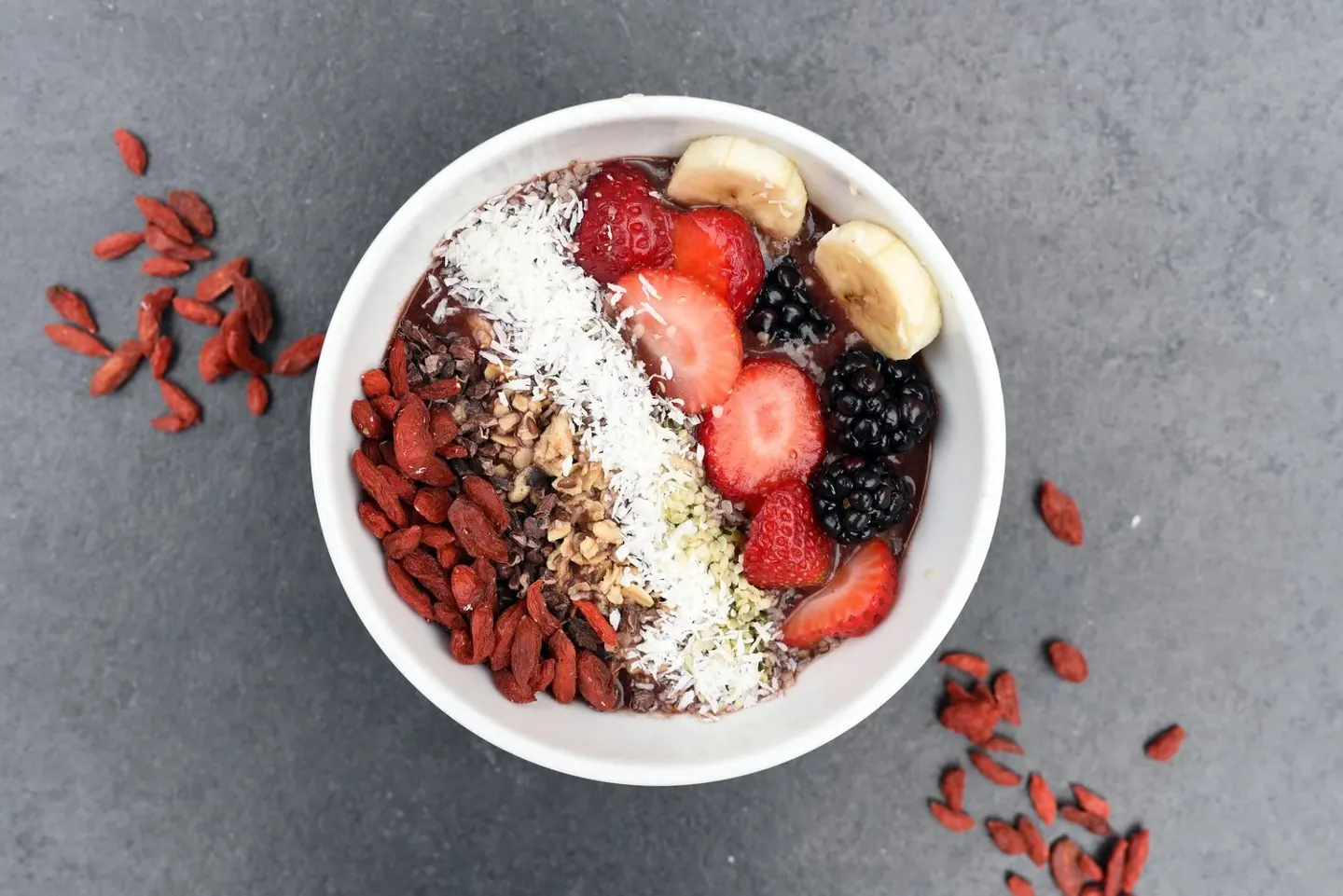
Goji berries bring a beautiful flash of red to a bowl of oats. Their flavor sits somewhere between sweet and earthy, and a short soak turns the dried fruit pleasantly plump. Long associated with Chinese food and herbal traditions, they deserve a place in the kitchen for those qualities alone.
What makes them interesting
Goji berries contain carotenoids, including zeaxanthin, a pigment found in the retina. A small randomized pilot study published in 2021 found that regular goji consumption increased a measure of macular pigment in healthy middle-aged adults. That is an interesting signal for further research. It does not establish that eating goji prevents macular degeneration or improves vision.
The distinction matters because a measurable biological change and a meaningful health outcome are not the same thing. Larger studies with longer follow-up would be needed to answer the questions most people care about: whether a food protects sight or changes disease risk.
Let the berry be a berry
Carotenoids are one reason to be interested in goji; their distinctive flavor is another. Laboratory antioxidant scores do not tell us which food makes a person healthiest, and they are not a useful competition between berries. Drying, processing, serving size, and the rest of the meal all change the nutritional picture. Think of goji as one fruit in a varied kitchen, rather than your primary source of protein or a guaranteed dose of vitamins.
Try a spoonful folded into warm porridge, scattered over yogurt, or steeped into a lightly sweet tea. Pair the berries with foods you already enjoy rather than reorganizing your diet around one ingredient. A mix of fruits gives you more flavor, texture, and nutritional variety than a competition between superfoods.
Three ways to bring them into breakfast
Warm them into oats
Add a small spoonful of dried goji berries while your porridge cooks so they soften with the grain. Finish with something creamy and a little crunch: yogurt and chopped almonds, for example. Taste before sweetening. The berry is an accent, and its slightly earthy character works best when it has a few other textures around it.
Make a quick fruit bowl
Soak a small portion in warm water until the texture is pleasantly soft, then drain. Fold through fresh orange segments or sliced pear. Use a clean bowl and prepare only what you plan to eat, rather than leaving a large soaking jar on the counter. The point is a softer berry, not a fermented tonic.
Keep the color in the cup
A few berries can steep in a warm drink for their flavor and appearance. Let the drink cool comfortably, and enjoy the softened fruit afterward if you like. This preparation has no established eye-health dose; it is simply another way to meet the ingredient.
Read the study without turning breakfast into a prescription
A small pilot trial is often a way to discover whether a question deserves a larger study. Here, the finding concerns a pigment measurement, which is useful for researchers but not something you need to reproduce in your own kitchen. If eye health is your concern, keep regular eye care and any advice for an existing condition in view.
When shopping, look for clear ingredients and a package you can reseal. Choose a size you will use while the fruit still tastes good. The most expensive berry is not necessarily the best one for an ordinary morning.
A thoughtful portion
Dried fruit is concentrated, so a little goes a long way. Check for added sugar if that matters to you, and stop if you develop itching, swelling, or another reaction. If you take warfarin, discuss goji with your prescriber before making it a regular habit because interactions have been reported. Choose ordinary food use over concentrated extracts when your goal is simply a more interesting breakfast.
Put it into practice
Naturopathic foundations
How can I use goji berries in everyday meals?
Try a small amount with oats, yogurt, or a familiar dish, and keep other fruits in the rotation. Let flavor and tolerance guide the choice. Review concentrated botanical products separately, especially when medicines or a health condition are part of your life.
Functional tests to consider
Eating well begins on the plate. If you are also investigating metabolic risk, these tests can help put the longer-term pattern in context.
HbA1c & fasting glucose
These help evaluate blood-sugar patterns when metabolic risk, increased thirst, frequent urination, or other clinical clues warrant testing. A1c gives a longer view; a fasting glucose is a point-in-time measurement. Anemia and other conditions can affect A1c.
Lipid panel, with ApoB when useful
For a cardiovascular or longevity review, begin with the lipid pattern and the whole risk picture. ApoB can add information in selected situations, particularly when triglycerides or metabolic risk complicate the picture. It is not a test of whether one food is working.
A mind–body practice
The first three bites
Put the screen away and place both feet on the floor. Before eating, notice the color and scent of the food. Take the first three bites slowly enough to notice their texture, then check in with hunger and comfort.
A little more clarity
Can a single food replace a whole-food eating pattern?
No single ingredient has to carry the whole meal. Look for enough food, a source of protein, varied plants, and a pattern that fits your life. Laboratory results describe specific health questions, not the virtue of an individual food.
For education and reflection. Individual needs vary. For persistent symptoms or personal guidance, seek additional care from a qualified clinician or appropriate specialist.
References
- Goji Berry Intake Increases Macular Pigment Optical Density in Healthy Adults: A Randomized Pilot Trial (2021) · Randomized human pilot trial; surrogate eye-health outcome
- Bleeding due to a probable interaction between warfarin and Gouqizi (Lycium barbarum) (2015) · Human case report; interaction signal