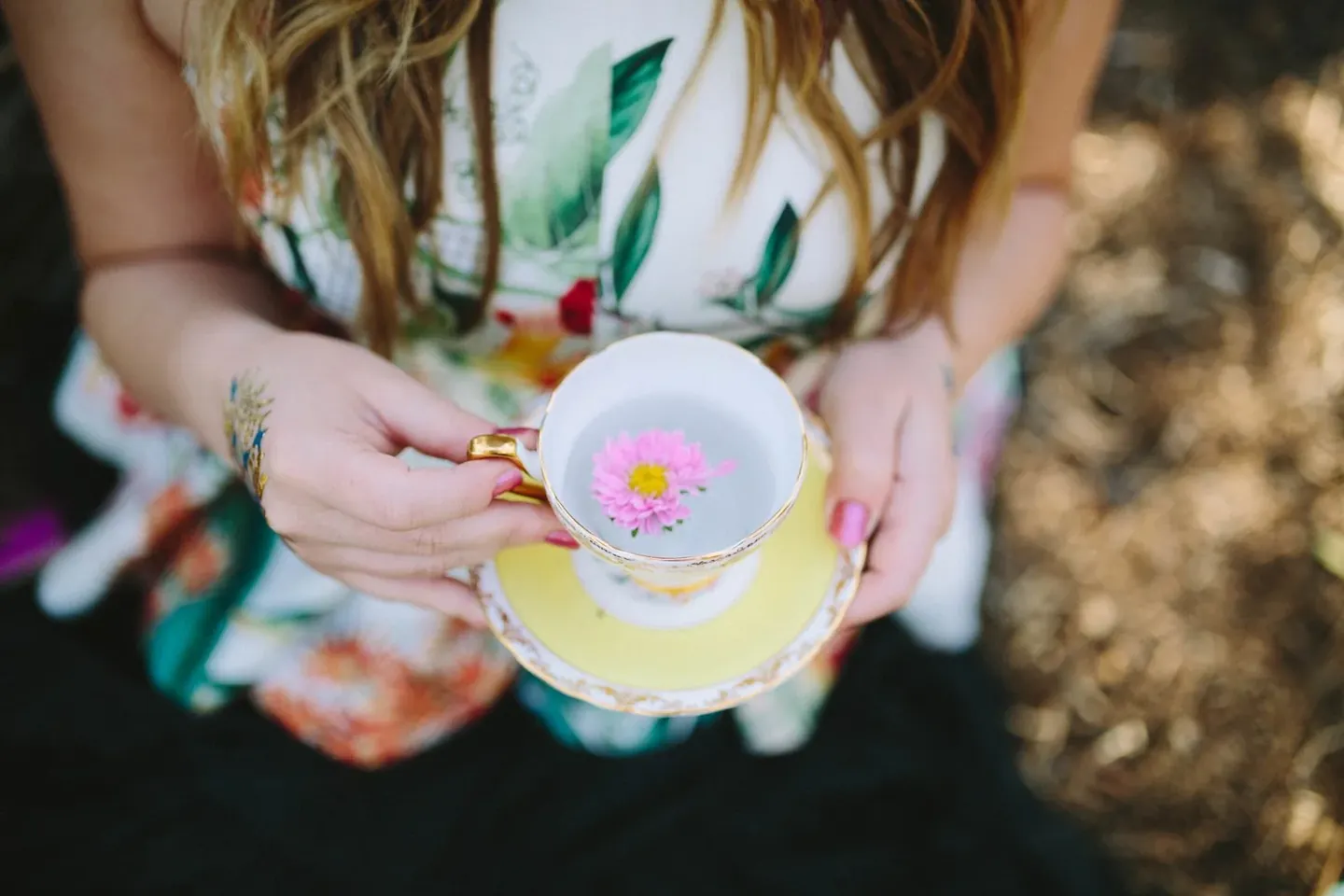
Imagine a cup of white tea with fresh peaches and mint, or chamomile with a little lemon beside an evening bath. That was where my original tea story began: with the sheer pleasure of bringing plants into an ordinary day. From there, I shared three more purposeful blends, each with its own botanical character.
I still love the small ceremony of making tea. There is fragrance, warmth, and the pause while the water changes color. There is also plant knowledge: which part we use, how we prepare it, and whether it belongs in this particular person’s cup.
Glowing Skin Blend
This is the original combination of bitter greens, earthy root, and golden flowers. Dandelion leaf has a traditional place among urinary herbs and bitters; burdock root appears in traditional skin-care herbalism. Calendula flowers and a little fresh turmeric complete the blend. Its name expresses the intention behind the recipe, rather than a promise to clear acne or remove unspecified toxins.
Original ingredients, per cup:
- 1 teaspoon dried dandelion leaf
- 1 teaspoon dried burdock root
- 1 teaspoon dried calendula flowers
- ⅛ teaspoon fresh turmeric root
Roots benefit from a different preparation than delicate leaves and flowers. For an adult for whom this blend is suitable, gently simmer the chopped burdock and turmeric in water, covered, for about 15–20 minutes. Remove from the heat, add the dandelion and calendula, cover, and infuse for another 5–10 minutes. Strain, adjusting the finished liquid to one cup. The two stages honor the different textures of the ingredients.
De-Stress Tea Blend
Holy basil brings an aromatic quality and a place in adaptogenic herbal traditions. Oatstraw is traditionally approached as a nutritive, with a long association with nervous-system nourishment. Astragalus root has a history in Chinese medicine and is also described as an adaptogen. This is a blend to consider thoughtfully, rather than an instant switch out of “fight or flight.”
Original ingredients, per cup:
- 1 teaspoon dried holy basil
- 1 teaspoon dried oatstraw
- 1 teaspoon dried astragalus root
Gently simmer the chopped astragalus root in water, covered, for about 20 minutes. Remove from the heat and infuse the holy basil and oatstraw for 10 minutes, keeping the lid on. Strain and adjust to one cup. Add a little honey if you enjoy it.
A randomized trial has studied a particular holy-basil extract for stress-related outcomes. That is an interesting research thread, but an extract trial does not tell us exactly what this mixed tea will do. The preparation and the experience both matter.
Women’s Blend
The original formula brought raspberry leaf, nettle leaf, and dong quai together. It belongs to a conversation about traditional feminine care, with recognition that “women’s health” includes many different bodies and life stages. Dong quai, Angelica sinensis, is a medicinal root with a long history in Chinese formulas.
Original formula, recorded per cup:
- 1 teaspoon dried raspberry leaf
- 1 teaspoon dried nettle leaf
- 1 teaspoon dong quai root
I am preserving this formula as part of the original article, with a clear distinction: it requires individualized guidance from a qualified botanical-medicine clinician. A teaspoon varies considerably with the cut of the root. Have the amount, preparation, and suitability confirmed before using it. Do not use dong quai during pregnancy or breastfeeding; it can increase bleeding risk and requires particular caution with bleeding disorders, medicines that affect clotting, and hormone-sensitive conditions.
Choose the ritual with care
These are adult medicinal-herb formulas, not everyday teas for everyone. Seek specialist guidance before use during pregnancy, breastfeeding, with health conditions, or alongside medicines. Avoid astragalus with autoimmune disease or immune-suppressing treatment; consider plant-family allergies, and obtain individual advice for kidney or biliary conditions. Persistent symptoms deserve additional care.
The deeper invitation is to become acquainted with what you are making. Smell the leaf. Notice the root. Let the pause be part of the recipe.
References & further reading
For education and reflection. Individual needs vary. For persistent symptoms or personal guidance, seek additional care from a qualified clinician or appropriate specialist.