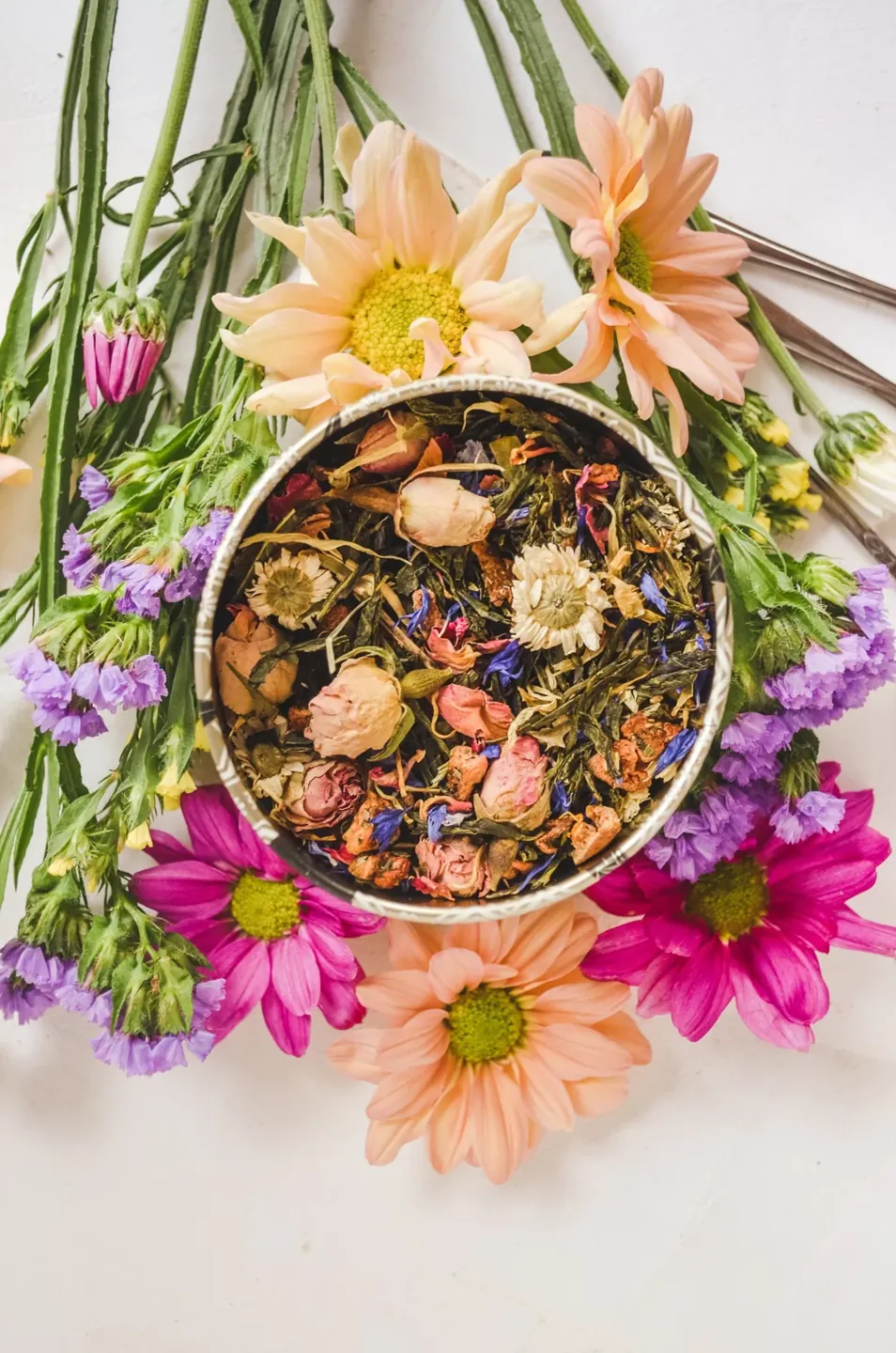
Flowers have a way of drawing our attention outward and then back inward. Their colors and forms can become small reminders: pause, soften, begin again. That reflective quality is part of what draws me to flower essences.
The Bach system associates highly diluted preparations with emotional themes. It is different from herbal tea, a concentrated tincture, or an essential oil. Its energetic language belongs to the spiritual framework of the practice; the clinical research appears in its own section below.
A flower, an intention, a little soul
I have long loved the gentle, intentional quality of flower-essence rituals. In their spiritual framework, flowers are understood to carry qualities that meet an emotional or energetic state. Agrimony speaks to the feelings hidden behind a cheerful face; Walnut to the tenderness of transition; Aspen to unease without an obvious name. These associations invite a softer kind of attention. A ritual can create space for something we have not yet said aloud, or give an intention a form we can return to. The flower, the pause, and the inner conversation all belong to the experience.
Use the themes as questions
- Agrimony: am I hiding a difficult feeling behind being cheerful?
- Centaury: where would a clearer boundary help?
- Elm: what could I make smaller or ask someone to share?
- Impatiens: what happens if I slow this moment down?
- Walnut: what would make a transition feel more supported?
- White Chestnut: could I put a recurring thought on paper rather than keep rehearsing it?
These are prompts for reflection, not personality diagnoses. There is no need to identify yourself as a “type,” and an unwanted thought does not tell you which flower you require.
Keep the evidence in view
A placebo-controlled study of Bach remedies for examination anxiety did not establish a specific benefit beyond placebo. Later small trials have explored other populations, but they do not provide a dependable basis for treating anxiety disorders, obsessive-compulsive symptoms, depression, or trauma with flower essences.
A journal, an essence ritual, or time with a vase of flowers can each become a way of attending to the inner life. Choose the form that feels meaningful to you, with the research in view when making a health decision.
Take one theme into the week
A reflective system becomes more useful when it points toward an ordinary action. If Centaury’s theme of boundaries resonates, decide which request needs a clearer answer. If Elm’s sense of overwhelm feels familiar, write down what can wait. The meaningful change comes from the choice you make, not from having identified the correct label.
A small notebook practice
Make two columns: “What I notice” and “What I need.” Keep each entry brief. “I am impatient” may become “I have not had a break.” “I feel left behind” may become “I need to speak to someone who knows me.” There is no need to reach a profound interpretation; a practical need can be enough.
Return to the page after a few days. Did the action help? Is the original description still accurate? You may find that the flower theme becomes less important as your own language grows more precise.
Understand the form
Flower essences are usually highly diluted preparations. They should not be confused with fragrant essential oils, which contain concentrated volatile compounds, or herbal extracts intended to deliver measurable plant constituents. A label that simply says “floral” tells you very little about what is inside.
If you like the symbolism but do not want a product, choose a flower image as a bookmark or place a small vase where you write. The invitation to reflection can be tangible and beautiful without requiring an ingestion ritual.
Choose support that matches the need
Some essence preparations contain alcohol; read the label, especially for children, pregnancy, alcohol avoidance, or possible medicine interactions. Essential oils are not substitutes to swallow.
If distress is persistent, interferes with sleep or relationships, or makes daily life difficult, seek more support. If you feel unable to stay safe, get urgent help and tell someone you trust. A gentle ritual can accompany care; it should never be asked to carry a crisis alone.
Put it into practice
Naturopathic foundations
How can I make a flower-essence ritual more reflective?
Begin with the feeling you want to acknowledge and a small action that would support it. A notebook, a flower, or a quiet pause can mark the moment. Keep the practice connected to life outside the bottle: food, rest, relationships, and the support you need.
A mind–body practice
Make something without an audience
Give yourself five minutes with paper and a pencil. Draw the shapes you see or write whatever is asking for attention. Leave it unfinished if you wish. The practice is making space for expression, not producing something to share.
For education and reflection. Individual needs vary. For persistent symptoms or personal guidance, seek additional care from a qualified clinician or appropriate specialist.
References
- Efficacy of Bach-flower remedies in test anxiety (2001) · Randomized placebo-controlled human trial
- Efficacy of Flower Therapy for Anxiety in Overweight or Obese Adults (2021) · Small randomized placebo-controlled human trial