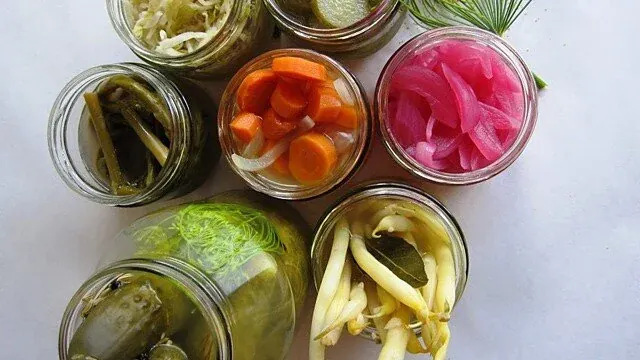
Kimchi brings a kind of brightness that a meal sometimes needs: chili heat, ginger, garlic, acidity, and cabbage with a satisfying bite. It is an important part of Korean food culture, with many regional and household variations—not simply a delivery system for probiotics.
Enjoy the food first
A small randomized study of a fermented-food eating pattern found changes in microbial diversity and inflammatory markers. That does not show that one jar of kimchi treats gut disease or that every ferment contains the same organisms. Serving a little alongside rice, tofu, eggs, or vegetables is a delicious starting point.
Refrigerated products may contain live cultures; pasteurized or thoroughly cooked versions may not. Both can still be enjoyable foods. Check labels for fish, shellfish, or other ingredients that matter for your diet.
A fresh cabbage version for today
For an easy, non-fermented salad with ginger, garlic, chili, and pear, toss 4 cups finely sliced washed napa cabbage with 2 sliced spring onions, 1 small grated garlic clove, a little grated ginger, 1–2 teaspoons Korean chili flakes, 1 tablespoon rice vinegar, and 1–2 teaspoons fish sauce or a suitable alternative. Add grated pear and a small pinch of sugar if you like a softer sweetness. Taste and adjust, then serve promptly or refrigerate.
This is a fresh adaptation, not a tested fermentation recipe or a shelf-stable preserve. Make a small batch and use within a few days.
Make the fresh version easy to serve
Slice the cabbage into pieces that fit comfortably on a fork. Mix the seasoning in a separate bowl first, then toss it through the vegetables so you can adjust the balance without overworking the leaves. Pear can soften the chili’s intensity; extra vinegar can make the bowl brighter. These are flavor adjustments for a fresh salad, not a fermentation formula.
Serve a small spoonful alongside the meal, and keep extra seasoning available if people prefer different levels of heat. A mild portion can be set aside before adding chili. The quick version is useful when you want the flavor today and do not want to manage a ferment.
Choose a jar with a little context
For purchased kimchi, read the label for ingredients, refrigeration, and use-after-opening directions. Some versions contain fish sauce or salted seafood; others are vegetarian or vegan. The name alone does not tell you which one you are buying.
Use a clean utensil and return the jar to the refrigerator as directed. Living ferments can continue to change in flavor and produce gas, but that does not make every change safe or every swollen container acceptable. Follow the producer’s specific handling advice. A trusted product or a tested home method is a better starting point than trying to infer safety from sourness alone.
For a proper ferment
Follow the complete, current method from Oregon State University Extension’s “Kimchi basics,” including its measured ingredients, temperature, container, fermentation, and refrigeration directions. Do not freely change salt or assume a stronger taste proves safety.
An improvised mixture does not come with a reliable six- or twelve-month storage life. Storage depends on the method and product. Discard a questionable batch rather than tasting it to decide; mold, unusual discoloration, or putrid odor is a reason to stop. Good fermentation is a craft with controls, and those controls make the pleasure more dependable.
Put it into practice
Naturopathic foundations
How can I introduce fermented foods comfortably?
Start with a small serving you enjoy beside a familiar meal. Keep the rest of the diet varied, and increase only as it suits you. Fermented foods are one option in a nourishing kitchen; you do not have to eat every kind to care for digestion.
Functional tests to consider
The pattern matters: timing after meals, stool changes, medications, travel, and which foods are involved. Persistent symptoms can call for targeted tests rather than an automatic microbiome panel.
Celiac antibodies & total IgA
For persistent digestive symptoms, unexplained iron deficiency, or a relevant family history, tissue transglutaminase IgA with total IgA may help investigate celiac disease. Testing should generally happen while gluten is still being eaten.
Fecal calprotectin
A targeted stool marker when ongoing diarrhea, abdominal symptoms, or a clinical history raises a question about intestinal inflammation. It helps guide the next step; it does not identify every cause of digestive discomfort.
A mind–body practice
The first three bites
Put the screen away and place both feet on the floor. Before eating, notice the color and scent of the food. Take the first three bites slowly enough to notice their texture, then check in with hunger and comfort.
A little more clarity
What tests can help investigate ongoing bloating or bowel changes?
Celiac screening or fecal calprotectin may be useful depending on the symptoms. Stool elastase addresses a more specific concern about digestion and absorption. Choose each test for a question; a commercial microbiome score alone does not explain every digestive symptom.
For education and reflection. Individual needs vary. For persistent symptoms or personal guidance, seek additional care from a qualified clinician or appropriate specialist.
References
- Gut-microbiota-targeted diets modulate human immune status (2021) · Randomized human dietary trial
- Kimchi basics (2024) · University extension food safety guidance and tested recipe
- Safe Food Handling (2024) · FDA food safety guidance