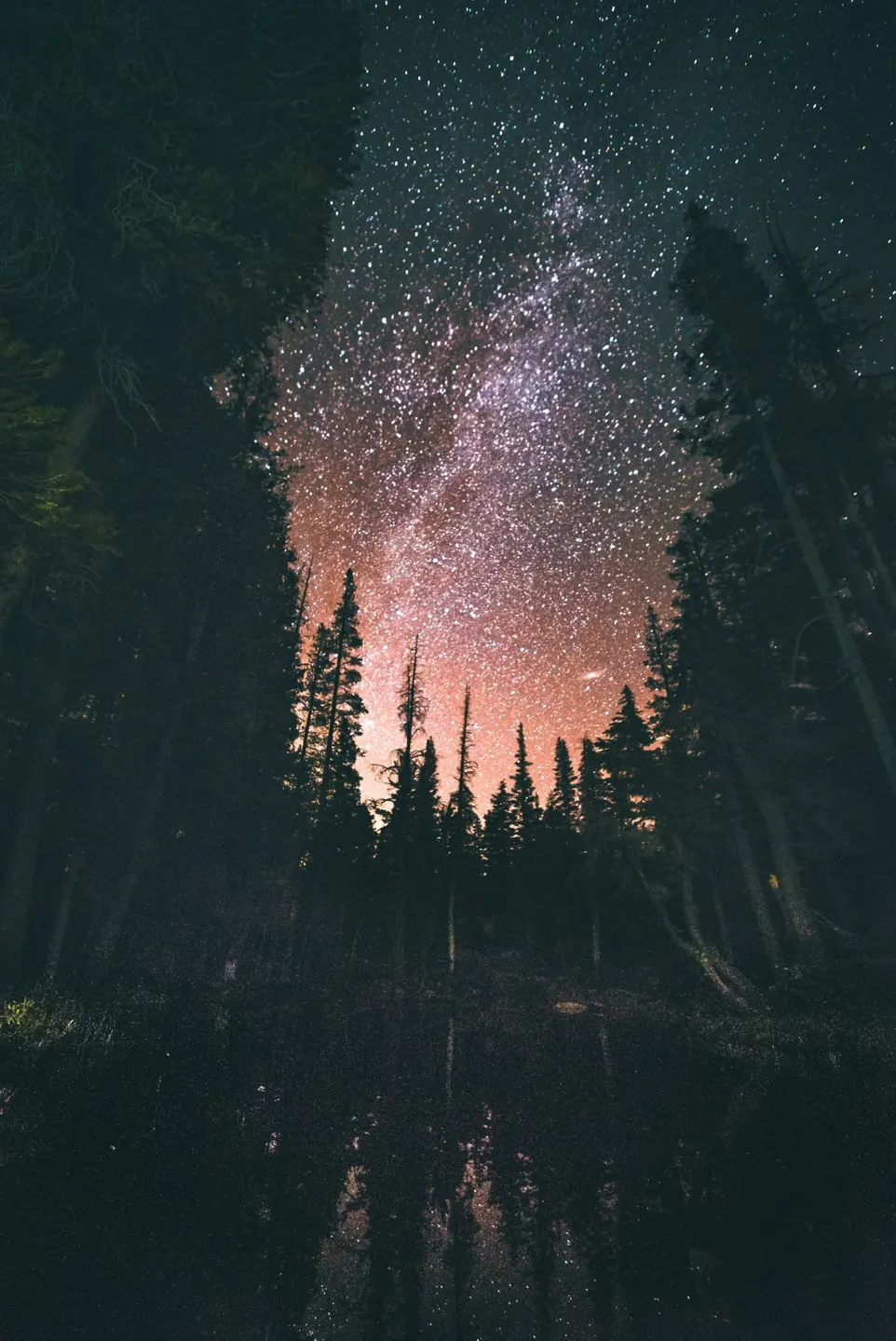
The moon gives the evening a rhythm larger than the calendar on a phone. Watching it change can be a beautiful practice of attention: a reason to step outside, look up, and remember that the world keeps moving beyond the day’s demands.
Astrology has long connected the sky with human experience, including health. It can be meaningful as a symbolic language without becoming a medical map of the body.
Cycles are an interesting question
Because the lunar month and many menstrual cycles are similar in length, researchers have explored whether they sometimes align. An exploratory 2025 study analyzed menstrual records and reported intermittent associations with lunar cycles, with differences across time and groups.
Observational patterns do not establish that moonlight or gravity controls ovulation. They do not provide a reliable way to predict an individual’s fertile window, time conception, or anticipate labor. Measurement choices, selection of participants, changing light exposure, and ordinary cycle variation complicate interpretation.
The research question is legitimate; the leap to certainty is not. A menstruation that arrives on a full moon can be personally striking without being a diagnostic result.
Keep symbolism in its own space
Traditional astrological systems associate signs and planets with organs. These correspondences are cultural beliefs, not validated tests of thyroid function, circulation, fertility, or disease risk. Your birth sign does not establish which illness you will develop or which treatment you need.
Understand the difference between a pattern and a prediction
Two cycles can occasionally line up without one causing the other. When their lengths are similar but not identical, the alignment can also drift. Researchers use statistical methods to ask whether an observed relationship is stronger than might be expected, but the answer still depends on the data collected and the assumptions used.
Even an association across a group may be too small or inconsistent to guide an individual decision. That is particularly important when the decision involves pregnancy timing or a symptom that needs assessment. An intriguing paper can open a question without providing a practical forecasting tool.
Let observation stay open-ended
If you keep a journal, record what happened before deciding what it means. Note the date, the weather, your sleep, and the feeling you want to remember. You can add the moon phase as a point of interest without organizing the rest of the entry around a prediction.
Then allow some entries to be unremarkable. A new moon does not require a profound beginning, and a full moon does not require an emotional climax. The practice can be a way to notice the actual life in front of you rather than a script it must follow.
There is beauty in a recurring cue that asks nothing more than attention. Looking up can remain a pleasure even when the sky is not offering a medical explanation.
A grounded lunar ritual
If the moon appeals to you, use it as a recurring reminder to check in: how have you slept, what have you enjoyed, what would make the next week easier? Track menstrual symptoms on their actual dates rather than trying to fit them to the sky.
New or troubling cycle changes deserve attention on their own terms. Wonder and careful observation belong together; neither requires turning the zodiac into a health forecast.
Put it into practice
Naturopathic foundations
How can a moon ritual support reflection without becoming a health rule?
Use the evening sky as a reminder to pause and notice the season of your own life. Write what you are ready to continue, change, or release. Keep sleep and everyday care steady; the ritual can offer meaning without determining your medical decisions.
A mind–body practice
Make something without an audience
Give yourself five minutes with paper and a pencil. Draw the shapes you see or write whatever is asking for attention. Leave it unfinished if you wish. The practice is making space for expression, not producing something to share.
For education and reflection. Individual needs vary. For persistent symptoms or personal guidance, seek additional care from a qualified clinician or appropriate specialist.
References
- Synchronization of women’s menstruation with the Moon has decreased but remains detectable when gravitational pull is strong (2025) · Exploratory observational human study
- Optimizing natural fertility: a committee opinion (2022) · Professional society evidence guidance