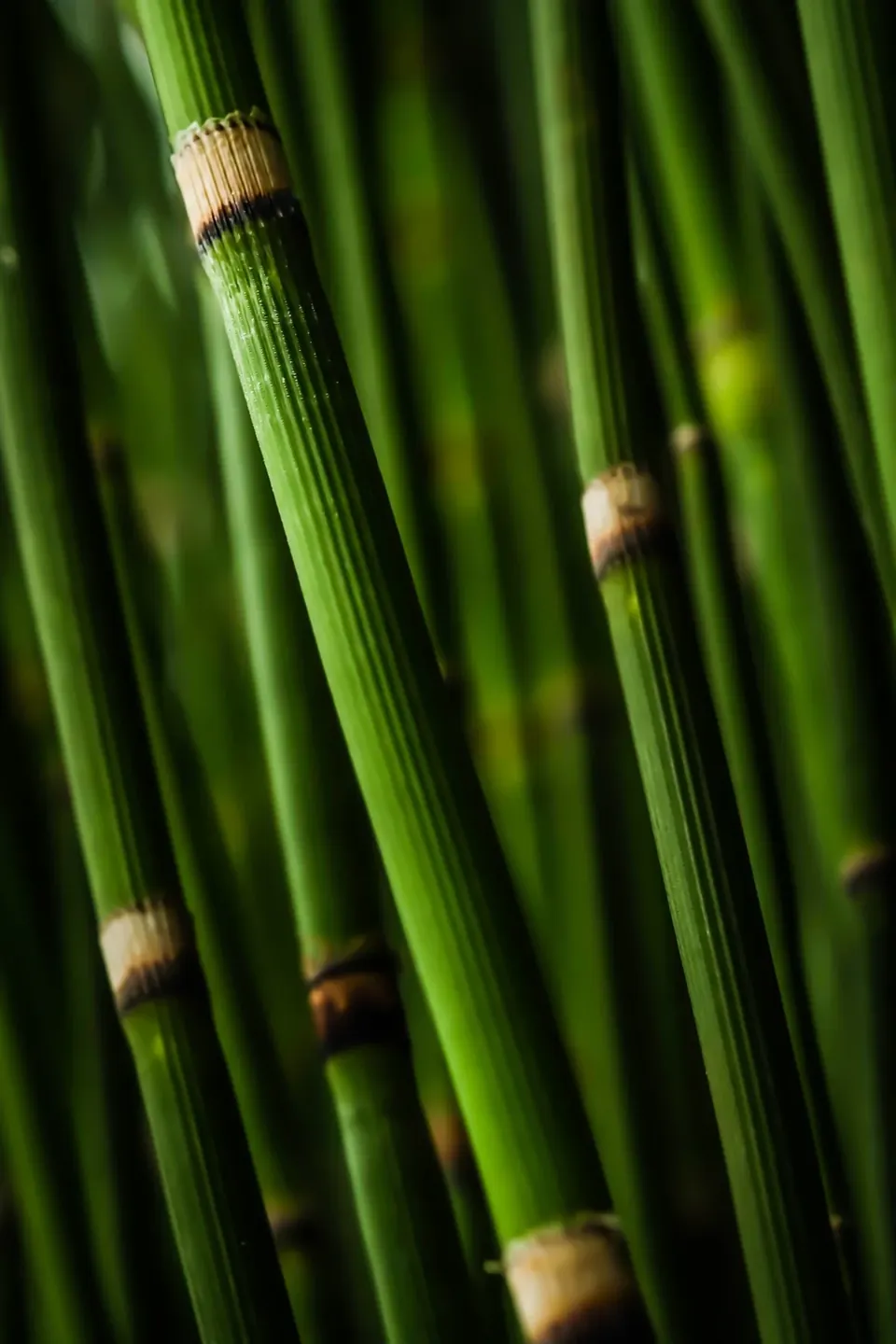
Horsetail looks almost designed: jointed green stems, fine whorls, a spare prehistoric silhouette. Equisetum arvense contains silica, which helps explain its long association with strong hair and nails. Its fine structure looks especially striking against dark stone or water, making it a lovely subject for a garden notebook as well as a familiar name in botanical beauty.
Keep the ritual modest
A botanical bath or a cool rinse can make an ordinary evening feel considered. If you already tolerate a properly labeled topical horsetail product, treat the experience as a cosmetic ritual, follow its directions, and avoid eyes and broken skin. Homemade infusions lack preservative systems, so make only what you will use immediately and discard the remainder. A plain warm bath is an equally good option.
Buying correctly identified material matters. Different Equisetum species are not interchangeable, and this is not a plant to harvest by resemblance alone. Oral use adds uncertainties about product quality, interactions, and safety; it is not a necessary route to better-looking hair.
The silica connection
Evidence does not establish that a homemade horsetail infusion increases hair growth or strengthens nails. Studies of other silicon preparations or multi-ingredient supplements cannot answer that question for a cup of herb tea. Concentration, absorption, and the preparation used all matter.
European assessment recognizes certain horsetail preparations for traditional uses, including minor urinary complaints and superficial wounds. That is not proof of a hair-growth effect. The agency's review specifically noted insufficient characterization for several skin, hair, and body-maintenance claims.
Look at the plant before the promise
Horsetail's segmented form is part of its fascination. Notice the rhythm of the stem and the way its fine branches repeat. A photograph or a botanical drawing can make an elegant addition to a garden notebook, and offers a way to enjoy the plant without turning it into a preparation.
Silica is a starting point for a question
When an ingredient is promoted because it contains a mineral, there are several steps between that fact and a meaningful cosmetic result. How much is in the preparation? How is it used? Was that exact preparation studied? Did the research measure something you would notice, such as a change in breakage, or a different laboratory outcome?
Those questions are especially relevant when a study of a supplement containing several ingredients is used to advertise one herb. The combination may be interesting, but it does not reveal what the plant would do on its own.
A more useful hair-and-nail note
If you are evaluating your routine, record practical details: changes in styling, washing, products, and when you first noticed a concern. Photograph nails or a scalp area in consistent light if useful. Avoid repeatedly testing fragile hair or nails to see whether they are stronger; the observation should be gentle.
A comfortable rinse or bath can remain a small pleasure. For a meaningful change in hair or nails, a clear timeline and attention to the cause are more useful than increasing the strength of an herbal infusion. Keep the botanical curiosity, and give the symptom its own careful consideration.
When to look beyond the bathroom
Sudden shedding, patchy hair loss, scalp pain, or nail changes that persist deserve attention to the cause. Iron status, thyroid problems, recent illness, styling practices, and other factors can be relevant. Avoid self-prescribing horsetail during pregnancy or breastfeeding, or when heart or kidney disease limits fluid intake. A thoughtful hair ritual starts with treating the scalp gently and taking meaningful changes seriously.
Put it into practice
Naturopathic foundations
What should I consider alongside horsetail for hair and nails?
Look at nourishment, recent illness, stress, and the way hair and nails are handled. A gentle botanical ritual can sit alongside these foundations. New shedding or persistent brittleness calls for a clearer explanation before another supplement is added.
Functional tests to consider
Hair shedding or brittle nails can raise different questions from dry lengths or styling damage. When the change is persistent, history and examination help decide whether these tests are relevant.
CBC, ferritin & iron studies
A useful conversation when fatigue, heavy periods, hair shedding, or a restrictive diet raises the question of iron deficiency. Ferritin belongs alongside the blood count and the wider clinical picture; inflammation can raise it.
TSH & free T4
Consider these when ongoing fatigue, cold intolerance, constipation, changing weight, or cycle changes suggest a thyroid question. Thyroid antibodies can add context when autoimmune thyroid disease is suspected. Supplements, medications, and timing matter when interpreting results.
A mind–body practice
A kinder moment at the mirror
Set down the magnifying mirror. Apply a familiar moisturizer with a light touch, noticing temperature and texture. Unclench your jaw. Name one thing your body allowed you to do today that has nothing to do with its appearance.
A little more clarity
Which tests are worth discussing for ongoing hair shedding?
A blood count, ferritin and iron studies, and thyroid testing may be useful when the pattern suggests a nutrient or thyroid contribution. Scalp inflammation, medication changes, recent illness, and postpartum timing also belong in the assessment.
For education and reflection. Individual needs vary. For persistent symptoms or personal guidance, seek additional care from a qualified clinician or appropriate specialist.
References
- EMA: Assessment report on Equisetum arvense herb (2016) · Regulatory evidence assessment