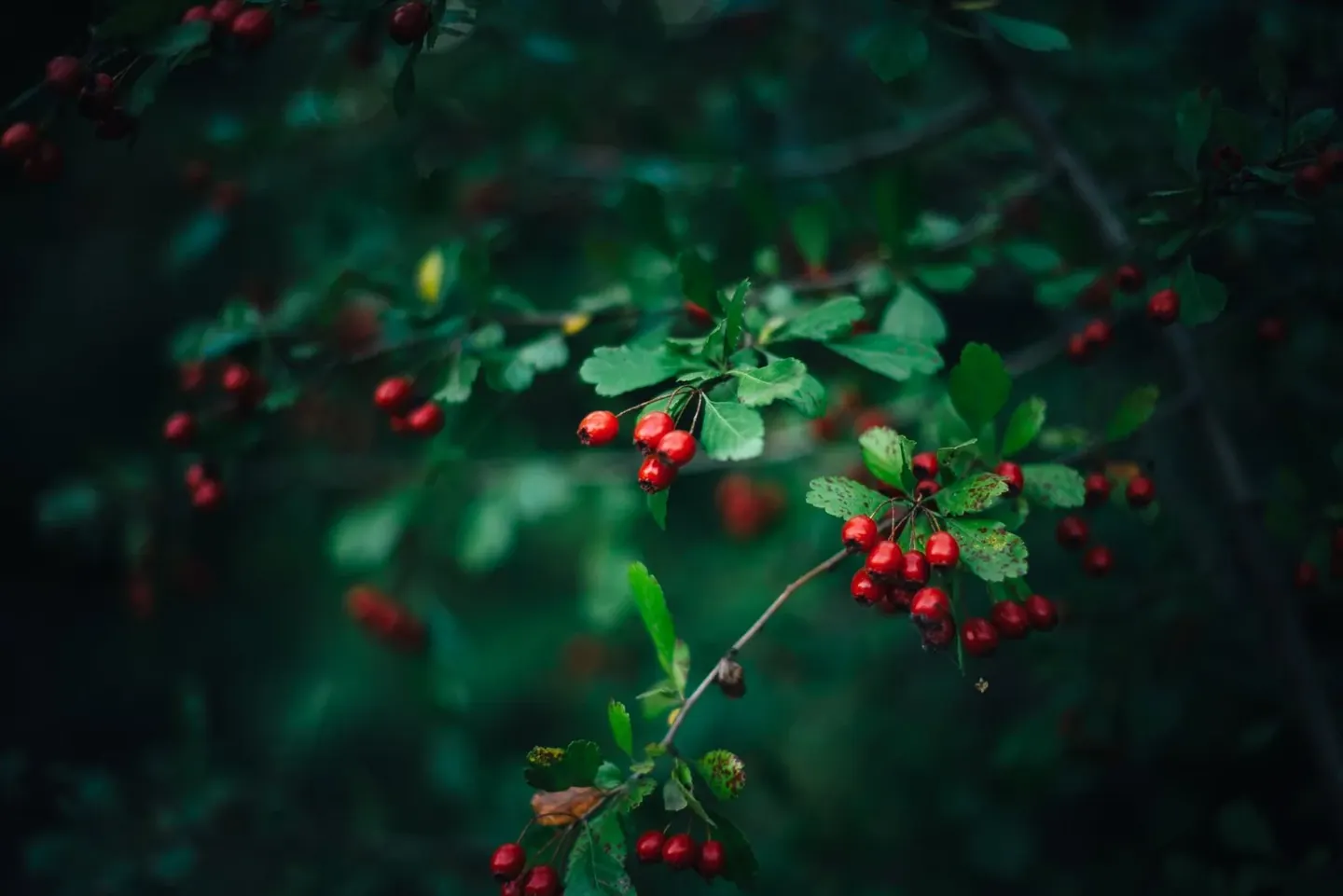
Hawthorn offers a beautiful seasonal rhythm: blossom, green leaf, then clusters of red fruit. In herbal traditions it is closely associated with the heart, both literally and symbolically. That symbolism can be meaningful; the clinical question needs a more exact answer.
The heart’s quieter language
In my original hawthorn story, I explored its energetic symbolism: patience, stillness, and space around a crowded mind. The heart in that conversation is emotional and spiritual as well as physical. Within this symbolic tradition, hawthorn offers an invitation to sit with grief, welcome tenderness, or make room for connection. Blossom, leaf, and fruit mark the changing seasons; the thorn offers its own image of a boundary that protects something living. I like the spaciousness of that heart-centered language. It lets care include what we feel, what we remember, and what we are learning to let in.
Which hawthorn, for which outcome?
Research has examined specific hawthorn preparations in people with heart failure, with conflicting results. Studies often use standardized leaf-and-flower extracts, which are not interchangeable with berry tea. Current evidence does not establish hawthorn as a reliable treatment for chest pain, abnormal heart rhythms, atherosclerosis, or high blood pressure.
The most informative studies ask a defined question about a defined preparation: does this extract improve a particular symptom or outcome in this group of people? That precision matters for a heart herb. Product differences and possible interactions make it especially useful to keep the research attached to the actual extract studied.
A heart-centered ritual
If hawthorn's traditional symbolism appeals, let it prompt a practice with a clear place in daily life: an unhurried walk, a shared meal, a few minutes away from the phone, or a pause to notice how you are doing. A plant can be a reminder of care without becoming a self-prescribed treatment.
Anyone considering a hawthorn supplement should first review the exact product and all medicines, particularly those affecting heart rhythm or blood pressure. Dizziness and digestive symptoms can occur, and long-term safety is not well established. Products marketed as “tejocote root” are a separate concern: regulators have identified some containing toxic yellow oleander instead of the labeled plant.
A heart-centered ritual that leaves room for pleasure
Hawthorn offers a particularly lovely invitation to notice the seasons: blossom, foliage, fruit, and the changing shape of a hedgerow. A plant can have a place in your life through that attention as well as through a preparation. You do not have to turn every meaningful botanical into a daily supplement.
Separate the cup from the capsule
If you enjoy a commercially prepared hawthorn tea, read which plant parts it contains and whether other herbs have been added. A tea blend, a berry product, and a standardized leaf-and-flower extract cannot be assumed to have the same composition or effect. An appealing description on a packet is not enough to make that connection.
This is especially relevant when research involves people with a diagnosed heart condition. The setting of the study, the other care participants received, and the exact extract all shape what the result means. A modest improvement in one measure does not establish prevention of heart attacks or a general tonic effect for everyone.
Give the ritual a practical purpose
Use the moment to pause before dinner, call someone you enjoy, or make time for an unhurried walk if that suits your circumstances. Those are reasons to protect a little space in the day. The herb itself remains a separate decision, particularly if you take regular medicines. A thoughtfully chosen ritual can feel generous without asking a single ingredient to carry the whole meaning of heart health.
When to seek more care
New or unexplained chest pressure, shortness of breath, fainting, or pain spreading to the arm, jaw, or back needs urgent medical attention. New swelling or worsening exercise tolerance also deserves prompt assessment. Do not use a tea or tincture to wait out those symptoms.
The most respectful way to approach a traditional heart herb is to be specific about its evidence and its limits. The heart is worth that degree of attention.
References & further reading
- NCCIH: Hawthorn · Public health evidence summary
For education and reflection. Individual needs vary. For persistent symptoms or personal guidance, seek additional care from a qualified clinician or appropriate specialist.