
Michele’s original diary, in her own words. Additional context follows the story ↓

HE KNEW IT ALL…
He was the first doctor to recognize that disease was associated with environmental factors, diet, and living habits. It seems so commonplace now, but back in 460 BC this was an interesting idea.
Living in the birthplace of Hippocrates, I often walk in nature and ask myself “how did he know so much?”
Long before the advent of technology, Hippocrates discovered many of the “discoveries” today.
In a time when people didn't understand disease or even their own body, Hippocrates showed a deep connection and profound wisdom that is just as valid today as it was many centuries ago.
The Hippocratic Koan School of Medicine was, in a sense the first holistic medical school with the emphasis on patient care. Although, there was much more to learn about diagnosis, biochemistry, physiology, anatomy, and medications, Hippocrates core values are still used as a foundation for medicine and patient care.
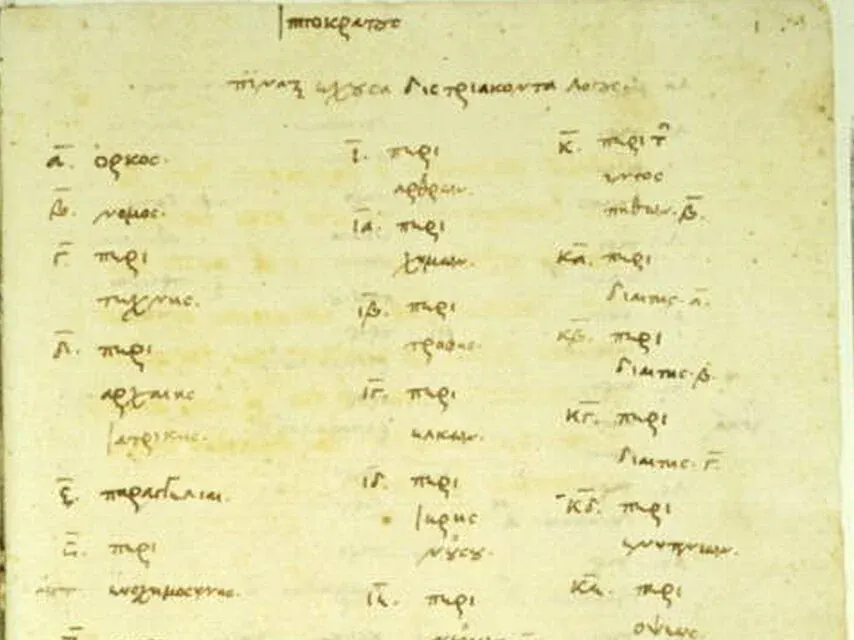
THE PHILOSOPHY
Hippocratic therapy followed nature and believed in the healing power inherent in nature.
“Let food be thy medicine and medicine be thy food”
“Wherever the art of medicine is loved, there is also a love of humanity”
“Natural forces within us are the true healers of disease”
“Everything in excess is opposed to nature”
“It is more important to know what sort of person has a disease than to know what sort of disease a person has”
Science, tradition & further reading
A historical note
Hippocrates is associated with Kos (also written Cos), rather than Crete, where these diaries were written. The Hippocratic Corpus contains work by multiple authors. Its attention to environment, food, and daily habits remains a meaningful subject of historical study.
Some familiar sayings attributed to Hippocrates have uncertain origins. In particular, “Let food be thy medicine” is not a securely documented quotation from the Corpus. The historical analysis below explores that attribution. The original diary’s quotations remain intact as part of the record.
References & further reading
- National Library of Medicine: Greek Medicine and Rationality (n.d.) · Historical institutional exhibit; accessed October 2026
- Let Not Thy Food Be Confused With Thy Medicine: The Hippocratic Misquotation (2013) · Historical textual analysis
Original writing: Medicine Wild Greek Diaries · 2015-05-27
For education and reflection. Individual needs vary. For persistent symptoms or personal guidance, seek additional care from a qualified clinician or appropriate specialist.