
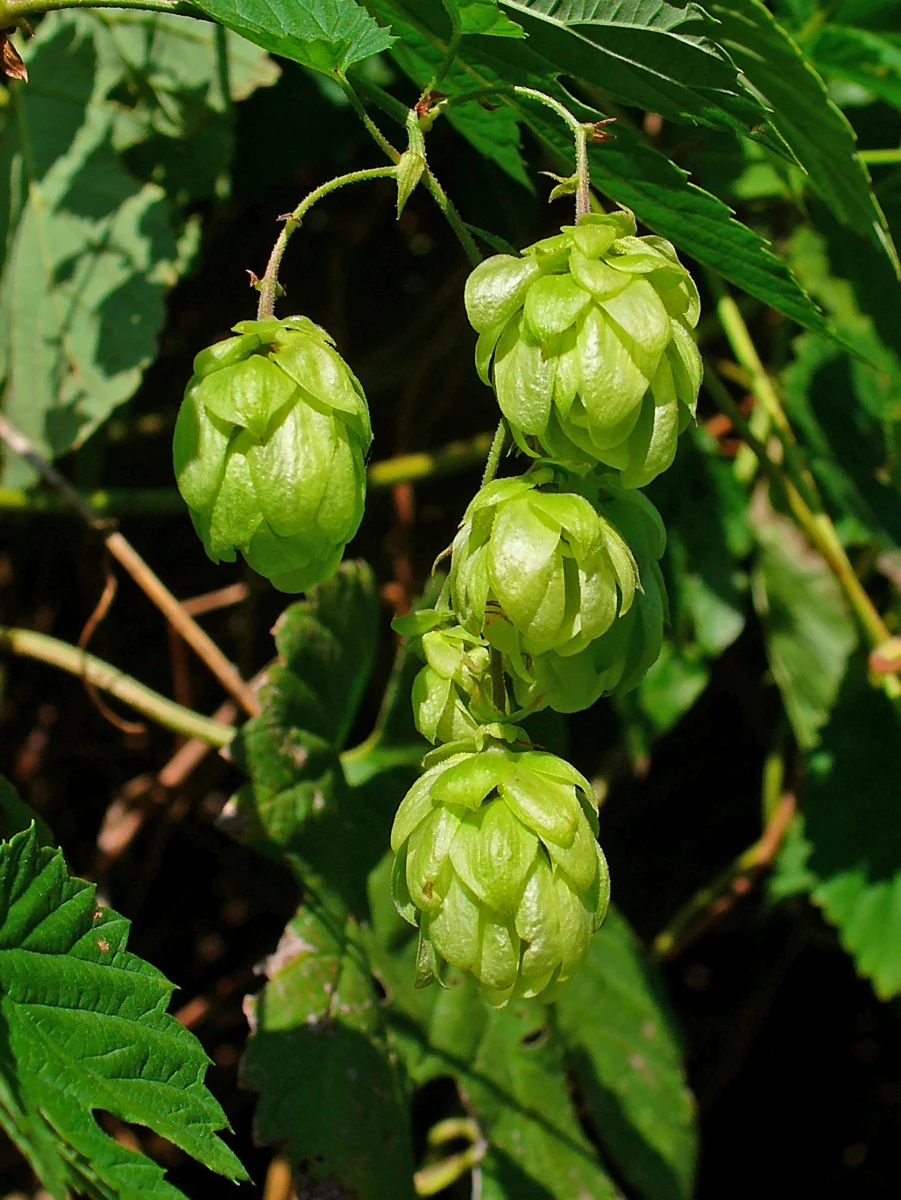
There is more to this beautiful climbing plant than beer.
- Traditional sleep support
- Phytoestrogens
- Menopause research
- Bitter tradition
With its delicate green cones and unmistakably bitter fragrance, hops has spent centuries woven into European herbal traditions. Long before its place in modern botanical research, it was valued for its calming character and its association with sleep and evening rituals.
But hops has another, less familiar story.
Within its resinous flowers are compounds that have attracted attention for their interactions with estrogen receptors, opening a fascinating conversation about botanical medicine and menopause.
It is a plant that belongs to two worlds: the tradition of rest and the modern science of phytoestrogens.
What makes hops interesting?
A botanical for quieter evenings
Hops has traditionally been used to ease mild nervous tension and support sleep. Its bitter, aromatic female flower clusters contain compounds associated with this calming herbal tradition.
A surprising phytoestrogen story
Hops contains 8-prenylnaringenin, a prenylated flavonoid with notable estrogen-receptor activity in laboratory research. Its presence has made specific hop extracts a subject of interest in menopause research, although clinical evidence remains limited.
The tradition of botanical bitters
Beyond its calming reputation, hops belongs to the world of bitter herbal preparations. Traditionally, bitter plants have been used around appetite and digestive rituals.
Preparation changes the experience
A traditional hops infusion, a liquid extract, and a standardized capsule may contain very different concentrations of bitter acids and prenylated flavonoids.
Understanding the preparation is essential to understanding the plant.
The plant’s personality
- Botanical family
- Cannabaceae
- Part traditionally used
- Female inflorescences, or strobiles
- Taste
- Intensely bitter, aromatic
- Traditional energetics
- Bitter, cooling, calming
- Habitat
- Temperate regions; cultivated and naturalized in many parts of the world
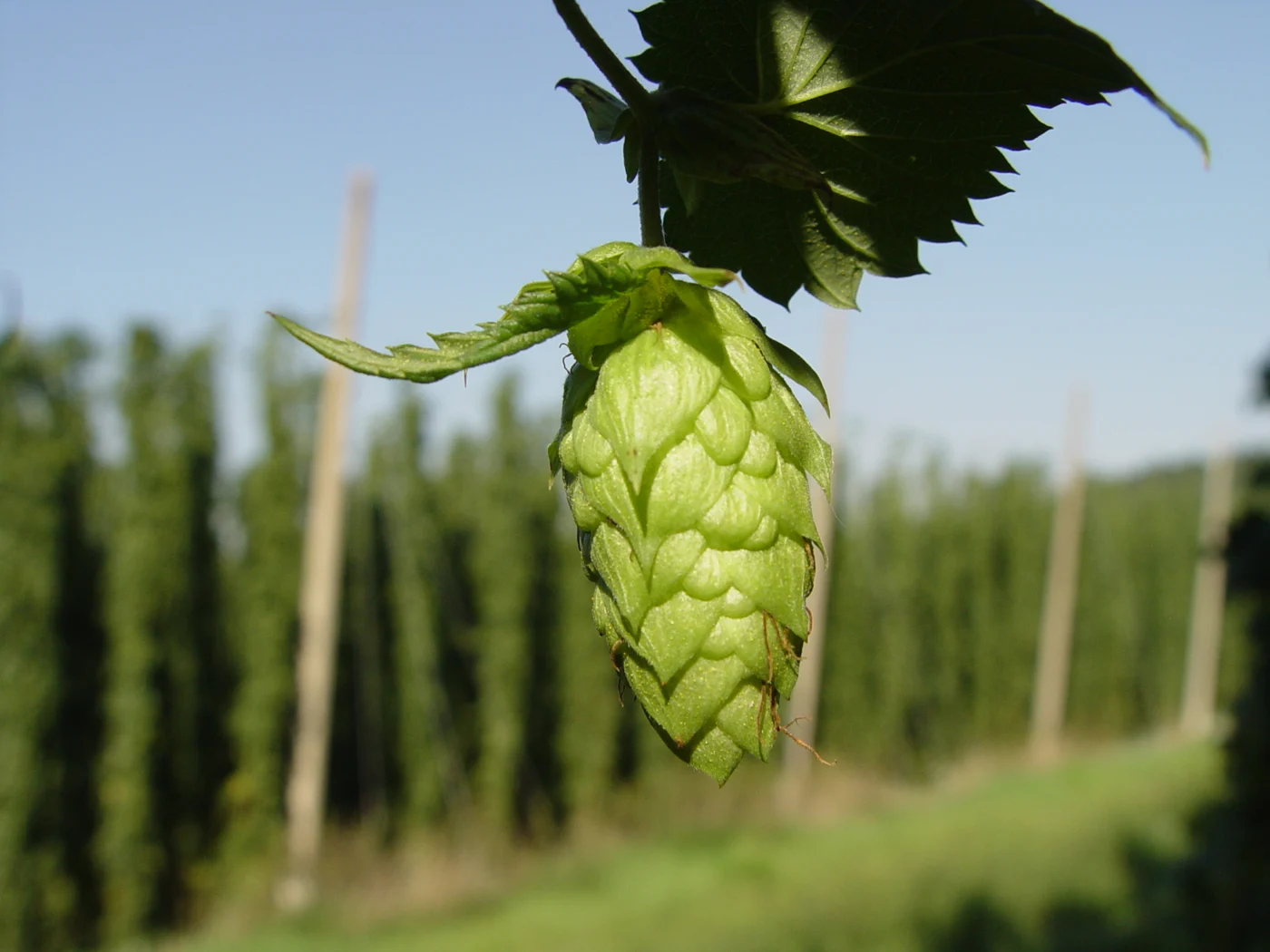
Hops is a vigorous climbing perennial, reaching toward the light while sending its roots deep into the earth.
Its green, papery cones contain lupulin glands, where important resins and aromatic compounds accumulate.
In traditional Western herbal language, hops is often described as a calming nervine and an aromatic bitter—a plant with both a quieting and distinctly digestive character.
Ancient roots
Hops has a long history in European cultivation, especially for brewing and preservation.
Its use as a traditional calming herb developed alongside its culinary role. Herbal preparations made from the female flower clusters became associated with restlessness, tension, and sleep.
Its relationship with menopause, however, is a comparatively modern area of investigation.
This distinction matters. Traditional sleep use and modern phytoestrogen research represent two different dimensions of the same botanical.
What modern science tells us
Hops contains several fascinating groups of compounds.
Bitter acids: Humulones and lupulones contribute to the plant’s distinctive bitterness.
Prenylated flavonoids: These include xanthohumol and 8-prenylnaringenin.
Volatile compounds: Aromatic components contribute to hops’ characteristic scent.
The compound 8-prenylnaringenin has demonstrated significant phytoestrogenic activity in laboratory studies. However, the concentrations found in different hop preparations vary, and laboratory estrogen-receptor activity does not automatically establish a clinical benefit.
The European Medicines Agency recognizes certain hop-flower preparations for traditional use in mild mental stress and sleep support. That recognition is based on longstanding use rather than strong clinical proof.
Research into menopause symptoms remains formulation-specific and less conclusive.
Preparation matters
Herbal infusion
Traditionally prepared from dried female flower clusters. Bitter and aromatic, this is one of the oldest ways of experiencing hops.
Tincture
A liquid botanical extract that may capture a different mixture of constituents, depending on the solvent and extraction conditions.
Capsule or standardized extract
A more concentrated preparation, sometimes designed around particular chemical constituents.
For menopause research, the precise extract and its prenylated flavonoid composition are particularly important.
A traditional cup of hops tea cannot be assumed equivalent to a standardized phytoestrogen preparation.
Compare tinctures, glycerites, capsules, teas, powders & extracts →
From my apothecary
The preparation matters as much as the plant.
When evaluating a hops preparation, I want to understand which part of the plant is used, the method of extraction, and whether the finished product provides meaningful information about its chemical composition.
Curious about hops?
Does hops contain phytoestrogens?
Yes. Hops contains a prenylated flavonoid called 8-prenylnaringenin, which demonstrates estrogen-receptor activity in laboratory studies. However, its amount varies among preparations, and the presence of this compound does not mean every hops product produces meaningful estrogenic effects in humans.
Can hops help during menopause?
Certain hops extracts have been studied for menopausal symptoms, including hot flashes. Some small studies have reported encouraging findings, but the clinical evidence remains limited. Outcomes observed with one standardized extract should not be attributed to ordinary hops tea or unrelated products.
Is hops good for sleep?
Hops has a long history of traditional use for mild nervous tension and sleep support. European herbal authorities recognize this traditional application, although evidence from rigorous studies of hops alone is insufficient to establish its effectiveness for insomnia.
What part of hops is used medicinally?
The female inflorescences, commonly called hop cones or strobiles, are the principal medicinal material. They contain resinous glands associated with the plant’s bitter acids, aromatic compounds, and other constituents.
How is hops different from red clover?
Both plants contain compounds with phytoestrogenic activity, but they have different chemical profiles. Red clover is primarily known for isoflavones such as formononetin and biochanin A, while hops is associated with prenylated flavonoids, particularly 8-prenylnaringenin.
Is hops better as a tincture or capsule?
Neither format is automatically superior. A tincture may reflect traditional liquid extraction, while a standardized capsule may provide more precise information about specific constituents. The appropriate comparison is between verified preparations and their intended uses, not simply between dosage forms.
Can hops affect hormones?
Certain hops constituents interact with estrogen receptors in experimental research. Whether a particular preparation meaningfully influences hormone-related symptoms depends on its composition and clinical evidence. Hops should not be described as simply increasing or balancing estrogen.
What should I consider before using hops?
Hops may cause drowsiness, particularly when combined with other sedating substances. Its phytoestrogenic constituents warrant additional consideration with hormone-sensitive conditions. Adequate safety data for medicinal use during pregnancy and breastfeeding are lacking.
Research & References
Traditional use, experimental receptor activity, and human symptom trials address different questions. The studies below concern specific preparations; they do not establish equivalent effects for every hops product.
- European Medicines Agency — Lupuli flos: overview, herbal monograph and assessment documents
- European Medicines Agency — 2025 addendum to the assessment report on Humulus lupulus L., flos
- Milligan et al. (1999). Identification of a potent phytoestrogen in hops (Humulus lupulus L.) and beer — laboratory study
- Milligan et al. (2002). Oestrogenic activity of the hop phyto-oestrogen, 8-prenylnaringenin — experimental study
- Heyerick et al. (2006). Randomized placebo-controlled study of a standardized hop extract for menopausal discomforts
- Erkkola et al. (2010). Randomized cross-over pilot study of a standardized hop extract for menopausal discomforts
- Kyrou et al. Hops extract and self-reported depression, anxiety, and stress
- HerbalGram 87: Hops—A Review of its Historic and Medicinal Uses
- EMA: Community herbal monograph on Humulus lupulus flower
Care with this plant.
Possible drowsiness; review sedative/alcohol combinations and hormone-sensitive conditions. Medicinal use is not recommended in pregnancy/lactation; keep botanical sachets away from children and animals.
About this article & supplement statements
These statements have not been evaluated by the Food and Drug Administration. These products are not intended to diagnose, treat, cure, or prevent any disease.
Medicine Wild offers botanical education from Dr. Michele Burklund’s naturopathic and functional medicine perspective. This article is for informational purposes and does not replace individual medical advice, diagnosis, or treatment. A qualified practitioner can help you choose care suited to your health history.


