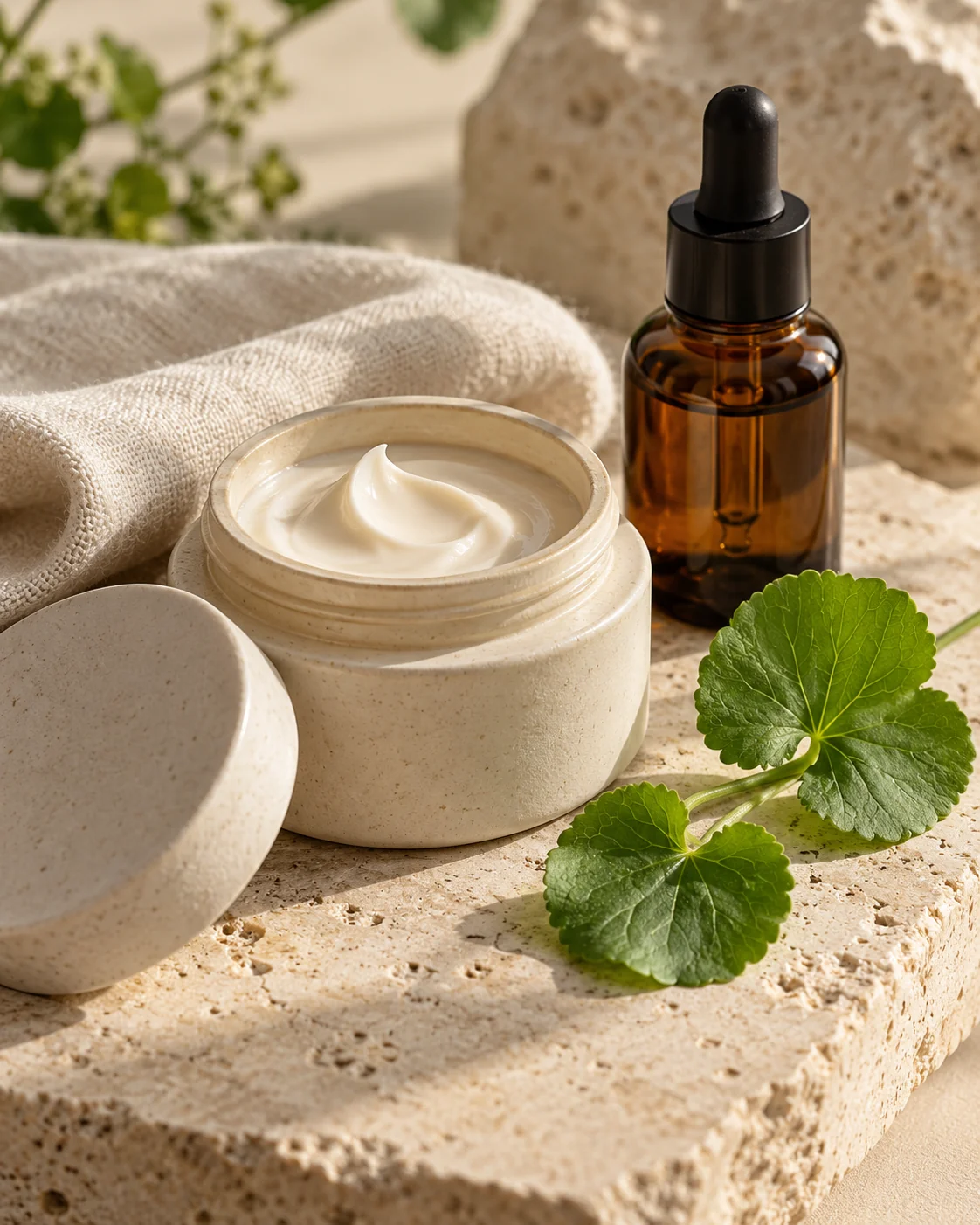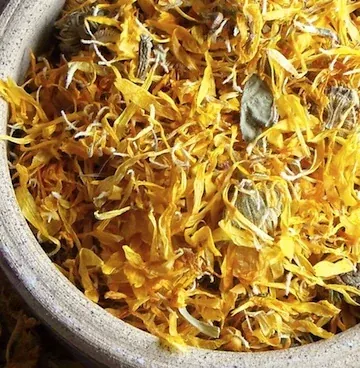
Calendula brings sunshine to a jar: orange-gold petals, a faint herbal scent, and a long association with tender skin. Calendula officinalis is often found in balms, creams, and bath blends. The most sensible place to begin is with what you want the finished product to do—perhaps help dry, intact skin feel comfortable.
Tradition and clinical evidence
Calendula’s longstanding role in minor skin inflammation and superficial wound care is recognized in European herbal assessment under a traditional-use category. Researchers have also explored its compounds in skin-repair experiments. Human evidence is still limited, so the most appropriate everyday expectation is a pleasant, tolerable skin-care ritual—not treatment of eczema, acne, or infection.
A balm's texture also matters. Oils, waxes, and other moisturizing ingredients may contribute substantially to how skin feels. When a product contains several ingredients, a pleasant result does not identify which one helped. Botanical skin care is easier to evaluate when the question is concrete and modest.
A simple golden bath
If you have previously tolerated calendula, a small amount of dried, correctly identified petals in a tied muslin bag brings a golden botanical detail to the bath while keeping loose flowers out of the drain. Keep water comfortably warm, not hot. Use clean materials, avoid broken skin, and stop if the skin stings or itches. The experience is a bath, not a treatment course.
For routine moisturizing, a clearly labeled finished product is easier to use consistently than a homemade water-based mixture, which can spoil. Introduce it on a small area first. Calendula belongs to the daisy family; people with allergies to related plants may react.
Choose the ritual that fits your skin
The same golden flower can appear in a rich balm, a light lotion, or a bath blend. Think first about where and how you want to use it. A hand balm belongs beside the sink; a body lotion may fit after a shower; a bath is an occasional pleasure. The format should make the routine easier to keep.
For a simple after-bath moment
Have a clean towel and a moisturizer you already tolerate ready before you get in. Keep the bath comfortably warm and the botanical addition modest. Afterward, pat the skin gently and apply your familiar moisturizer as directed. I love the simplicity of a little dried calendula in a bath—the golden petals make an ordinary evening feel more considered.
That enjoyment is separate from a claim about treating a skin condition. If your skin is already inflamed, cracked, or unusually reactive, a plain bath and a familiar formula may be the more comfortable choice.
Know what you are buying
Look for the botanical name, Calendula officinalis, on a labeled product. Note the other ingredients, especially fragrance, because the whole formula touches your skin. A shorter ingredient list is not automatically superior, but it can be easier to compare with products you have used before.
Keep a brief note if a new formula causes a reaction: the product name, where you applied it, and when symptoms appeared. That is more helpful than deciding that every botanical—or every moisturizer—is unsuitable for you.
When to seek more care
Spreading redness, increasing warmth or pain, pus, fever, or a wound that is not healing deserves assessment. Extensive or blistering burns should not be managed with a botanical bath. A rash that keeps returning may need its trigger identified. You can keep the golden petals in your life while being precise about their role.
References & further reading
- EMA: Calendula flower (2018) · Traditional-use regulatory assessment
For education and reflection. Individual needs vary. For persistent symptoms or personal guidance, seek additional care from a qualified clinician or appropriate specialist.