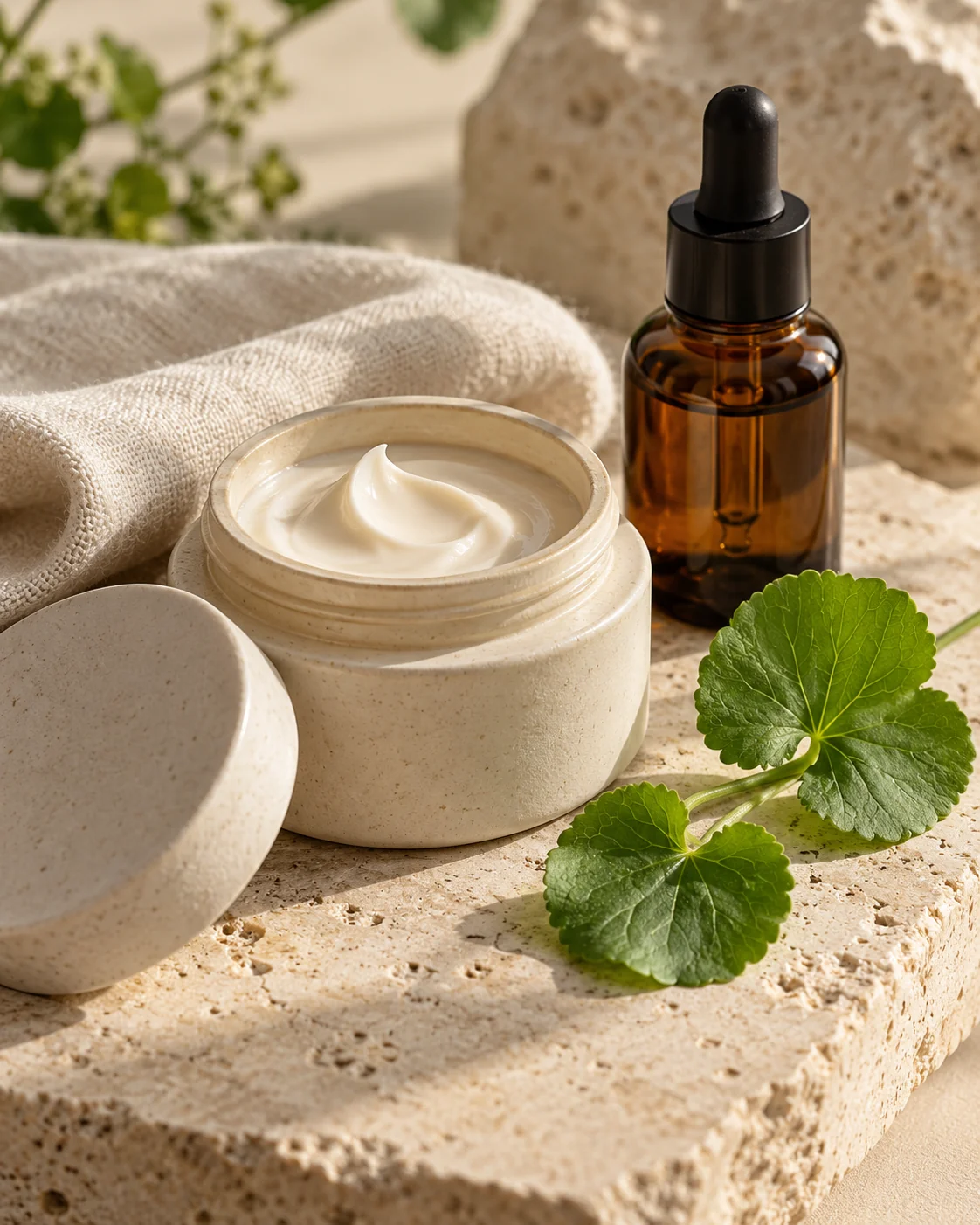
A pared-back beauty shelf can feel like a small luxury: a lip color you love, a mascara that stays put, a moisturizer your skin welcomes. Choosing botanical or organic ingredients can reflect personal values. It does not, by itself, tell us whether a product is safer.
Read beyond the front label
Ingredient databases such as Skin Deep can help you look up what is in a product. Read ratings in context: exposure, concentration, the complete formula, and your own sensitivities matter. Check the package in your hand, since formulas change and an older listing may describe a different version.
FDA guidance explains that an organic claim and cosmetic safety are different questions. Plants contain chemicals, too, and botanical fragrance can irritate sensitive skin. A preservative may play an important role in keeping a product from becoming contaminated.
Build a small edit, not a perfect shelf
Lay out the products you actually reach for in a normal week. There may be fewer than you think. Start there: one comfortable moisturizer, one color you love, an eye product that wears well, and whatever else has a clear role. A pared-back routine can leave more room in both the bathroom and the morning.
Separate your priorities
Ingredient sourcing, packaging, animal-welfare policies, shade range, scent, and skin tolerance are different questions. Decide which matter most to you, then look for specific information. A broad “clean” claim cannot answer all of them at once.
When comparing formulas, keep the use in mind. A lip balm, mascara, and rinse-off cleanser have different jobs and different ways of contacting the body. You do not need to become a cosmetic chemist to make a thoughtful choice; you need enough information to understand the product in front of you.
Buy one new thing at a time if possible. Use it long enough to decide whether you like the texture and performance, while stopping promptly if it irritates. The most elegant shelf is the one that earns its space through everyday usefulness.
Make the choice practical
- Check the ingredient list on the actual package, especially if you have a known allergy.
- Introduce one new product at a time and test a small area before broader use.
- For reactive skin, consider a simple fragrance-free formula.
- Keep applicators clean, follow storage directions, and replace products that change smell or texture.
- Choose color, texture, packaging, and sourcing according to your preferences without asking a marketing word to prove safety.
The goal is a shelf that works for you. If a product repeatedly causes itching, burning, or swelling, stop using it. Persistent reactions deserve help identifying the ingredient involved.
Put it into practice
Naturopathic foundations
How can I simplify a natural beauty routine?
Begin with the products you actually use and the needs of your own skin. Choose a few dependable essentials, review ingredients you know you react to, and introduce changes individually. A shorter shelf makes it easier to see what your skin welcomes.
A mind–body practice
A kinder moment at the mirror
Set down the magnifying mirror. Apply a familiar moisturizer with a light touch, noticing temperature and texture. Unclench your jaw. Name one thing your body allowed you to do today that has nothing to do with its appearance.
For education and reflection. Individual needs vary. For persistent symptoms or personal guidance, seek additional care from a qualified clinician or appropriate specialist.
References
- FDA: Organic Cosmetics (2022) · Regulatory consumer guidance