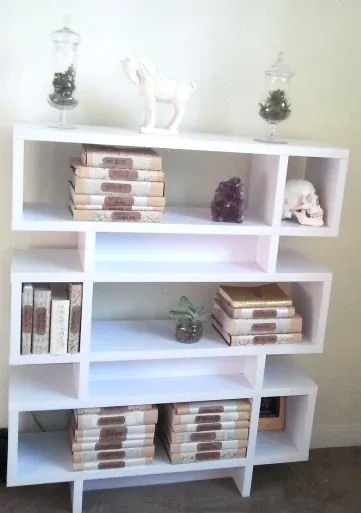
I began this project while looking at my medical-school books and wondering how to bring them into the rest of my decor. They were references I wanted to keep using, but the shelf could use a little attention. Removable paper covers offered an easy way to do both.
Choose your paper
Use sturdy decorative paper that folds cleanly, a pencil, a ruler, and scissors. For valuable or delicate books, choose suitable archival materials and avoid adhesives touching the book itself. Leave original dust jackets somewhere safe.
Make the cover
- Place the paper face down. Open the book on top, covers against the paper, and lightly mark its outline.
- Cut with an extra 1½ inches above and below the book and about 3 inches beyond each side.
- Remove the book. Fold the top and bottom margins inward so the paper matches the book's height.
- Return the open book to the center. Allow about ¼ inch of give near each outside edge before folding the side flaps inward to create pockets.
- Slide the front and back covers into their pockets. Close the book gently and adjust if the paper pulls on the binding.
Choose a palette with room to breathe
Start with two or three papers that share a color or a similar level of contrast. A plain paper can sit beside a quiet pattern; you do not need every book to match. Wrap one or two volumes first and put them back on the shelf before committing to the whole collection.
Keep the paper weight manageable. Something too stiff can resist the folds and pull awkwardly when the book opens. Something too thin may tear at the corners. Test the movement of the finished cover as carefully as you test its appearance.
Label for the way you use the shelf
Write the title clearly enough to find it quickly. If a book is a working reference, consider a small label near the bottom of the spine rather than a decorative treatment that hides the information. The project is successful when it makes the collection more inviting without making it harder to use.
Stop before it feels too uniform
Leave a few original spines visible, especially books whose covers you love. A shelf can look considered while still showing the history of its contents. The point is to bring the books into the room, not to erase their identity.
Add a spine label so the book remains easy to find. A mix of related colors can feel more relaxed than perfectly matching covers; one contrasting pattern gives the shelf somewhere for the eye to land.
The best result still behaves like a book. If it cannot open comfortably, loosen the cover. Beauty should make the collection more inviting to use.
Put it into practice
Naturopathic foundations
How can a small creative project help me slow down?
Choose a manageable task, prepare the tools, and give it a short space without interruptions. Notice texture and color as you work. Keep the goal simple enough that the process can be enjoyable even if the project is not finished today.
A mind–body practice
Make something without an audience
Give yourself five minutes with paper and a pencil. Draw the shapes you see or write whatever is asking for attention. Leave it unfinished if you wish. The practice is making space for expression, not producing something to share.