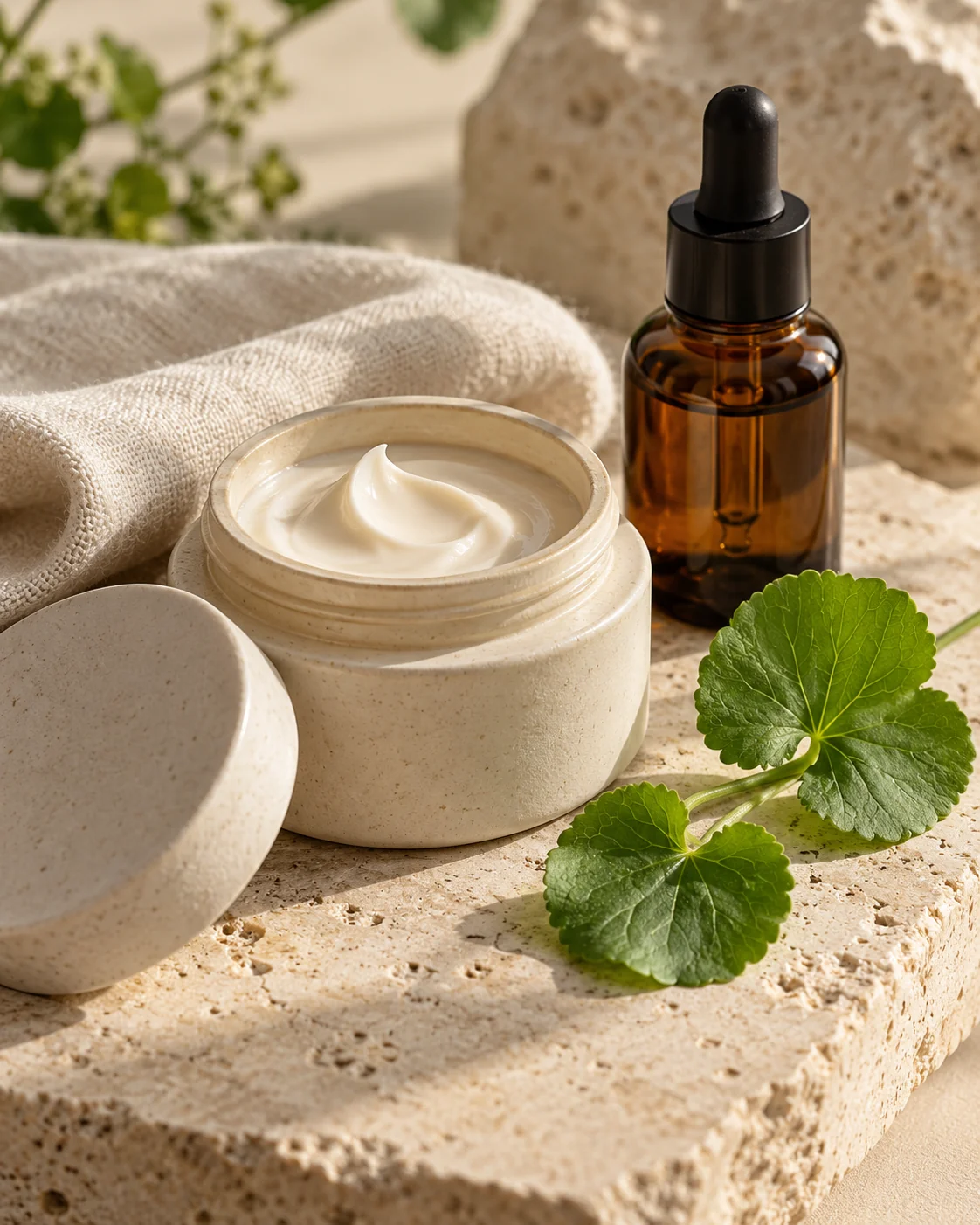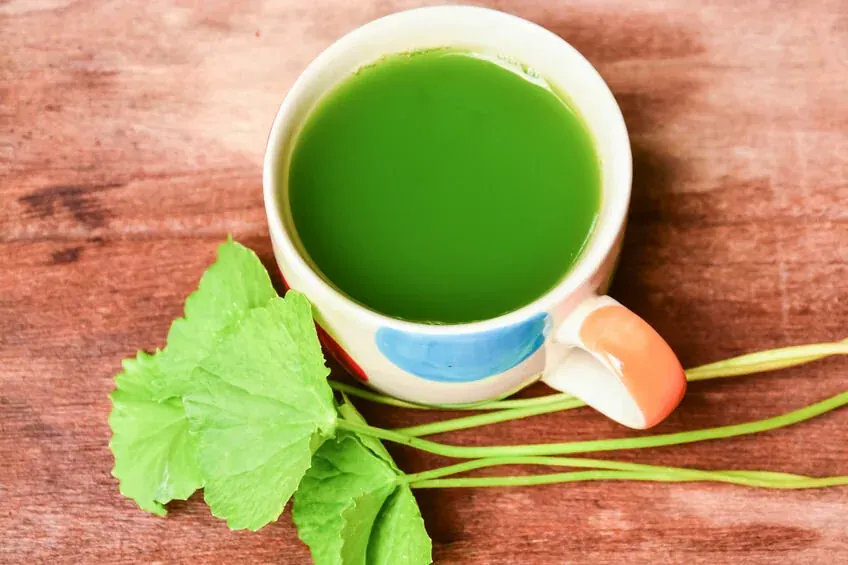
Centella asiatica has moved from the herbal shelf into moisturizers, serums, and soothing creams, often under the name cica. Its appeal is easy to understand: a botanical story paired with a skin-care goal that feels useful—comfortable, well-hydrated skin.
The most interesting evidence is specific
Centella contains triterpenoid compounds, including asiaticoside and madecassoside, that are studied in skin biology. In a small 2016 human study, creams and gels containing standardized Centella extract were tested on volunteers’ forearms over four weeks. Certain formulations improved measured hydration and reduced water loss.
That supports interest in the ingredient. It does not establish that every cica product rebuilds collagen, erases stretch marks, prevents keloids, or has the same effect on the face. Laboratory mechanisms and cosmetic outcomes are different levels of evidence.
Let the formula work for you
Look for a product suited to your skin and a complete ingredient list. Introduce it on a small area, then give your routine time before adding something else. The moisturizer surrounding an extract can matter as much as the headline botanical. Stop if redness, itching, or swelling develops.
A homemade oil infusion cannot be assumed to extract the same compounds at the same concentrations used in research. A sunny-window infusion has no validated potency or shelf life. If you enjoy botanical oils, use them as a separate cosmetic ritual; do not expect them to reproduce a standardized study product.
Build a cica routine around the texture you like
A lightweight gel, a lotion, and a rich balm may all contain Centella, yet feel entirely different. Start with how the finished product fits your skin and climate. A formula that sits comfortably under your usual daytime products may be more useful than one chosen only for a long list of botanical ingredients.
Read the research name and the label name
“Cica” is a familiar beauty term; the ingredient list gives more detail. Look for Centella asiatica or named constituents such as madecassoside, and remember that their presence alone does not tell you the concentration or the result. A study on one standardized extract should be read as evidence about that preparation, not a guarantee attached to the plant’s name.
When an advertisement refers to a percentage improvement, check what was measured and what it was compared with. A change from baseline is different from a difference against placebo. Instrument readings, participants’ impressions, and photographs are also different kinds of information. All can be useful when described clearly.
Give comfort a fair trial
Keep the rest of your routine steady, use the product as directed, and notice whether your skin feels more comfortable through the day. If you choose to take photographs, use similar lighting and avoid judging a product by one unusually good or bad morning. A well-tolerated moisturizer that you enjoy using has value even when the changes are subtle.
Where cica meets microbiome skincare
A cica cream may sit beside a probiotic serum on the beauty shelf, but the two claims ask different questions. A botanical formula can improve hydration without having been shown to change the skin microbiome. A laboratory finding about a plant compound and a bacterium does not establish a benefit from applying a finished cream to a face.
When a label brings both stories together, look for the human study behind the combination. Was the finished product tested, or only an ingredient? Did people experience less dryness or discomfort, or did a laboratory measure change? Was there a comparison formula? These details make an interesting claim more useful without taking the pleasure out of the product.
Read a new study without losing the plot
The 2026 oral Centella trial is a good example of why route matters. Swallowing a standardized extract exposes the body differently from applying a moisturizer. An oral result cannot establish the effect of a cream, and a soothing cream cannot establish that a capsule is worth taking.
For the topical routine, choose a job you can recognize: a comfortable finish after washing, a texture that layers well, or fewer moments of tightness. Keep the rest of your routine familiar while you introduce the formula. A botanical ingredient earns a place by being useful to your skin, not by asking you to reinterpret stinging as progress.
Read more about the relationship between the barrier and its resident organisms in our skin-microbiome guide.
A kinder view of texture
Stretch marks and changing skin texture are normal parts of many lives. A cream can be pleasurable without making them disappear. Use cosmetics only on intact skin; a wound, burn, or raised growing scar needs an appropriate assessment rather than a home extract.
Oral research is developing too. A 2026 trial randomized 112 middle-aged Korean women to a Centella extract or placebo for 12 weeks and reported improvements in wrinkle-related measures, with small changes in several other skin measurements. The analysis focused on participants who followed the protocol, and several authors had industry affiliations. This is promising, product-specific evidence—not proof of long-term benefit or safety for every oral supplement. A comfortable topical routine remains a sensible place to begin.
References & further reading
- Moisturizing and Antiinflammatory Properties of Cosmetic Formulations Containing Centella asiatica Extract (2016) · small human topical-formulation study
- Microbiological Safety and Cosmetics — FDA · regulatory safety guidance
- A Randomized, Double-Blind, Placebo-Controlled Trial Assessing the Effects of Oral Centella asiatica Extract on Skin Aging-Related Parameters in Middle-Aged Korean Women (2026) · randomized human trial; author-institution abstract
For education and reflection. Individual needs vary. For persistent symptoms or personal guidance, seek additional care from a qualified clinician or appropriate specialist.