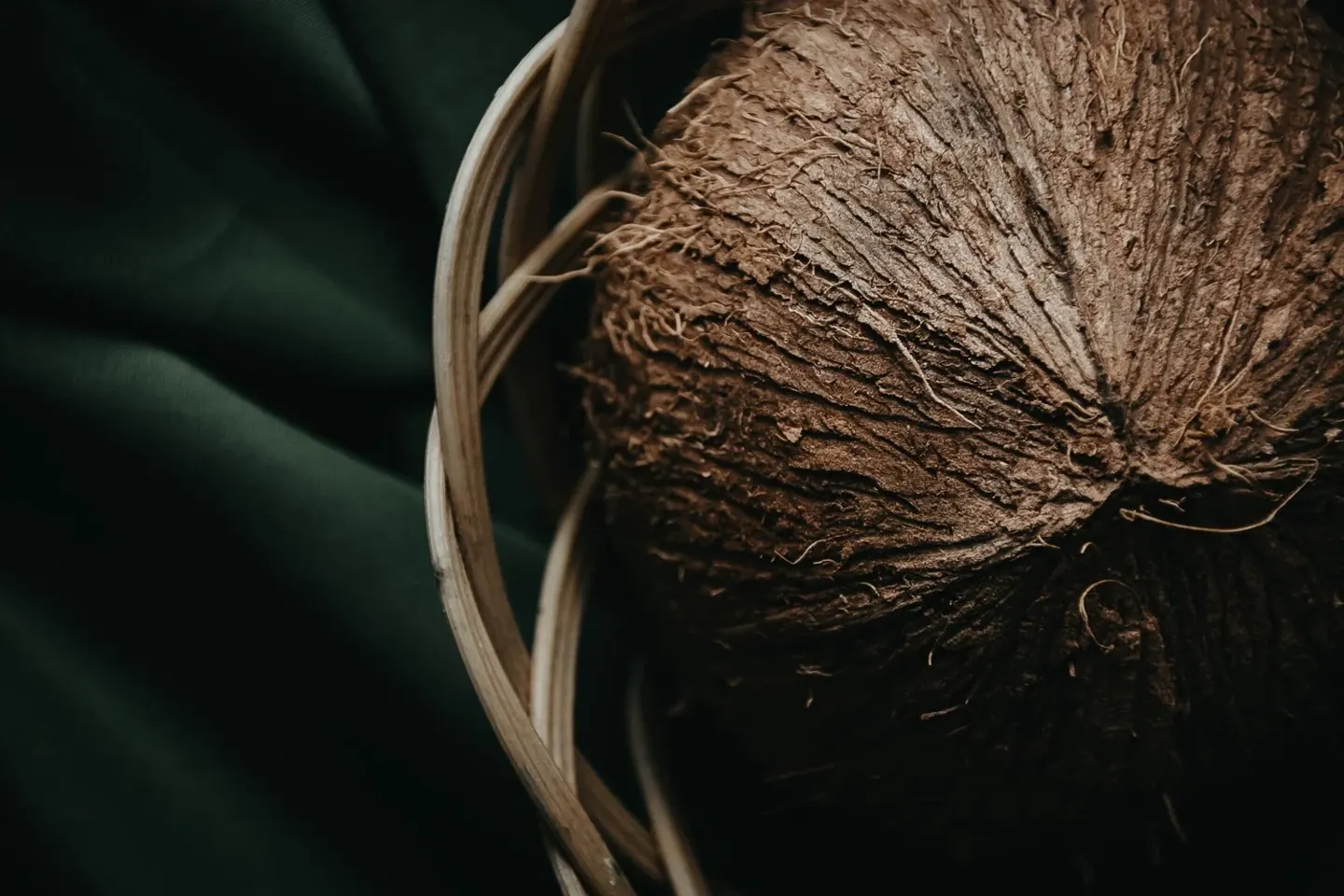
Coconut oil gives a hair ritual a familiar, almost kitchen-like simplicity. Used sparingly on the lengths, it can add slip and help some hair feel smoother. The right amount depends on your texture: what feels rich and nourishing on one head may feel heavy on another.
Start smaller than you think
Warm a small amount between your hands and smooth it onto the ends before washing. Keep it away from a scalp that tends to feel greasy or irritated. Wash out thoroughly and judge the result once the hair is dry.
For a richer kitchen mask, combine three tablespoons of coconut oil with one mashed avocado, apply from the ends upward, and cover with a shower cap. Make a fresh single-use batch, mash very smoothly, and keep the contact time comfortable rather than assuming longer is better. Fine or short hair may need much less.
Make the mask easier to use
If you choose the avocado version, use ripe fruit and mash or blend it until completely smooth. Small pieces can be difficult to rinse out. Prepare only what you need, keep the mixture away from the eyes, and use an old towel around your shoulders to protect clothing.
Work in small sections
Begin at the ends, where you want the conditioning feel, and smooth a little through each section. Stop before the hair feels heavily coated. A shower cap can keep the mixture contained, but there is no need to add heat or leave it on for longer to make the ritual count. Follow with your usual wash routine and rinse carefully.
For a first try, plain coconut oil may be easier to evaluate than the combined mask. If it makes the hair feel weighed down or takes several washes to remove, reduce the amount or leave it out. A product does not have to suit every texture to be useful for some people.
Judge the result when the hair is dry
Notice softness, manageability, and whether the lengths feel comfortable between washes. Keep the rest of the routine familiar while you decide. If your main concern is breakage, a persistent scalp problem, or a sudden change in shedding, a conditioning experiment answers only part of the question. The ritual can be pleasant without needing to explain every hair concern.
What the research adds
A laboratory study of human hair fibers found that coconut oil reduced protein loss compared with the other oils tested. That supports its use as a conditioning ingredient, but it is not evidence that it grows hair, repairs every type of damage, or treats scalp disease.
Discard any avocado mixture after use, avoid slipping on oily shower surfaces, and stop if itching or a rash develops. Persistent flaking, scalp pain, or sudden hair shedding deserves a closer look. For ordinary dry lengths, a small, well-tolerated pre-wash ritual may be all you want.
Put it into practice
Naturopathic foundations
How can I use a hair oil without making the routine complicated?
Start with a small amount on the lengths if it suits your texture, and keep washing and styling gentle. Separate dry or damaged hair from new shedding at the scalp. The first asks about care and handling; the second may need a broader assessment.
Functional tests to consider
Hair shedding or brittle nails can raise different questions from dry lengths or styling damage. When the change is persistent, history and examination help decide whether these tests are relevant.
CBC, ferritin & iron studies
A useful conversation when fatigue, heavy periods, hair shedding, or a restrictive diet raises the question of iron deficiency. Ferritin belongs alongside the blood count and the wider clinical picture; inflammation can raise it.
TSH & free T4
Consider these when ongoing fatigue, cold intolerance, constipation, changing weight, or cycle changes suggest a thyroid question. Thyroid antibodies can add context when autoimmune thyroid disease is suspected. Supplements, medications, and timing matter when interpreting results.
A mind–body practice
A kinder moment at the mirror
Set down the magnifying mirror. Apply a familiar moisturizer with a light touch, noticing temperature and texture. Unclench your jaw. Name one thing your body allowed you to do today that has nothing to do with its appearance.
A little more clarity
Which tests are worth discussing for ongoing hair shedding?
A blood count, ferritin and iron studies, and thyroid testing may be useful when the pattern suggests a nutrient or thyroid contribution. Scalp inflammation, medication changes, recent illness, and postpartum timing also belong in the assessment.
For education and reflection. Individual needs vary. For persistent symptoms or personal guidance, seek additional care from a qualified clinician or appropriate specialist.
References
- Effect of mineral oil, sunflower oil, and coconut oil on prevention of hair damage (2003) · laboratory study of human hair fibers
- Microbiological Safety and Cosmetics — FDA · regulatory safety guidance