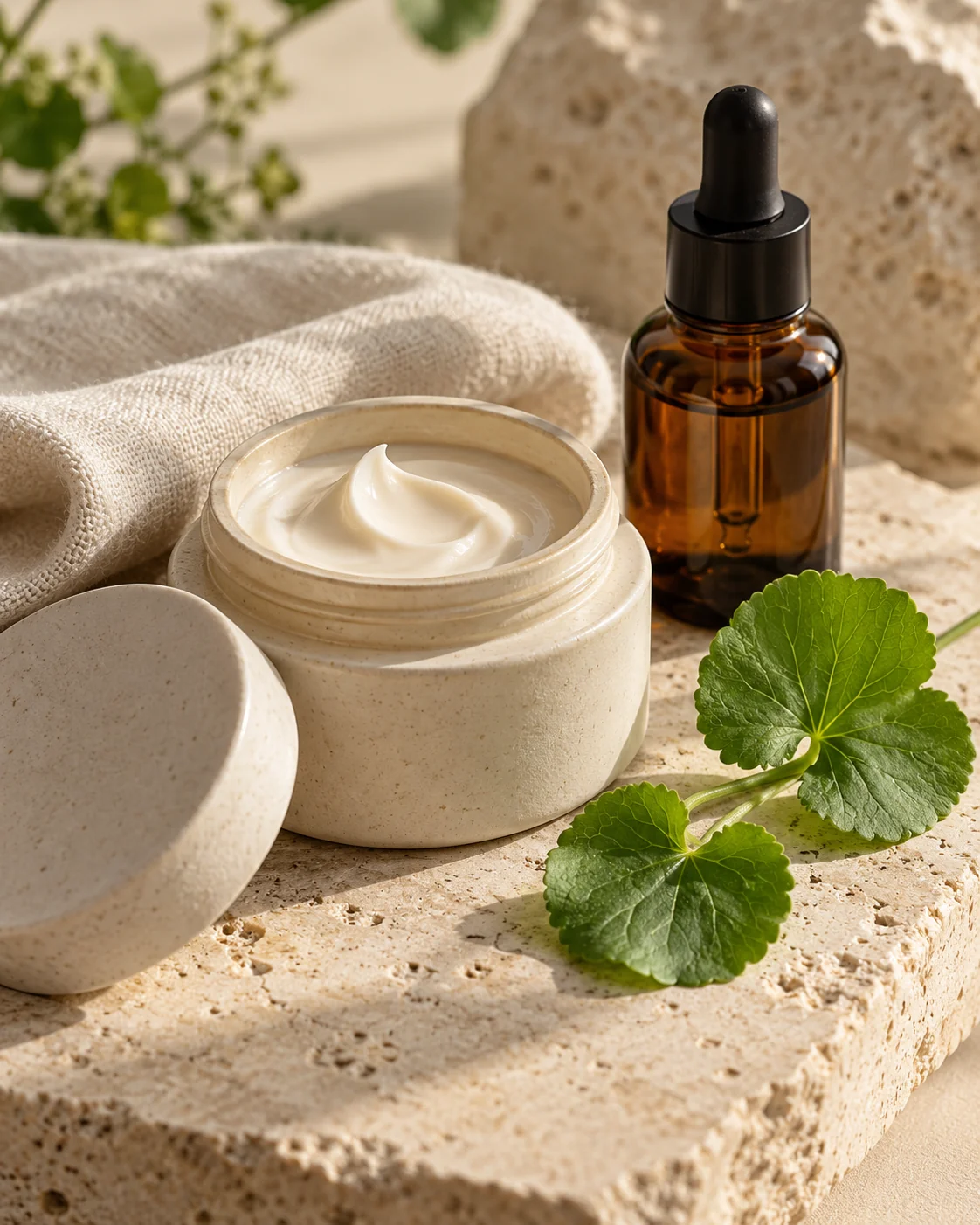
During a year of moving and traveling, I kept finding myself without the products I usually relied on. In Greece, olive oil was close at hand; in tropical places, coconut oil was easy to find. The experience made me pay more attention to what my skin actually liked.
Winter often brings a familiar tightness: cold air outdoors, dry heated rooms indoors, and the temptation to linger under very hot water. A little consistency can do more for comfort than a collection of seasonal “superfood” treatments.
Keep the water comfortable
Use lukewarm water and keep washing gentle. Pat the skin rather than rubbing it dry, then apply a familiar moisturizer while it is still slightly damp. If the air is very dry, a properly cleaned humidifier may make the room feel more comfortable.
Choose oils individually
An oil can help reduce moisture loss, but different oils behave differently. My travel preferences are personal observations, not a rule for all skin. Small human studies suggest repeated olive-oil use can impair the skin barrier, particularly relevant to eczema-prone skin. A bland, fragrance-free moisturizer may be a better fit when skin is irritated.
Introduce one product at a time and test it on a small area. If an oil leaves your face itchy, congested, or red, move on; there is no benefit in persuading your skin to like it.
Put the mandarins on the plate
Whole mandarins, clementines, and satsumas bring vitamin C, sweetness, and fiber to winter meals. Their strained juice contains much less fiber. Enjoy the fruit as food rather than relying on raw citrus juice or peel as a facial treatment.
Acidic juice, rough peel scrubs, and some citrus oils can irritate skin; certain oils also increase sensitivity to sunlight. The brighter ritual is simpler: peel a mandarin, enjoy its scent, and leave your face in the care of products it tolerates.
A small routine for a dry-weather week
Choose a few dependable products and make them easy to reach. Put moisturizer near the sink or shower, keep a hand product where you tend to notice dryness, and have a soft towel ready. A routine that removes effort is more likely to survive a busy week than one built around occasional intensive treatments.
Morning: protect the comfort you have
Cleanse only as much as your skin and the products you use require. If washing leaves you tight, reconsider the temperature, duration, and cleanser before adding another active ingredient. Dress for the weather, including gloves when cold air makes your hands uncomfortable.
Evening: simplify the transition
Remove makeup and other residue gently, then use a familiar moisturizer. Skip the impulse to scrub away every dry patch. Flaking is not necessarily an invitation to exfoliate more; an irritated barrier may need less friction and fewer new products.
At the table: keep variety easy
A bowl of citrus, a pot of beans, frozen greens, and a few nuts or seeds can make winter meals varied without a special “skin diet.” Choose whole fruit when you want its fiber, and let juice remain a different food. No single winter ingredient has to be responsible for your complexion.
When traveling, carry a small amount of a product you know you tolerate rather than assuming the most accessible local oil will suit your face. Keep the spirit of discovery for the market and the landscape, while letting reactive skin enjoy a little predictability.
The barrier is a living landscape
Think of the outer skin layer as a finely arranged surface of cells and lipids. Ceramides, cholesterol, and fatty acids help that surface hold on to water. Its resident microbes live within this changing environment; a dry shin and an oily forehead offer very different places to settle.
A 2022 human study followed a particular body lotion for five weeks and measured improved hydration and barrier properties alongside changes in the skin’s microbial community. The researchers also found changes in skin lipids. It is an intriguing connection, although it cannot tell us that the microbial changes caused the moisturizing benefit—or that every lotion does the same thing. Several authors worked for the manufacturer. Read the study.
The practical implication is reassuring: your everyday moisturizer can be a meaningful part of caring for the environment where skin microbes live. You do not need to purchase a separate bacterial serum to make that routine count.
Give each texture a job
A lotion spreads easily over a large area. A cream often feels more substantial on a dry cheek or shin. A balm can provide a concentrated finishing layer where friction and weather make skin uncomfortable. The names are only a starting point: ingredient lists and how a formula behaves on your skin are more useful than the jar’s weight or price.
Look for a blend that brings moisture and helps retain it. Glycerin is a familiar humectant; ceramides are among the lipids used in barrier-focused formulas. An oil contributes slip and softness, but an oil-only ritual is different from a moisturizer that combines water-binding ingredients with protective lipids.
A winter shelf that earns its space
Put the dependable cream where you will use it, not behind the occasional mask. Keep a smaller tube with your gloves or in a travel bag. If your usual product begins to sting, stop and reconsider what changed: weather, washing, exfoliation, or the skin itself. A new seasonal label is less useful than a routine you understand.
For a deeper look at the organisms sharing that surface, explore the Medicine Wild guide to the skin microbiome.
Cracking, bleeding, persistent itch, or an expanding rash deserves assessment. Winter skin care should feel soothing enough that you want to keep doing it.
References & further reading
- American Academy of Dermatology — Dry skin: Diagnosis and treatment · professional patient guidance; accessed 2026
- Danby et al. — Effect of olive and sunflower seed oil on the adult skin barrier (2013) · small controlled human studies
- FDA — Aromatherapy (2023) · government safety guidance
- Murphy et al. — Barrier lipids and microbiome changes after lotion use (2022) · human cosmetic study; manufacturer affiliations
For education and reflection. Individual needs vary. For persistent symptoms or personal guidance, seek additional care from a qualified clinician or appropriate specialist.