You do not need acreage—or a complete lifestyle overhaul—to feel more connected to the things you use. A pot of herbs on a windowsill, a repaired sweater, a jar that gets another life: small acts of tending can change the texture of a week.
Start where the pleasure is
- Grow one vegetable or herb you actually like to eat. A container is enough.
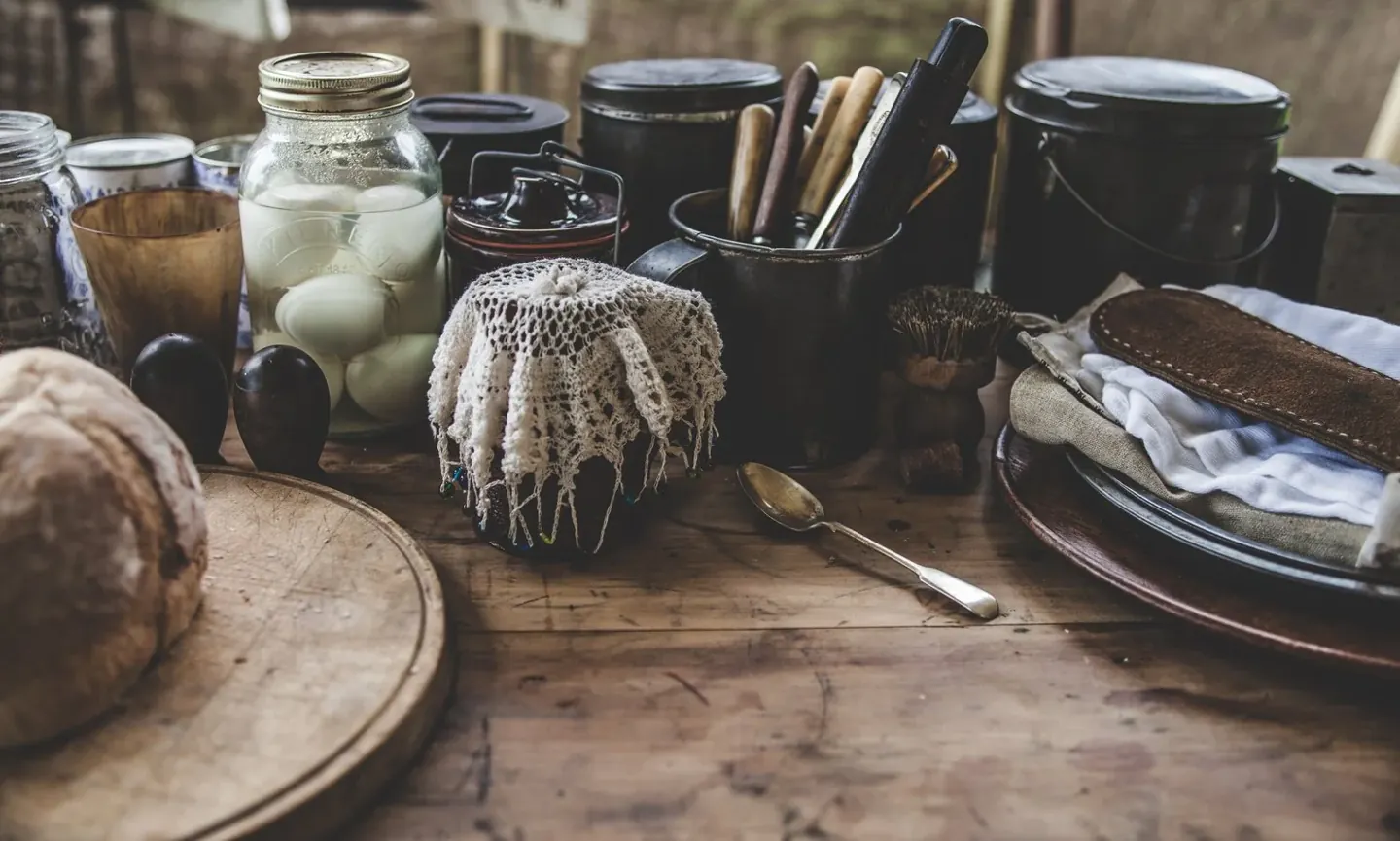
- Reuse food-safe jars for dry goods, leftovers, or a vase of branches.
- Buy vintage when it suits the purpose, and repair what already works.
- Compost through a local collection program or a system appropriate to your space.
- Walk or cycle a familiar errand when the route is practical and safe.
Make one corner a little more useful
Choose a project small enough to finish without reorganizing your life. A windowsill herb pot, a basket for mending, or a clear shelf for pantry jars can give a new habit a physical home. Before buying supplies, look at what you already have. The object that works is often more useful than a perfectly coordinated set.
A weekend-sized beginning
On the first day, choose one thing and gather what it needs. On the second, do the smallest complete version: plant the herbs, mend the loose button, or cook a batch of beans for the freezer. Leave a little time to clean up and decide where everything will live. A project is easier to repeat when its tools do not disappear into a new pile.
If you share your home, ask which change would make life easier for everyone. A compost container needs a convenient place and a plan for emptying it. Reused jars need labels so nobody has to guess what is inside. Sustainability feels better when the system is pleasant to use.
Keep the parts that fit
You may discover that you love growing herbs and dislike preserving food, or that buying vintage is easier than repairing fabric. That is useful information. Urban homesteading can be a collection of chosen skills rather than an identity you must maintain. Let it develop around the space, time, and pleasure you actually have.
Let a skill develop slowly
Cooking and preserving can be especially rewarding. Start with a freezer batch or a refrigerator pickle. For canning, use a current, tested recipe and the correct equipment; a tightly sealed lid does not by itself make food shelf-stable. Low-acid vegetables need a different process from an acidic jam.
Herbal curiosity fits here too, but growing a plant is not the same as knowing how to prepare a safe medicine. Learn identification, appropriate uses, and local harvesting rules before gathering anything wild.
Choose one project that makes home feel more like yours. There is no prize for doing everything from scratch. A well-used skill, like a well-used jar, is often enough.
Put it into practice
Naturopathic foundations
Where can I start with urban homesteading in a small space?
Choose one manageable skill: growing a culinary herb, repairing something, or preparing a familiar food. Keep the setup safe and the expectations modest. Let the practice connect you with your surroundings rather than add pressure to do everything yourself.
A mind–body practice
Make something without an audience
Give yourself five minutes with paper and a pencil. Draw the shapes you see or write whatever is asking for attention. Leave it unfinished if you wish. The practice is making space for expression, not producing something to share.
For education and reflection. Individual needs vary. For persistent symptoms or personal guidance, seek additional care from a qualified clinician or appropriate specialist.
References
- General Information on Pickling — National Center for Home Food Preservation · food preservation safety guidance