The beauty rituals I associate with Greece begin before the bathroom shelf: food in season, time outside, and meals that invite you to stay. Botanicals add fragrance and texture to that picture. Their most useful role is often a modest one, woven into a daily rhythm.
Olive oil, where it shines
Use extra-virgin olive oil to dress tomatoes, beans, or cooked greens. Its principal monounsaturated fat is oleic acid, an omega-9 fatty acid; it is not an omega-3-rich oil. A few drops can soften dry cuticles or coat hair ends before washing, but facial skin varies. Small human studies raise concerns about repeated olive-oil application to the skin barrier, especially when eczema is present.
Sea buckthorn, with curiosity
The bright berries and rich oils have a long botanical story. A formulated cosmetic containing sea buckthorn may feel lovely, but an ingredient's antioxidant activity in a laboratory does not establish that it reverses skin aging. Choose a product for its complete formulation and how your skin responds.
Avocado, served generously
Avocado brings creamy texture, fiber, and unsaturated fat to a meal. It can also make an occasional rinse-off mask feel emollient on intact skin, provided you tolerate it. Eating a food and applying it topically are different experiences; neither guarantees a particular complexion.
A gentler salt ritual
For those who enjoy a body scrub, mix a small amount of fine salt with enough plain oil to make a loose paste. Use very light pressure on intact body skin, avoiding the face, freshly shaved areas, and any eczema or broken skin. Rinse and take care on a slippery floor. There is no need to add essential oils or scrub in a prescribed “lymphatic” direction.
Oregano in the kitchen
Its aromatic leaves belong beautifully with roasted vegetables, lemon, and olive oil. Concentrated oregano essential oil is a different substance and can irritate skin; skip the homemade scalp-growth treatment.
Put the five ideas together gently
These rituals work best as a collection to choose from, not a checklist to complete in one evening. A meal dressed with olive oil, a comfortable bath, and a simple moisturizer already make a generous routine. Adding every botanical at once can make it harder to know what your skin enjoys.
A kitchen-first afternoon
Slice tomatoes or roast a tray of vegetables, add olive oil and oregano, and serve with beans or another food you enjoy. Keep the meal pleasurable and substantial. The sensory links between cooking and beauty—fragrance, color, texture, and the act of slowing down—do not depend on applying the same ingredients to your face.
A bathroom-first evening
Choose a single product or optional ritual. If it is a scrub, keep it on an appropriate area of intact body skin and use a small amount. If it is an oil, begin where you can easily observe the response. Keep the rest of your routine familiar that night and over the next few days.
Read the whole label
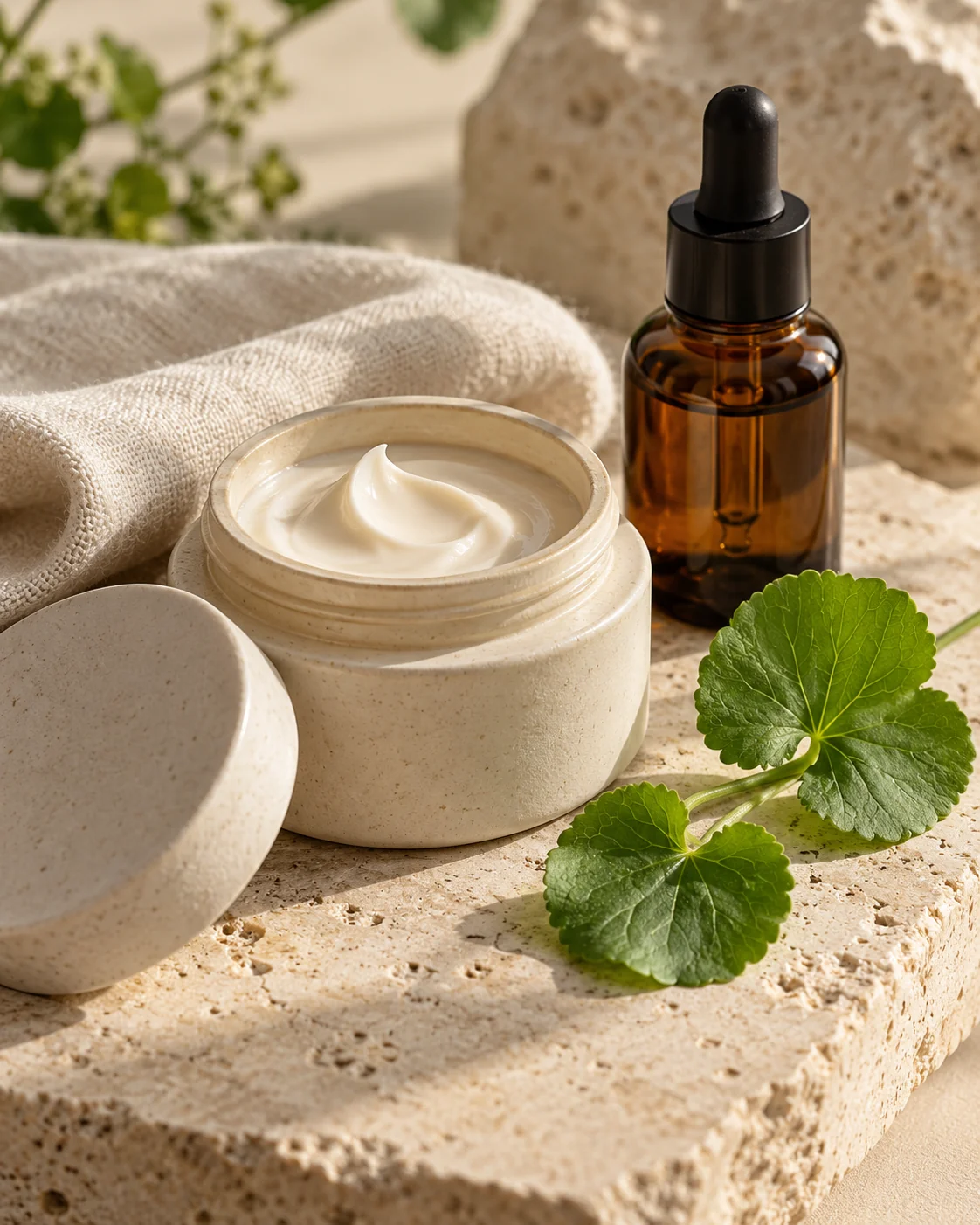
A product described by one appealing botanical may also contain fragrance, several essential oils, or other ingredients that matter to sensitive skin. Notice the complete formula, instructions, and packaging. A plant-based identity is not a substitute for a stable, well-made cosmetic.
Greek-inspired beauty can be most compelling in its ordinary form: food worth lingering over, a clean towel, time outdoors with appropriate protection, and a routine that leaves the skin comfortable. The atmosphere is part of the pleasure; it does not need a stronger claim.
Try one new topical ingredient at a time and stop if redness, itching, or burning develops. The most persuasive beauty ritual is one that leaves your skin comfortable and your day a little more enjoyable.
References & further reading
- Danby et al. — Effect of olive and sunflower seed oil on the adult skin barrier (2013) · small controlled human studies
- FDA — Aromatherapy (2023) · government safety guidance
- FDA — Allergens in Cosmetics (2026) · government safety guidance
For education and reflection. Individual needs vary. For persistent symptoms or personal guidance, seek additional care from a qualified clinician or appropriate specialist.