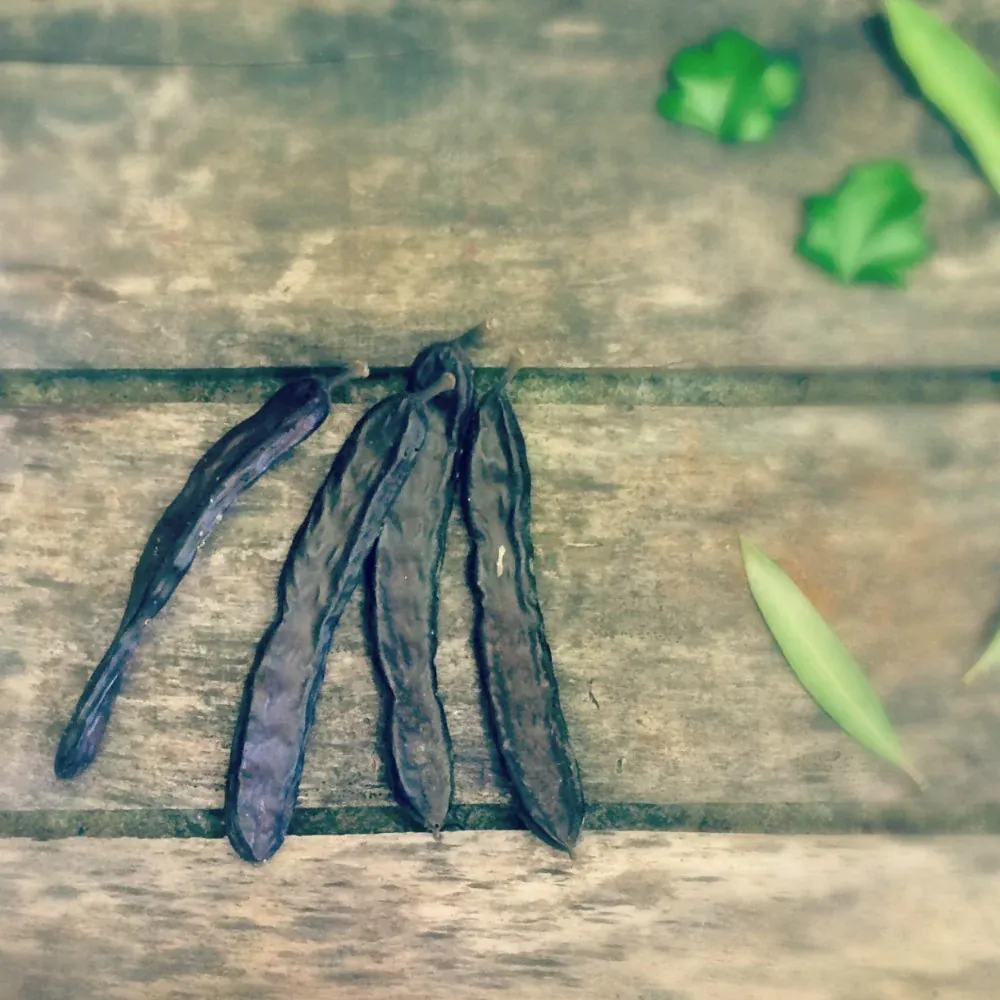
Carob has a character of its own: softly sweet, earthy, and a little toasted. It can sit comfortably where cocoa might otherwise go, but it is worth enjoying for its own flavor. The powder comes from the processed pod of Ceratonia siliqua, a tree long associated with Mediterranean food traditions.
Unlike cocoa, pure carob is naturally free of caffeine. It contributes carbohydrate and fiber, though nutrient content varies by product. It is not a particularly concentrated protein food, and a sweetened carob snack is still a sweetened snack.
What the research means in the kitchen
Small human trials have studied concentrated carob-fiber preparations for cholesterol. One randomized study reported improved blood lipids with a specific polyphenol-rich product. That does not establish that ordinary carob powder—or a dessert made with it—treats metabolic syndrome. Use the ingredient for flavor and variety rather than a therapeutic promise.
Carob avocado mousse
- 2 ripe avocados
- ⅓ cup coconut milk
- ⅓ cup carob powder
- Up to 2 tablespoons honey, to taste
Blend everything in a food processor until completely smooth. Taste before adding all the honey; carob already has natural sweetness. Divide into bowls and chill for about an hour. The recipe makes two generous servings, or four smaller ones.
Make the mousse especially smooth
Start with ripe avocados
The flesh should yield easily and blend without firm pieces. Taste it before adding the other ingredients; a pleasantly mild avocado gives the carob room to lead. Scrape the sides of the processor once or twice so the mixture becomes evenly creamy.
Add liquid gradually
Coconut milk varies in thickness. Begin with most of the quantity, blend, then add the remainder if needed. For a lighter texture, use a little more liquid; for a spoonable dessert, keep the mixture thicker and let chilling finish the job. Sift a lumpy carob powder before adding it.
Finish with contrast
A few tart berries, chopped toasted nuts, or a light dusting of carob can make a small bowl feel complete. Choose additions that suit any allergies. The mousse is already rich, so a modest portion with something fresh alongside can be more appealing than a very large serving.
Carob's flavor differs from cocoa, and different brands vary in roast and sweetness. If it is new to you, begin with the recipe as written and taste before making substitutions. You may find you enjoy its softer character without trying to make it imitate chocolate exactly.
Keep refrigerated and enjoy promptly. Use a suitable alternative to honey if serving young children; honey is unsuitable under twelve months. Check the powder's ingredient list if you need to avoid allergens or added sweeteners.
A spoonful of this mousse is rich enough to invite a slower pace. A few berries alongside make a lovely tart counterpoint.
Put it into practice
Naturopathic foundations
How can I use carob in a nourishing kitchen?
Try carob for its own flavor in a porridge, drink, or baked recipe. Pair it with ingredients that make the meal satisfying, and notice how much sweetness the preparation already contains. It can be a pantry pleasure without replacing every other ingredient.
Functional tests to consider
Eating well begins on the plate. If you are also investigating metabolic risk, these tests can help put the longer-term pattern in context.
HbA1c & fasting glucose
These help evaluate blood-sugar patterns when metabolic risk, increased thirst, frequent urination, or other clinical clues warrant testing. A1c gives a longer view; a fasting glucose is a point-in-time measurement. Anemia and other conditions can affect A1c.
Lipid panel, with ApoB when useful
For a cardiovascular or longevity review, begin with the lipid pattern and the whole risk picture. ApoB can add information in selected situations, particularly when triglycerides or metabolic risk complicate the picture. It is not a test of whether one food is working.
A mind–body practice
The first three bites
Put the screen away and place both feet on the floor. Before eating, notice the color and scent of the food. Take the first three bites slowly enough to notice their texture, then check in with hunger and comfort.
A little more clarity
Can a single food replace a whole-food eating pattern?
No single ingredient has to carry the whole meal. Look for enough food, a source of protein, varied plants, and a pattern that fits your life. Laboratory results describe specific health questions, not the virtue of an individual food.
For education and reflection. Individual needs vary. For persistent symptoms or personal guidance, seek additional care from a qualified clinician or appropriate specialist.
References
- Ruiz-Roso et al. — Insoluble carob fiber rich in polyphenols lowers total and LDL cholesterol (2010) · randomized placebo-controlled trial
- FDA — Safe Food Handling (2024) · government food-safety guidance