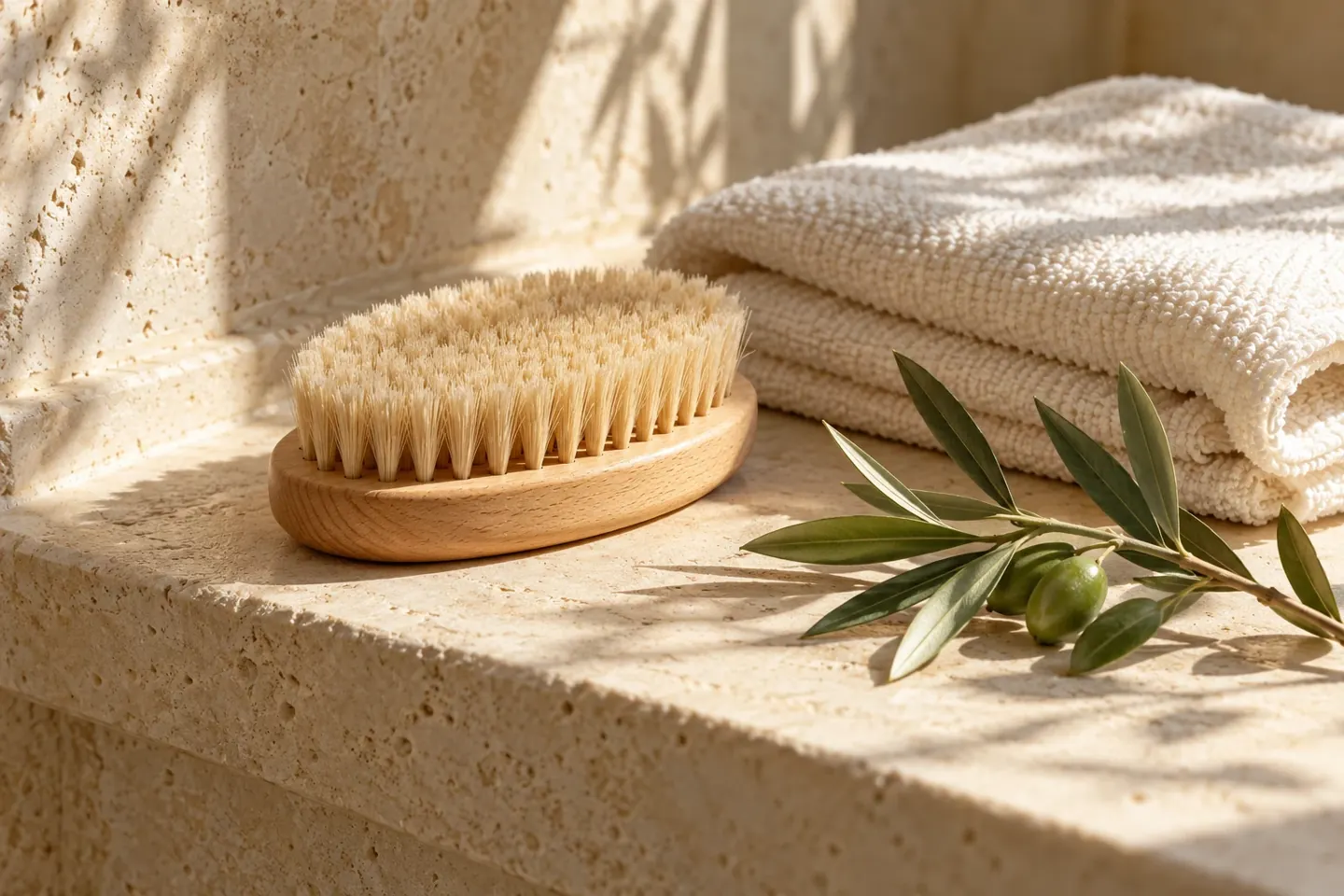
There is something satisfying about a tactile ritual: the feel of a soft brush, a warm shower afterward, the ease of applying moisturizer slowly. Dry brushing can fit that moment when the goal is gentle exfoliation and a little attention to the body.
Keep the benefit close to the surface
A brush can remove some loose skin cells, which may leave the surface feeling smoother. It has not been shown to detoxify the body, eliminate cellulite, or treat a lymphatic problem. A temporary flush from friction is not evidence that toxins are leaving or that deeper circulation has been repaired.
Skin is a protective barrier, so more sensation is not a better result. The useful endpoint is comfortable skin, not tingling, redness, or a feeling that you have worked hard enough.
Try less than you think
Choose a clean, soft brush and test a small area of intact skin. Use a few light strokes with very little pressure. You do not need to follow a complicated lymphatic map, and there is no reason to cover the entire body at the first attempt.
Keep the brush away from the face, breasts, genitals, and any area that is tender or easily irritated. Follow with a lukewarm shower if you like, then a moisturizer your skin tolerates. Clean and dry the brush according to its instructions, and do not share it.
Make the bathroom feel less busy
Before adding a brush, look at the routine you already have. A washcloth, an exfoliating body product, or regular shaving may already give the skin more friction than you realize. Another step is optional, and a simpler routine can be easier to assess.
If you want to try brushing, choose a time when you can pay attention rather than rushing. Start with a few strokes on one small area, then leave it alone long enough to see how the skin feels. The appearance immediately afterward is less useful than whether it remains comfortable later.
Choose a brush for softness
A beautiful wooden handle can be appealing, but the bristles are what touch your skin. They should feel gentle rather than scratchy. Follow the maker's cleaning and replacement instructions, and let the brush dry fully in an appropriate place. An attractive accessory still needs ordinary care.
Try the no-brush version
After a comfortable shower, apply a familiar moisturizer with slow, light movements. Notice areas that feel dry and avoid rubbing where the skin is irritated. You can have the sensory pleasure of attending to the body without adding exfoliation.
Set out a clean towel and put the products you need within easy reach. A considered space does not need to be crowded. The useful part of the ritual is the attention you can give your skin and the permission to stop when it has had enough.
Let your skin decide
Skip brushing over eczema, psoriasis flares, sunburn, cuts, rashes, infections, or painful veins. Extra caution is sensible with fragile skin, reduced sensation, or medicines that make bruising easier. If you already use exfoliating acids or a retinoid, another form of exfoliation may be unnecessary.
Stop if the skin burns, stings, becomes persistently red, or feels raw. New swelling, a persistent rash, or suspected lymphedema deserves assessment rather than a harder brush. Sometimes the most luxurious version of the ritual is simply applying moisturizer with your hands and leaving the exfoliation out.
Put it into practice
Naturopathic foundations
How can I make body care gentler if I enjoy dry brushing?
Use a light touch on comfortable, intact skin and skip areas that are irritated. Follow with a familiar moisturizer, and choose hands instead of a brush when that feels better. Let the ritual bring attention to the body without treating friction as a measure of effectiveness.
A mind–body practice
A kinder moment at the mirror
Set down the magnifying mirror. Apply a familiar moisturizer with a light touch, noticing temperature and texture. Unclench your jaw. Name one thing your body allowed you to do today that has nothing to do with its appearance.
For education and reflection. Individual needs vary. For persistent symptoms or personal guidance, seek additional care from a qualified clinician or appropriate specialist.
References
- American Academy of Dermatology: How to Safely Exfoliate at Home (2026) · Authoritative evidence and safety guidance