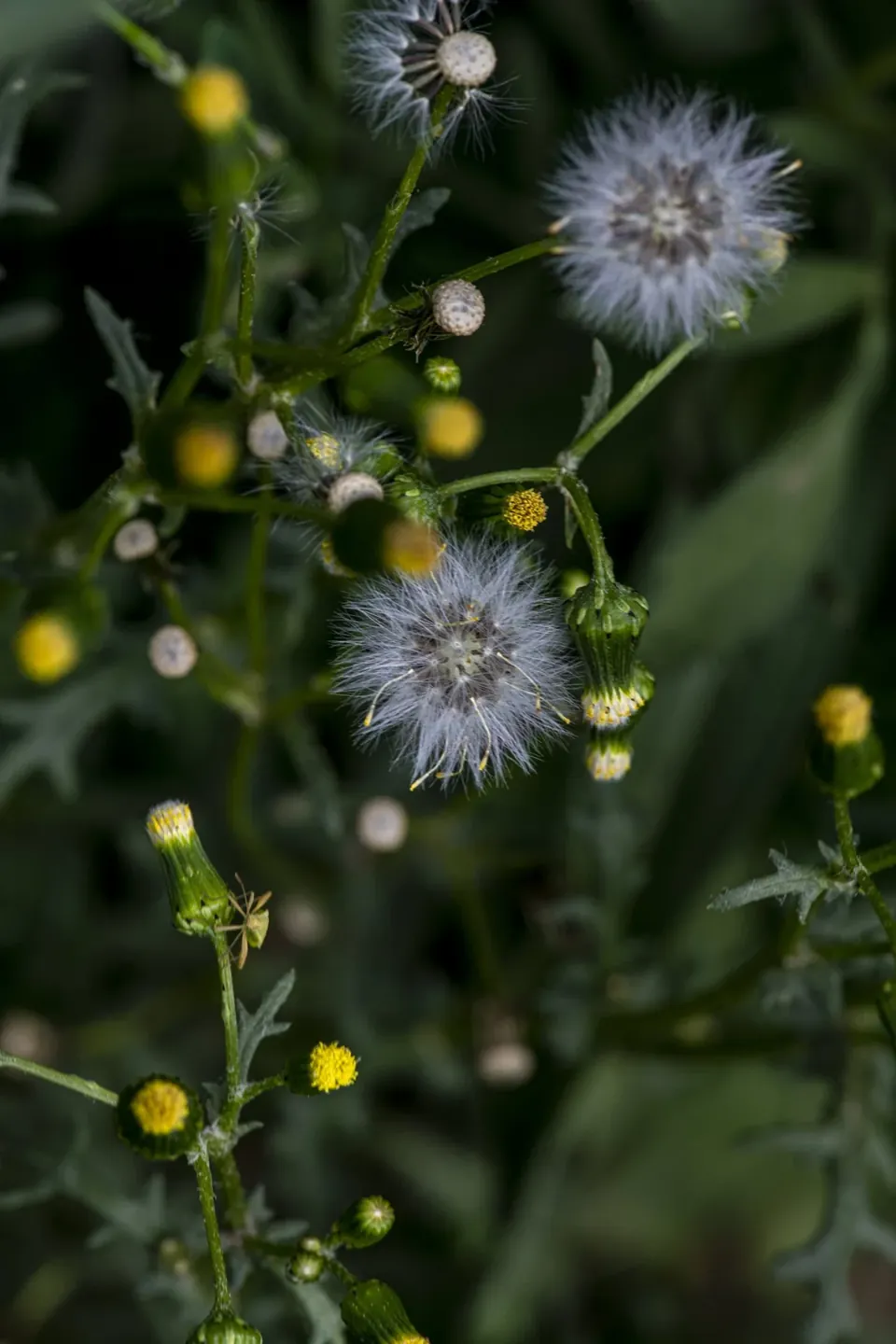
I have a soft spot for dandelions. I wrote about it years ago, and the feeling has not changed: it seems a little unfair that a plant so bright, persistent, and useful is so often dismissed as a weed. A yellow flower appears between paving stones, asking for remarkably little. We could pause long enough to become curious about it.
Taraxacum officinale belongs to the Asteraceae family. Its leaves, root, and flowers each invite a different relationship. In botanical medicine, knowing which part we mean is the beginning of understanding the plant.
The leaf and the root
Dandelion leaves are bitter greens with a history as food and as a traditional urinary herb. At the table, their assertive flavor can bring character to a meal. In the apothecary, the leaf has traditionally been discussed for its diuretic action. A small, one-day human pilot study of a specific leaf extract reported changes in urinary frequency and excretion; it was preliminary, not a basis for treating unexplained swelling.
The root has its own story. European herbal traditions have used it for mild digestive discomfort and temporary loss of appetite. The European Medicines Agency recognizes these as traditional uses, grounded in longstanding experience. Chopped root is commonly prepared as a decoction, while tender leaves are suited to different preparations. A root powder, a leaf extract, and a cup of tea are not interchangeable.
What research can clarify
That distinction became especially interesting in a 2026 crossover study of fourteen young adults. A commercial dandelion-root powder taken with water did not significantly increase four-hour urine output beyond water alone. The study tested that product and protocol; it did not settle every question about the plant. Together with the earlier leaf study, it shows why the plant part and preparation belong in the conversation.
I would rather understand dandelion in this detail than give it a long list of conditions it supposedly treats. The bitter taste, the seasonal greens, the root’s traditional place in digestive care—there is already plenty here to explore.
A plant for paying attention
There is also a symbolic way of meeting dandelion. Its persistence can become an image of resilience; the change from yellow flower to airy seed head can invite reflection on growth and release. These are personal readings of the plant, not a claim that one spiritual meaning belongs to every culture.
Try looking at it before deciding what it is worth. Notice the shape of a leaf, the flower’s geometry, the way the seed head holds together and then lets go. Botanical knowledge begins with this sort of attention. A plant does not have to be rare or expensive to deepen our relationship with the living world.
Bring discernment to the ritual
For food, choose reliably identified greens from a safe source; roadside or sprayed plants do not belong in the kitchen. Concentrated preparations call for individual guidance. Dandelion can cause allergic reactions, and medicinal root preparations are unsuitable for some biliary conditions or when fluid intake must be restricted. Safety during pregnancy and breastfeeding is not established. Seek additional care or a suitable specialist for persistent digestive or urinary symptoms.
My invitation remains simple: give the dandelion a second look. There is an entire botanical conversation beneath that familiar yellow flower.
References & further reading
For education and reflection. Individual needs vary. For persistent symptoms or personal guidance, seek additional care from a qualified clinician or appropriate specialist.