It’s time to release.
That was the invitation in my original spring-cleanse story. I still love it. The light changes. We open the windows, reach for green things, and feel the quiet desire to begin again. Mother Earth does this beautifully: the bare branch, the new leaf, the steady return of color.
Today, I want to widen that conversation. A seasonal reset can include the water in our glass, the fabric against our skin, the dust on the windowsill, and the way we nourish ourselves. It can hold modern environmental science alongside the old practices of cooking, tending, resting, and listening within.
For me, the most interesting question is: What can we change around the body, and what can we offer it?
Start with what surrounds you
The wardrobe: microplastics in clothing
Polyester, nylon, and acrylic are plastic-based fibers. Through wear and washing, synthetic textiles can release tiny fibers into the environment. Clothing is one part of a much larger story involving packaging, tires, furnishings, and the breakdown of discarded plastic. Wearing a synthetic shirt, by itself, does not tell us how much plastic enters a particular person’s body.[1][2]
I like to begin with the next thoughtful purchase: a linen shirt, a cotton nightdress, a piece of wool knitwear you will repair and keep. Natural-fiber blends may still contain synthetics; read the composition label. Care for the clothes you own, wash when needed, and consider a suitable washing-machine filter or fiber-catching device. These can reduce some emissions, with performance varying by fabric and device. Put collected lint in the rubbish rather than washing it down the drain.[1]
There is a pleasure in this, too. Knowing what touches your skin. Choosing texture with attention. Letting a few beautiful things last.
What the emerging science is asking
A 2024 study of people undergoing carotid-artery surgery found an association between plastic particles detected in removed arterial plaque and subsequent cardiovascular events or death. It raises important questions. Because the study was observational and involved a selected patient group, it does not establish causation, a safe exposure threshold, or a treatment that clears those particles. There is reason for serious research and thoughtful prevention without turning every ordinary object into a source of fear.[21]
The water: know your source
Researchers have detected micro- and nanoplastics in bottled water. Detection methods are still developing, and a particle count cannot tell us the health consequences of drinking a particular bottle. Plastic particles, dissolved chemicals such as PFAS, and metals such as lead are different exposure questions.[2][3]
Begin with your local water-quality report, or appropriate testing for a private well. If a contaminant is present, choose a filter independently certified for that specific reduction claim. A taste-and-odor filter is not automatically a lead or PFAS filter. Follow cartridge replacement and cleaning instructions; no household filter removes everything. Certification for larger particles should not be read as a promise to remove every nanoplastic.[4][5]
At home, a washable glass or stainless-steel bottle makes a lovely everyday companion. Use heat-safe glass or ceramic for hot food when practical. These are ways to reduce some avoidable contact with plastic; their effect on an individual’s internal particle levels has not been established. When tap water is unsafe, use a verified safe source.
The home: give the air some attention
A damp cloth, a well-maintained vacuum with a HEPA filter, and ventilation while cooking can help reduce indoor particles. Open windows when outdoor air quality allows. If smoke, heavy pollution, or pollen makes outdoor air unsuitable for you, adjust that ritual. The most fragrant room is not necessarily the healthiest one; burning candles and incense also creates particles.[6]
Keep this manageable. One room, one shelf, one habit that will still feel useful next month.
Heavy metals deserve a specific conversation
Lead, mercury, arsenic, and cadmium are often grouped together as “heavy metals,” although arsenic is technically a metalloid. Their sources, behavior in the body, and appropriate tests differ. A suspected exposure calls for a history: water, work, hobbies, renovation dust, food sources, and any imported remedies or supplements.
For fish, there is room for both nourishment and discernment. Salmon, sardines, and trout appear among lower-mercury choices in FDA/EPA guidance. Follow local advisories for fish you catch, and the guidance specific to pregnancy and children. Variety is useful; abandoning an entire food group is not the only way to respond.[14]
Functional & naturopathic approaches: let the question lead the lab
I value a detailed environmental history. It can reveal far more than a large panel ordered without context. My starting questions are simple: What might the exposure be? Is it ongoing? What would a result change?
| The question | A focused next step |
|---|---|
| Possible lead exposure | A blood lead test; a venous sample is used to confirm an elevated capillary result. Investigation of the source matters alongside the number.[7] |
| Possible arsenic exposure | Speciated urine testing can distinguish forms of arsenic. Recent seafood can raise total urine arsenic through less-toxic organic forms, so preparation and interpretation matter.[8] |
| Possible mercury exposure | Blood or urine testing selected for the likely form and timing of exposure. A detectable result alone does not establish illness.[9] |
| Known PFAS exposure | A discussion of whether blood testing would inform care. It measures selected PFAS; it cannot identify the source or predict an individual’s future health.[11] |
| Fatigue, digestive change, or nutritional concerns | A clinical assessment may lead to a CBC, kidney and liver chemistry, or targeted nutrient tests. These answer particular questions; they do not produce a universal “toxin burden” score. |
Urine collected after a chelating substance should not be compared with ordinary, unprovoked reference ranges: this can create misleading “high” results. Broad hair-mineral panels also need careful scrutiny and are not a general diagnosis of poisoning. For suspected significant exposure, seek additional care from an environmental-medicine or medical-toxicology specialist.[8][10]
Microplastic measurements remain an emerging research area, with substantial differences between methods. A commercial result is not automatically a validated guide to treatment. Before paying for any test, ask how it is validated, what its reference range means, and what evidence supports the proposed response.[2]
Bring renewal to the table
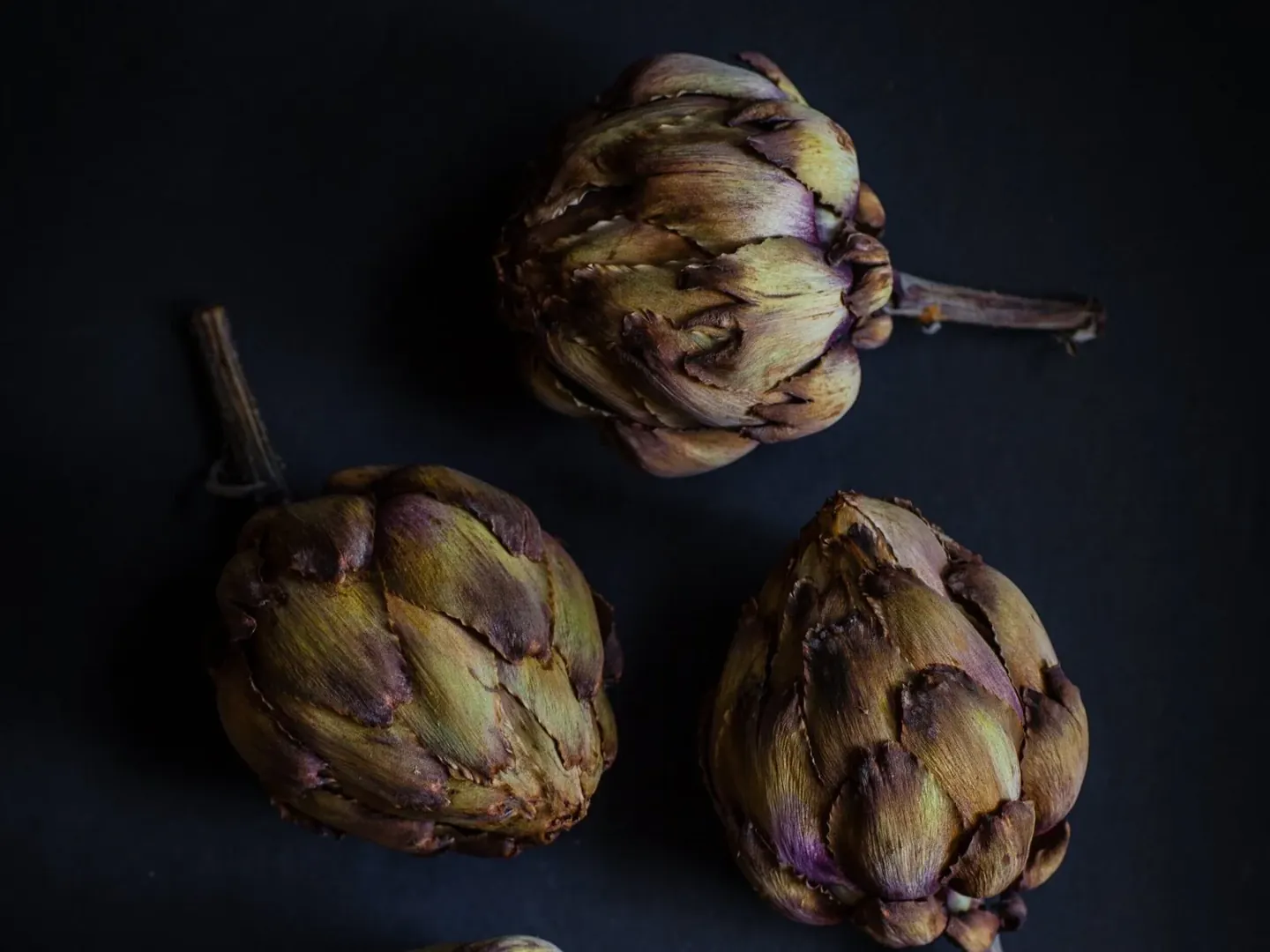
I return to the foods in my original article: artichokes, broccoli, onions, beets, cabbage, herbs, apples, and lentils. A beautiful plate can contain enough food to sustain you. Protein, plant variety, and fiber belong here, alongside the taste and pleasure of a meal.
One market basket, three ways
- A green lunch: warm lentils, roasted broccoli, chopped parsley, lemon, and extra-virgin olive oil. Add a spoonful of pumpkin seeds.
- A slow supper: steamed artichokes with a lemon-and-olive-oil dip, white beans, and a piece of good bread.
- A morning bowl: oats with grated apple, ground flax, cinnamon, and plain yogurt or a suitable alternative.
Cruciferous vegetables offer an especially interesting meeting of food and biochemistry. In a randomized study in a highly polluted region of China, a specific broccoli-sprout beverage increased urinary excretion of metabolites of benzene and acrolein. This was a finding about particular biomarkers under particular conditions. It did not demonstrate removal of microplastics or heavy metals, or prove that any broccoli supplement prevents illness.[12]
Include your inner ecosystem
In a small randomized dietary study, the fermented-food group increased gut microbial diversity and showed reductions in several inflammatory markers. That gives us something interesting to explore, without promising the same response in everyone. Try a little kefir, yogurt, or fermented vegetables if they suit you; build fiber gradually and notice tolerance. Fermented foods and probiotics are not interchangeable, and neither is an established microplastic-removal treatment.[13]
For more kitchen inspiration, visit my farm-to-table guide. A seasonal practice becomes more lasting when it tastes good.
The plants at the edge of spring
Milk thistle, Silybum marianum. Its traditional association with the liver belongs in this story. The European Medicines Agency recognizes specified preparations on a traditional-use basis for digestive symptoms and liver support after serious conditions have been excluded. Modern clinical results vary by condition and preparation. I would discuss a suitable extract for a defined reason, rather than promise regeneration or a general clearing of pollutants.[15][17]
Dandelion, Taraxacum officinale. This is a plant that makes spring feel like spring. The root has documented traditional uses for mild digestive complaints and temporary loss of appetite. The leaf and root have different uses and preparations; the plant deserves that specificity. Bitter greens at the table offer another way to meet this tradition, using correctly identified food from an uncontaminated source.[16]
Traditional terms such as “alterative” or “spring tonic” carry a history of observation, preparation, and relationship. I want to understand what the herbalist meant, which plant part was used, and how the person was cared for. That is plant knowledge worth keeping. It can sit alongside precise modern questions about a named exposure, rather than be translated into a claim that a tea removes every pollutant.
Supplements: choose a purpose
My original guide included glutathione, NAC, chlorella, and probiotics. Glutathione is part of the body’s antioxidant systems; NAC supplies a precursor used in its synthesis. A randomized trial of oral glutathione measured changes in body stores. That is a different outcome from demonstrating removal of plastic particles or treatment of metal poisoning.[18]
Within an individualized functional or naturopathic plan, a clinician may consider nutrient replacement for an identified gap, a specific botanical preparation, or a probiotic for a specific indication. The strain, formulation, dose, and goal matter. Chlorella, cilantro, charcoal, clay, and “binders” should not be treated as interchangeable ways to clear an unspecified toxic load. No supplement in this guide is established as a reliable way to remove microplastics from people.[19][20]
Ask for the product’s identity, independent quality testing, and screening for contaminants, including metals. “Natural” tells us something about origin; it does not tell us everything about purity.
A ritual of return
My original story ended with nature and time away from technology. I still think that is a beautiful place to arrive. There is an inner kind of spring cleaning, too: noticing what has become noisy, making room for the senses, allowing the day to have a quieter edge.
A Taoist-inspired invitation for this season is to soften unnecessary effort. Let the next breath arrive without trying to perfect it. This is a personal contemplative practice, not a treatment for an exposure. Its value can be found in the experience itself.
Put down the phone. Feel the support beneath your feet. Remember the scent of crushed herbs in your hands. Let your shoulders settle as you breathe naturally.
Ask yourself: What would feel nourishing today?
Let one small answer be enough.
A walk, gentle movement, a comfortable bath, and a consistent bedtime can all belong to this rhythm. Sweating is a cooling process; detecting a substance in sweat does not establish that a sauna meaningfully clears an exposure. Choose warmth for comfort, and respond to your body’s limits.[19]
Begin with a meal. A glass of safe water. A surface cleared. A little daylight. There is room for science, traditional knowledge, and the soul of the season in the same life.
Adapted from my original Medicine Wild article, featured in the March 2016 issue of Better Nutrition.
References & further reading
- European Environment Agency — Microplastics from textiles: sources and reduction (2022)
- FDA — Microplastics and Nanoplastics in Foods: evidence and measurement
- NIH — Plastic particles in bottled water; research summary (2024)
- CDC — Choosing Home Water Filters
- EPA — Identifying drinking-water filters certified to reduce PFAS
- EPA — Sources of Indoor Particulate Matter and practical exposure reduction
- CDC — Blood lead testing and clinical guidance
- ATSDR — Clinician Brief: Arsenic; exposure history and speciated urine testing
- ATSDR — Mercury: exposure and testing
- American College of Medical Toxicology — Against post-chelator challenge urinary metal testing (2017)
- ATSDR — PFAS: clinical evaluation and the limits of blood testing
- Egner et al. — Broccoli sprout beverage and pollutant-metabolite excretion: randomized trial (2014)
- Wastyk et al. — Gut-microbiota-targeted diets: randomized dietary study (2021)
- FDA / EPA — Advice about Eating Fish; lower-mercury choices
- European Medicines Agency — Milk thistle fruit: traditional-use assessment
- European Medicines Agency — Dandelion root: traditional-use monograph (2022)
- NCCIH — Milk Thistle: clinical evidence and safety
- Richie et al. — Oral glutathione and body stores: randomized trial (2015)
- NCCIH — Detoxes and Cleanses: research and safety
- NCCIH — Using Dietary Supplements Wisely
- Marfella et al. — Microplastics and nanoplastics in atheromas and cardiovascular events; observational study (2024)
For education and reflection. Individual needs vary. For persistent symptoms or personal guidance, seek additional care from a qualified clinician or appropriate specialist.