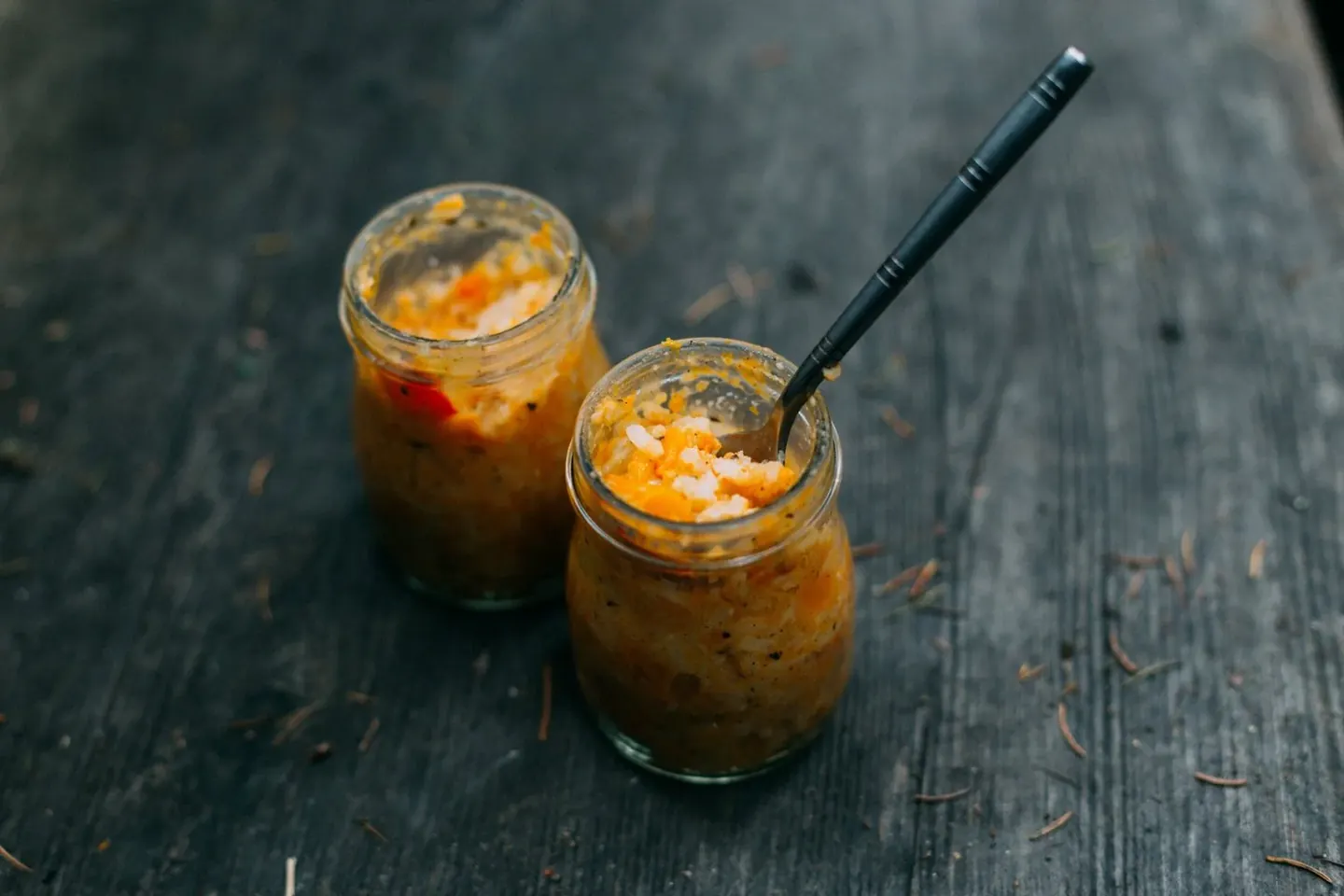
These rose-colored onions bring a welcome sharpness to beans, grain bowls, and sandwiches. Cinnamon and fennel make the combination especially aromatic. One useful distinction: vinegar pickles are not necessarily fermented foods and do not reliably supply live probiotic organisms.
Ingredients
- 3/4 cup apple cider vinegar labeled 5% acidity
- 2 tablespoons sugar
- 1 red onion, thinly sliced
- 1/8 teaspoon fennel seeds
- 1 cinnamon stick
- 1/4 teaspoon allspice
- A dash of red pepper flakes and a pinch of salt
Make a small refrigerator batch
- Put the onion in a clean, heat-safe container.
- Warm the vinegar, sugar, spices, and salt until the sugar dissolves; cover and gently simmer for about five minutes.
- Pour over the onion, using a container small enough for the liquid to cover it.
- Cool briefly, cover, and refrigerate promptly. Use clean utensils and enjoy within one week.
This is a refrigerator recipe, not a tested shelf-stable canning formula. Do not store it in the pantry or dilute the vinegar for long-term preservation. Discard the batch if there is mold or spoilage.
Let the onion do the brightening
Slice the onion as evenly as you can so the pieces soften at a similar pace. A sharp knife is enough; a mandoline is optional and deserves careful handling. Separate the layers before adding the warm vinegar mixture. The pink color develops as the onion sits, making a small jar feel like a particularly satisfying kitchen project.
Three ways to serve it
- Spoon a few strands over warm black beans, rice, and avocado.
- Add them to a sandwich with crunchy greens and a spread you enjoy.
- Scatter them over roasted squash just before serving, so the sharpness stays distinct from the sweetness.
The cinnamon and allspice give this pickle a warmer character than a plain vinegar onion. Use a light hand with the red pepper flakes on your first batch. If you want to explore a different spice combination later, keep the vinegar concentration and refrigerator handling consistent rather than improvising a preservation method.
Use a clean fork to lift out what you need, then return the covered jar to the refrigerator. The liquid is part of a fresh refrigerator preparation, not a reusable canning brine. A small batch encourages you to enjoy it while its texture and flavor are at their best.
Where fermented foods fit
A small 2021 dietary trial found changes in microbiome diversity and inflammatory markers with a high-fermented-food diet. It did not test these onions. Enjoy this recipe for its flavor, and let varied plant foods supply the broader nutritional picture.
Put it into practice
Naturopathic foundations
Are vinegar pickles the same as fermented foods?
Quick vinegar pickles and fermented foods are prepared differently. Enjoy the recipe for its flavor, and build digestive nourishment through the wider variety of foods you tolerate. Add a few onions to a satisfying meal rather than relying on them as a probiotic product.
A mind–body practice
The first three bites
Put the screen away and place both feet on the floor. Before eating, notice the color and scent of the food. Take the first three bites slowly enough to notice their texture, then check in with hunger and comfort.
For education and reflection. Individual needs vary. For persistent symptoms or personal guidance, seek additional care from a qualified clinician or appropriate specialist.
References
- General Information on Pickling — National Center for Home Food Preservation · food preservation safety guidance
- Gut-microbiota-targeted diets modulate human immune status (2021) · randomized human dietary trial