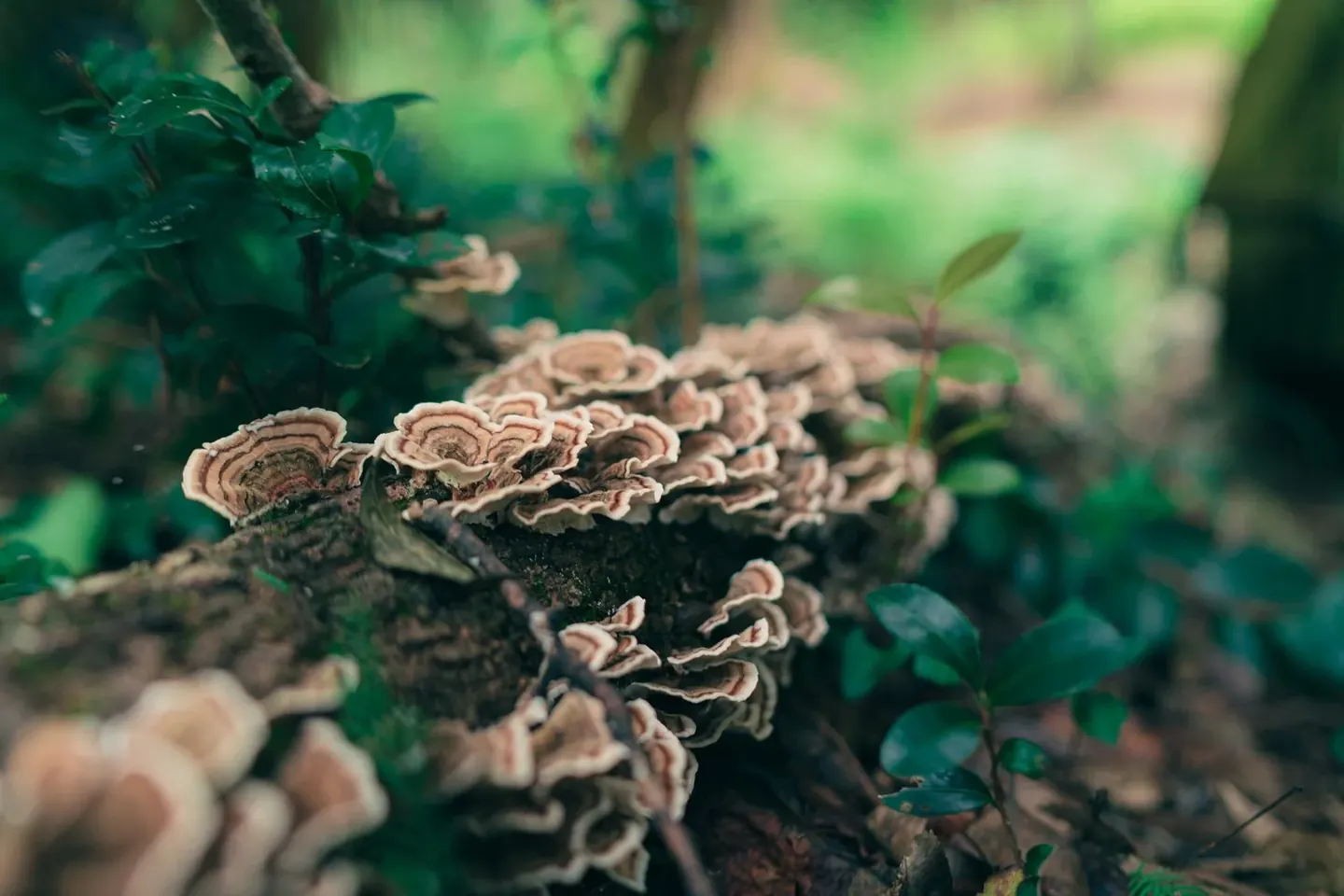
Reishi’s lacquered surface and turkey tail’s fine bands of color make a forest walk feel like a gallery visit. Their appeal goes well beyond appearance: both have long histories in traditional medicine and are subjects of ongoing research. Understanding the exact preparation helps separate genuine scientific interest from oversized promises.
Turkey tail: specificity matters
Trametes versicolor contains complex carbohydrates and other compounds studied for effects on immune function. Some cancer research involves PSK, a particular protein-bound polysaccharide preparation used as an adjunct in Japan. Those findings are not evidence that a retail powder, tea, or tincture prevents cancer or produces the same outcomes.
A change in an immune marker is also not the same as longer survival, fewer infections, or better day-to-day health. Early studies are useful for deciding what to investigate next; they cannot answer every clinical question.
Reishi: respect the limits
Ganoderma products have been studied in several settings, but claims that they reliably strengthen a weak immune system and calm an overactive one go beyond established human evidence. “Immune modulation” describes a line of investigation, not a guarantee that a supplement will move your immune system in the direction you want.
These woody mushrooms are not equivalent to the ordinary culinary mushrooms in a stir-fry. Vitamin D content varies by species and growing or ultraviolet exposure conditions; it cannot be assumed from a supplement label’s forest imagery.
Read a mushroom study from the inside out
The headline usually names the mushroom. The meaningful details are smaller: which preparation was used, who took it, what else they were receiving, and what the researchers measured. Those details are especially important when a study involves people living with cancer. An adjunct studied alongside a treatment is not evidence for using the same ingredient alone.
Four distinctions to keep close
- Species: “mushroom complex” is not enough information to connect a product with a particular study.
- Material: fruiting-body material, mycelium, and an isolated preparation are different things.
- Preparation: a tea, powder, and standardized extract may contain different amounts of the compounds of interest.
- Outcome: a laboratory immune measurement answers a different question from a change in symptoms or survival.
None of those distinctions automatically makes one retail product the best. They explain why a sophisticated-looking label still needs to be read carefully, and why changing the preparation changes the question.
Keep the forest in the experience
You can explore these mushrooms through a field guide, a photograph, or a walk with a knowledgeable naturalist. Observation is a complete activity; it does not need to end with harvesting. If cooking is the interest, buy mushrooms sold as food and follow the preparation guidance for that species. The pleasure of a mushroom meal and the investigation of a concentrated medicinal extract belong to related but separate conversations.
If a supplement is being considered for a particular health concern, write that concern down first. Ask what improvement would be meaningful, what evidence supports the exact product, and how it will be reviewed. That turns a broad promise of vitality into a decision that can actually be evaluated.
Choose curiosity over a blanket prescription
If you use a mushroom product, know the species, plant-like part or fungal material used, extraction method, and independent quality testing. Different products may have very different compositions. People taking immune-suppressing medicines, blood thinners, or cancer treatment need their exact product checked for compatibility. Pregnancy safety is insufficiently established.
Do not forage mushrooms for eating or medicine without expert identification. And never let a supplement delay the evaluation of unexplained weight loss, persistent fevers, enlarged nodes, or another concerning symptom. The mushrooms remain fascinating when the claims are measured.
Put it into practice
Naturopathic foundations
What should I clarify before choosing a medicinal mushroom product?
Know the species, material, preparation, and purpose, then review how it fits with your health and existing treatment. Keep food, sleep, and recovery central. A well-chosen product begins with a clear question rather than a longer list of mushrooms.
Functional tests to consider
Rest, enough food, fluids, and an appropriate response to the illness come first. Frequent, unusual, or prolonged infections deserve a clinical assessment; selected blood testing may then be helpful.
CBC, ferritin & iron studies
A useful conversation when fatigue, heavy periods, hair shedding, or a restrictive diet raises the question of iron deficiency. Ferritin belongs alongside the blood count and the wider clinical picture; inflammation can raise it.
A mind–body practice
Meet one living thing
Choose a plant or tree you can observe safely. Spend a few minutes with its shape, color, and movement. You do not need to touch, pick, or consume it. Let curiosity be the whole activity.
A little more clarity
Do I need an immune panel before using a seasonal herbal remedy?
Not routinely. The important questions are what symptoms are present, how long they have lasted, and whether they are worsening or recurring unusually. Choose testing from that picture, and distinguish a comforting ritual from treatment for an active infection.
For education and reflection. Individual needs vary. For persistent symptoms or personal guidance, seek additional care from a qualified clinician or appropriate specialist.
References
- Medicinal Mushrooms (PDQ) — NCI (2024) · government oncology evidence summary