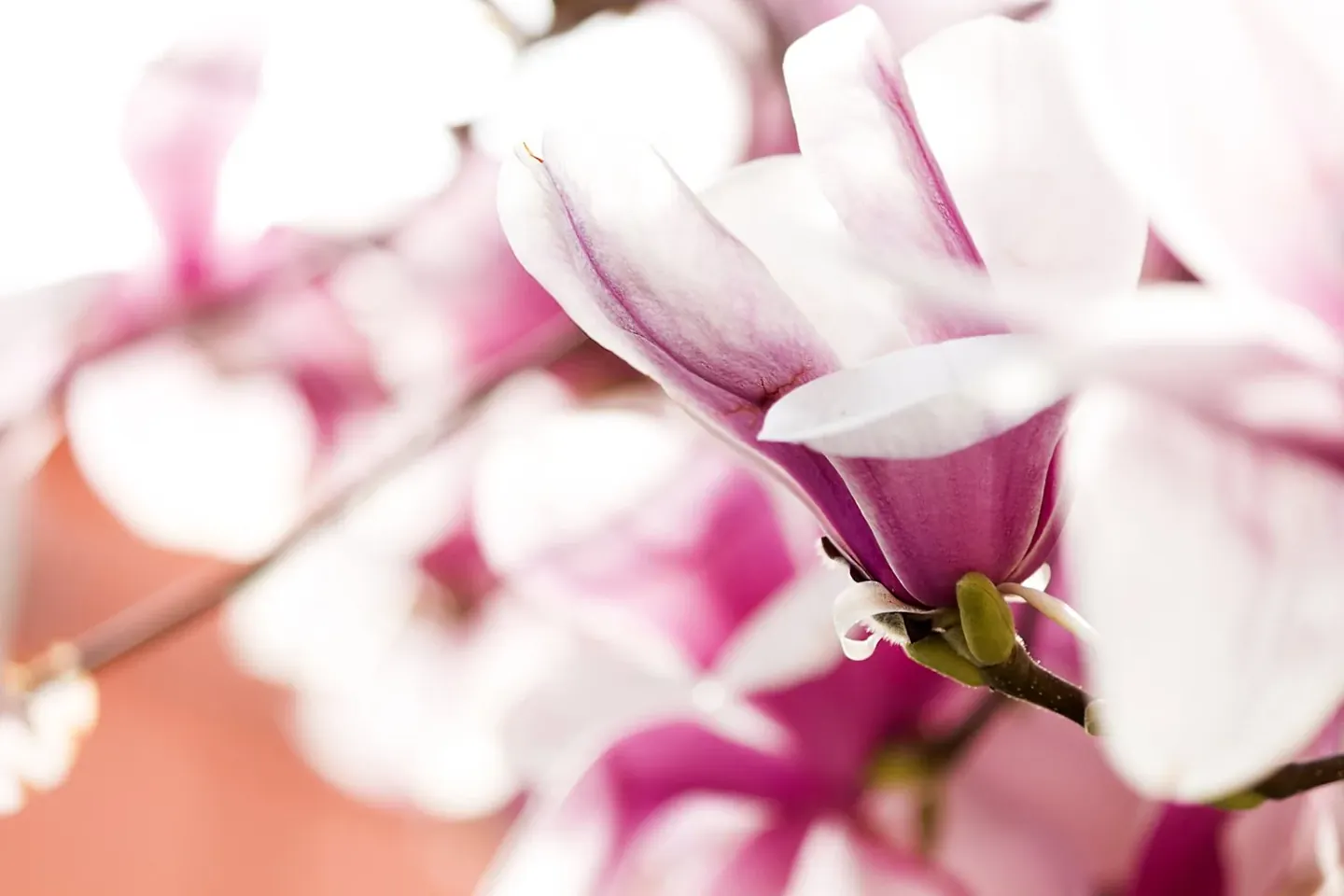
Magnolia has an almost cinematic presence: glossy leaves, generous flowers, a fragrance that stops you mid-step. The bark of Magnolia officinalis belongs to a different botanical story, with a long place in traditional medicine and growing interest in compounds such as honokiol and magnolol.
The flower’s symbolic story
Magnolia appeared in my original writing as a flower essence associated with steadiness through a period of change. That energetic tradition turns toward the blossom’s symbolic qualities: composure, softness, and a sense of shelter through transition. A flower can become a focus for an intention or a reminder to move gently through an uncertain season. I like keeping that story beside the very different botanical story of magnolia bark. Each asks us to look at the plant from a particular angle and offers its own language for the experience.
What the human research can say
One small 2013 randomized trial studied 56 moderately stressed adults for four weeks. Participants took either a standardized combination of magnolia and phellodendron bark or a placebo. The combination group had improvements in several self-reported mood measures and lower salivary cortisol exposure.
That is a reason for scientific curiosity, not a universal prescription. The trial was short, involved a proprietary combination, and cannot isolate the effect of magnolia alone. It did not establish treatment for major depression, a hormone disorder, or premenstrual symptoms. A retail supplement with different ingredients cannot simply inherit its results.
Ask a more useful question
Instead of asking whether an herb lowers cortisol, ask what you want to feel or do differently: fall asleep more easily, feel less keyed up, or have enough energy for the afternoon. Cortisol has essential functions and follows a daily rhythm; lower is not always better.
Begin with supports that fit the actual problem—a gentler evening routine, regular meals, manageable movement, or fewer late stimulants. An herb can only be evaluated sensibly against a specific goal and a specific formulation.
Make “calmer” specific
Before considering a product, describe an ordinary day in a few lines. Note when the tension begins, what you are doing, and whether you have eaten or rested. Include the parts of the day that already feel easier. This is not a diagnostic test; it is a way to avoid asking one herb to solve several different problems at once.
Choose a meaningful comparison
If the concern is winding down, notice the gap between your last demanding task and bedtime. If the concern is an afternoon slump, look at lunch and the day’s pace. If worry is present throughout the day, a conversation or broader support may matter more than a new evening capsule. The most useful outcome is something you can recognize in real life.
When evaluating a botanical with professional guidance, ask for a plan with a clear purpose and a review point. Record the exact product rather than only “magnolia,” because blends can change and similar names may conceal different formulations. Avoid adding several new calming products at once; otherwise, you cannot tell what is doing what.
Keep a non-supplement option nearby
A quiet walk, a regular meal, a bath at a comfortable temperature, or a few minutes of unforced breathing can give the day a softer edge. None needs to be described as lowering a hormone to be worth keeping. The appeal of magnolia can coexist with a routine that does not depend on it.
Keep the blend in focus
Magnolia products may be sedating, and long-term safety information is limited. Check combinations with alcohol, sleep medicines, and other sedating herbs. Avoid self-prescribing during pregnancy or breastfeeding. Flower essences and bark extracts are different preparations; claims about energetic protection or a healing crisis are not established clinical effects.
If low mood, anxiety, or insomnia is persistent or impairing, seek more support. A worsening symptom is not something to endure as proof that an herb is working.
Put it into practice
Naturopathic foundations
What comes before choosing magnolia for a stressful season?
Notice what keeps the day in a state of urgency: missed meals, too little sleep, continuous interruptions, or a workload without recovery. Make one practical change first. Botanical choices become more personal when they sit within a life that has some room to settle.
Functional tests to consider
A stressful season and a new physical symptom deserve to be understood together. Start with recovery and daily demands, and investigate persistent fatigue or other symptoms rather than assuming the cause.
CBC, ferritin & iron studies
A useful conversation when fatigue, heavy periods, hair shedding, or a restrictive diet raises the question of iron deficiency. Ferritin belongs alongside the blood count and the wider clinical picture; inflammation can raise it.
TSH & free T4
Consider these when ongoing fatigue, cold intolerance, constipation, changing weight, or cycle changes suggest a thyroid question. Thyroid antibodies can add context when autoimmune thyroid disease is suspected. Supplements, medications, and timing matter when interpreting results.
A mind–body practice
Close the day on paper
Write one thing that is finished, one thing that can wait, and one thing you need tomorrow. Close the notebook and lower the lights. Let this be a clear ending to work, even when every task is not complete.
A little more clarity
Does feeling stressed mean I need cortisol testing?
Not automatically. Cortisol testing answers specific clinical questions about hormone excess or deficiency. For ongoing exhaustion, a broader history and targeted tests such as iron or thyroid studies may be more informative than labeling every stress pattern an adrenal problem.
For education and reflection. Individual needs vary. For persistent symptoms or personal guidance, seek additional care from a qualified clinician or appropriate specialist.
References
- Effect of Magnolia officinalis and Phellodendron amurense on cortisol and mood (2013) · small randomized human combination-product trial
- Adrenal Fatigue — Endocrine Society (2022) · specialist society guidance