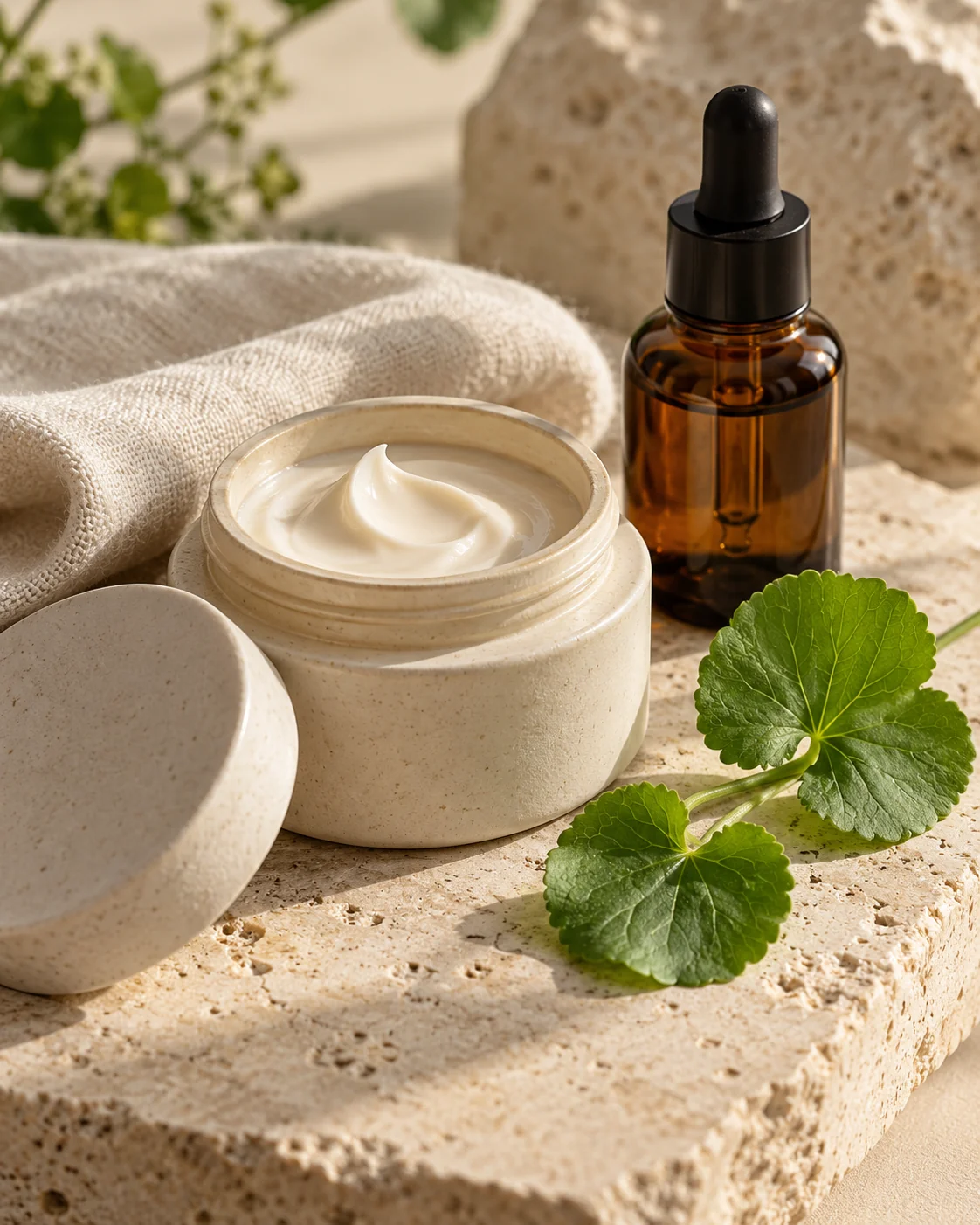
Rosehip oil has a lovely place in an evening routine: a small amount warmed between the fingertips, pressed gently over a moisturizer, and a moment to slow the pace. Its appeal begins with texture and the softer feel an oil can give dry skin.
What is in the bottle
Made from rose hips or their seeds, depending on the product, these oils contain fatty acids and other compounds whose amounts vary with species, extraction, and storage. The ingredient list matters more than a generic promise about natural vitamin A.
Limited human research has explored rosehip oil for skin appearance and scars. The studies do not establish that a cosmetic oil produces the same results as tretinoin, the medicine sold under names including Retin-A. An oil is not a standardized dose of retinoic acid, and evidence for one preparation cannot be assumed to apply to every bottle.
Think comfort and consistency
I have used rosehip oil at night and noticed changes in my skin. That remains a personal observation, not proof that an oil reverses past sun damage. A comfortable, consistent routine can be worthwhile without a dramatic before-and-after promise.
Try a small amount on a limited area first, then give your skin time to respond. If it feels good, apply a few drops to intact skin, avoiding the eyes. Oil can add softness, but a moisturizer that includes water-binding ingredients may still be helpful when skin feels dehydrated.
Choose the bottle for the formula
A single-ingredient oil is easier to understand than a blend with several fragrances and botanical extracts. That does not guarantee it will suit your skin, but it makes the ingredient list clearer. Check whether the product contains only rosehip oil or includes other oils, scent, or additional active ingredients.
Choose packaging and storage directions that make sense for how quickly you will use it. A small bottle can be more practical than a large one that sits open for months. Keep the label so you can identify the exact product if irritation develops.
Try a restrained evening sequence
- Cleanse with a product your skin already tolerates.
- Apply a familiar moisturizer if it is part of your routine.
- Press a small amount of oil over a limited area, avoiding the eyelids and lash line.
- Leave the rest of the routine unchanged so you can judge whether the addition feels useful.
Oil is optional. If it leaves you uncomfortable, shiny in a way you dislike, or more prone to breakouts, there is no reason to persist simply because the ingredient has an appealing botanical story.
Look for the changes you can honestly assess
Softness, comfort, and how a product wears are everyday outcomes you can notice. Claims about rebuilding collagen, reversing sun damage, or behaving like a medicine require a different level of evidence. Keep those categories separate when deciding whether a product deserves a place on your shelf.
A good routine can be aesthetically pleasing and quite spare. One well-tolerated product used consistently often makes more sense than a crowded collection with overlapping promises.
Keep the rest of the routine simple
Store the bottle as directed and replace it if the oil develops a rancid smell. Stop with irritation or breakouts. Fragrance-free products are often easier to assess because fewer added ingredients compete for attention.
Rosehip oil does not provide reliable sun protection. Shade, clothing, and appropriate sunscreen remain useful when you spend time outside. A changing, bleeding, or nonhealing skin spot deserves assessment rather than another cosmetic experiment. Let this particular botanical be a source of softness and pleasure, with expectations that match what is actually in the bottle.
References & further reading
- Rosehip Extract and Wound Healing: A Review (2023) · Review; limited human skin evidence
For education and reflection. Individual needs vary. For persistent symptoms or personal guidance, seek additional care from a qualified clinician or appropriate specialist.